

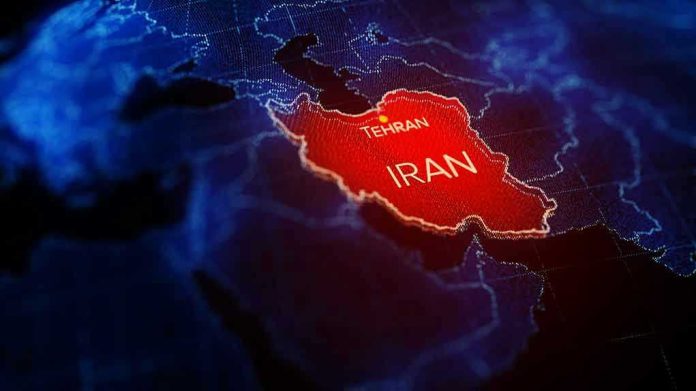
A new analysis warns against premature celebrations of regime change in Iran, highlighting skepticism about the effectiveness of recent protests.
Story Highlights
- Protests in Iran began following Mahsa Amini’s death in 2022.
- Iranian government attributes unrest to foreign conspiracies.
- Neoconservative optimism about regime change is seen as premature.
- Structural regime capacity for repression remains strong.
Iranian Protest Movements: A Cautious Perspective
The recent wave of protests in Iran, sparked by the death of Mahsa Amini on September 16, 2022, has drawn significant international attention. Women have played a prominent role in these demonstrations, challenging Iran’s clerical rule. Despite their significance, experts caution against viewing these protests as an imminent threat to the regime. Unlike the 2009 Green Movement, these protests have been smaller and more dispersed, with diverse participation across social groups.
The Iranian government, led by Supreme Leader Ali Khamenei, has consistently attributed the unrest to foreign conspiracies. The IRGC Intelligence Chief claimed that secret services from approximately 20 countries supported the protests. However, these claims lack independent verification and reflect standard rhetoric employed by authoritarian regimes to deflect internal dissent. The government’s narrative frames the protests as externally motivated rather than organically driven by domestic grievances.
Structural Stability and Regime Tactics
The Iranian regime maintains a stable support base, estimated at around 25% of the population. This base is primarily concentrated in devout lower classes in urban slums and rural areas. The regime’s support is bolstered by clientelism targeting Iran-Iraq war veterans, IRGC and Basij militias, bazaar merchants, and elites. This structural stability, combined with the regime’s capacity for forceful repression, poses significant challenges to protest movements aiming for regime change.
The protests’ subsidence by mid-January 2023 and the subsequent deployment of security forces underline the regime’s ability to suppress large-scale unrest. While the protests have raised awareness about human rights issues, fundamental grievances such as economic hardship, political repression, and social restrictions remain unresolved, creating conditions for potential future protest cycles.
Neoconservative Commentary and Skepticism
Neoconservative analysts have expressed optimism about the potential for regime change in Iran through popular unrest. However, expert assessments caution against such premature celebrations, emphasizing the regime’s adeptness at repression and the lack of a coherent revolutionary movement. Historical comparisons to pre-1979 revolutionary conditions highlight critical differences, suggesting that the current protests do not signal an imminent collapse of the regime.
The Iranian protests have drawn international scrutiny, complicating Iran’s foreign policy and human rights practices. While the protests reflect genuine grievances, the regime’s structural capacity for suppression and its concentrated support base suggest that systemic change is unlikely in the short term. The cyclical nature of Iranian protests—recurring but consistently suppressed—underscores the challenges faced by those seeking to catalyze regime transformation.
Sources:
Universidad de Navarra Strategic Analysis (2023)
U.S. Congressional Research Service (September 2023)
UK Intelligence and Security Committee (2025)









![[NEW RESEARCH] When the Chatbot is the Predator (Mini](https://usnewsnetwork.org/wp-content/uploads/sites/5/2026/02/NEW-RESEARCH-When-the-Chatbot-is-the-Predator-Mini-100x70.jpeg "AI Chatbots: The Silent Threat to Childhood")