

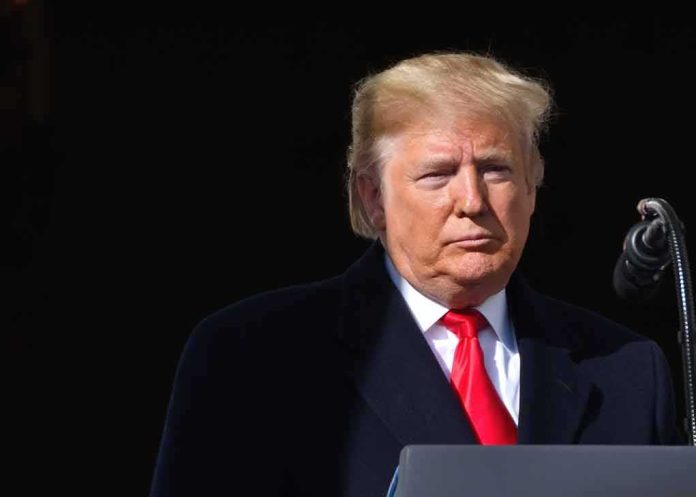
President Trump said he was flying to Alaska to boost Senator Dan Sullivan, underscoring how close that Senate race has become.
Story Snapshot
- Trump told reporters he was heading to Alaska to help Senator Dan Sullivan.
- The stop is part of a wider push by Republicans to protect and expand Senate seats before midterms.
- The White House framed the trip as tied to policy results for Alaska as well as politics.
- Trump also praised new press secretary Katie Zacharia after her first briefing.
What Trump Said Before Departing the White House
On October 13, 2026, President Trump spoke with reporters outside the White House before leaving for Alaska. He said he was “going to Alaska to try and help Dan Sullivan,” the Republican senator seeking another term. Public television and other outlets reported the same remarks, describing Alaska as a long trip and the race as competitive enough to draw a presidential visit. The exchange set the tone for a day focused on campaign travel and party control of the Senate.
Associated Press coverage described the trip as part of a wider map of campaign stops aimed at shoring up Republican chances in tight races ahead of the midterms. Cable news transcripts framed the distance and timing as signs that the party views Alaska as important, with only weeks left before voters cast ballots. While presidents often travel for their parties, this visit stood out due to the miles involved and the attention on ranked-choice voting in Alaska.
Why Alaska Matters in 2026
The White House highlighted policy ties to Alaska on the same date, pointing to energy, infrastructure, and security priorities for the state. That messaging ran alongside the political goal of helping Senator Sullivan. Public television noted Trump’s words of support for Sullivan and reported that the president planned other stops after Alaska. Together, the policy nods and the campaign pitch show the dual track presidents often use: policy claims to validate political travel, and political travel to sell policy.
Television coverage also emphasized the broader Senate stakes. With Republicans controlling Congress and President Trump in the White House, keeping seats like Alaska’s limits room for Democratic gains. A loss in a state once seen as safe would signal voter frustration on pocketbook issues like prices and energy costs, and on national border and crime worries that many cite. That tension makes each trip and each rally a test of whether Washington can still deliver for regular families.
Press Access and Communication Signals
Trump’s impromptu exchange came the same day he praised new White House press secretary Katie Zacharia’s first briefing. He said she did “excellent,” as reporters noted the short format and limited questions taken in that debut. The split-screen moment showed two styles at once: quick, informal comments from the president on the driveway, and a shorter, more controlled briefing inside. Voters often say they want both access and answers, not stagecraft.
TRUMP HEADS TO IOWA AND KANSAS IN FINAL MIDTERM PUSH
Earlier today, President Trump departed Florida aboard Air Force One for stops in Iowa and Kansas ahead of Tuesday’s midterm elections.
Trump is scheduled to deliver remarks in Iowa around 4 p.m. ET before heading to Kansas… pic.twitter.com/eQvd64O3YG
— One America News (@OANN) November 1, 2026
Scholars have found that cable news often highlights conflict and extremes, which can warp how audiences see Congress and elections. That matters when a presidential trip becomes a made-for-TV sign of crisis or momentum. The Alaska stop is real and documented, but the meaning viewers take from it depends on which clips and lines they see. That is why clear facts about who went where, when, and why still matter, even in a loud media market.
Sources:
youtube.com, apnews.com, transcripts.cnn.com, pbs.org, c-span.org, nationpress.com