
Federal investigators recovered the Learjet’s cockpit voice recorder, offering the first concrete clue in a crash that killed nine people in Florida.
Story Snapshot
- The National Transportation Safety Board recovered the cockpit voice recorder at the initial impact site.
- The recorder is now being examined at the agency’s laboratory in Washington, D.C..
- The crash near Greenacres on November 1 killed all nine people on board, according to multiple reports.
- Laws bar the release of cockpit audio; only a written transcript may be published later.
What Investigators Found and Where It Goes Next
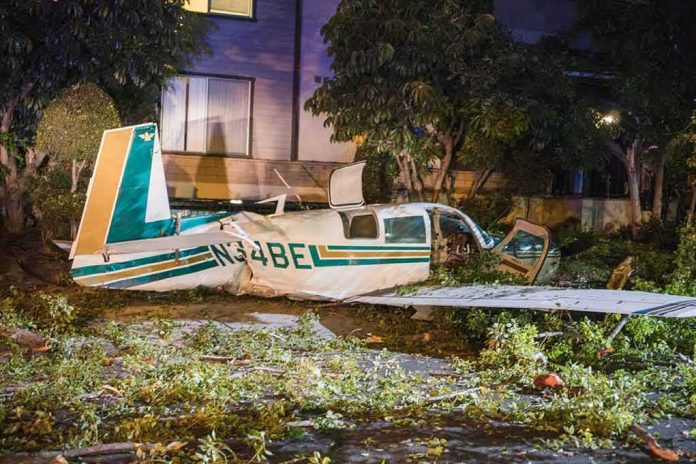
The National Transportation Safety Board said it recovered the cockpit voice recorder at the initial impact site of the Learjet 60 that crashed near Greenacres on November 1. The agency moved the device to its Vehicle Recorders Laboratory in Washington, D.C., where specialists will try to extract audio and prepare it for the investigative team. This step secures the evidence and starts the technical process that can reveal crew voices, alarms, and cockpit sounds during the final minutes.
Officials reported that all nine people on board died in the crash. Local coverage identified the site near a busy area in Palm Beach County, heightening concern for people on the ground and first responders. Early reports discussed severe weather in the area and a rapid loss of control, but investigators have not issued a cause. The voice recorder will help the team compare what the pilots said and heard with other facts from the wreckage and radar data.
What a Cockpit Voice Recorder Can and Cannot Tell Us
The cockpit voice recorder is an evidentiary tool, not a final answer. National Transportation Safety Board guidance says recorders are processed in Washington, and a committee creates a transcript for the investigation’s use. Federal law blocks release of the audio to the public. The Board may later publish a written transcript that removes private or non-pertinent content, keeping the focus on safety facts, not drama. That policy guards against misuse while supporting a thorough probe.
The device captures the last period of cockpit audio, including crew dialogue, radio calls, and cockpit alerts. It does not record every aircraft system. Investigators match the audio timeline to other evidence, such as wreckage patterns and weather data, to test theories and spot errors or failures. If the recording is clear, it may confirm pilot workload, checklist use, or a sudden emergency. If it is damaged or short, it can still give clues like a warning tone or a crew remark near the end.
Why This Matters to Public Safety and Trust
Crash investigations can look slow, but this step shows the system working as designed. Recovering and securing the recorder sets up a facts-first review and keeps politics out of the lab. The process aims to find out what failed, how training and maintenance factored in, and what fixes can stop a repeat. For families, pilots, and travelers, a careful record-based approach is the best path to real answers and safer skies.
Investigators said Monday they have recovered the cockpit voice recorder from the Bahamas-bound Learjet that crashed in Florida last week, killing all nine people on board. https://t.co/rsd5h3WH0L
— ABC News (@ABC) November 10, 2026
People on both the right and the left worry that powerful insiders hide the ball. In this case, the rules are clear and public. The National Transportation Safety Board runs the probe, not a cabinet department, and the law shields raw cockpit audio from sensational release while allowing a vetted transcript later. That balance seeks transparency without fueling noise. The recovered recorder is a step toward truth, not a headline stunt.
Sources:
washingtontimes.com, ntsb.gov, abc6onyourside.com, aerotime.aero