

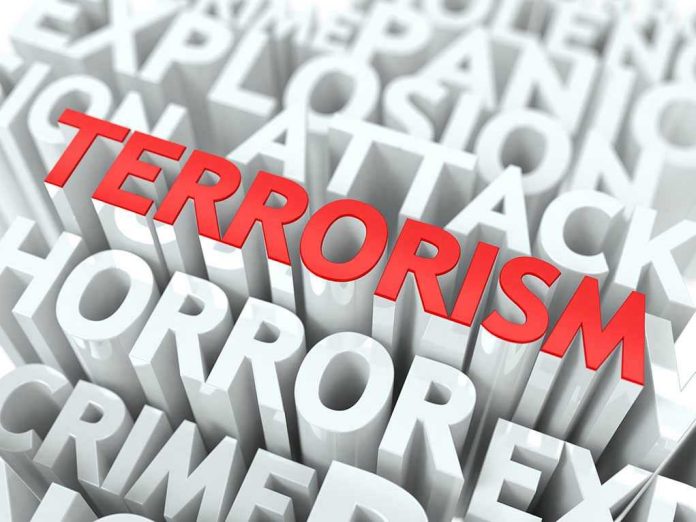
Britain’s government has weaponized terrorism laws to criminalize factual reporting about political movements, threatening journalists with 14-year prison sentences for simply stating facts.
Story Highlights
- British Terrorism Act 2000 now criminalizes factual reporting about proscribed groups like Palestine Action
- Journalists face up to 14 years imprisonment for truthful statements about designated organizations
- Government expanded terrorism definitions from militant groups to include non-violent protest movements
- Free speech advocates warn this sets dangerous precedent for suppressing dissent and independent journalism
Government Redefines Terrorism to Include Journalism
The British government has dramatically expanded the scope of its Terrorism Act 2000, transforming legislation originally designed to combat violent extremism into a tool for silencing journalists and suppressing factual reporting. Under these new interpretations, making truthful statements about proscribed political movements now constitutes a terrorism offense punishable by up to 14 years in prison. This represents a fundamental shift from targeting actual militant threats to criminalizing basic journalistic functions and free speech rights.
Palestine Action Proscription Signals Broader Crackdown
The proscription of Palestine Action, a non-violent protest group, exemplifies how the government has stretched terrorism definitions beyond their original intent. Unlike traditional terrorist organizations that employ violence and intimidation, Palestine Action engaged in civil disobedience and protest activities. By designating such groups as terrorist organizations, British authorities have created a legal framework where reporting on their activities, motivations, or even existence becomes indistinguishable from terrorism support under the law.
Legal Framework Eliminates Distinction Between Facts and Endorsement
The Terrorism Act’s provisions have been interpreted in ways that make it nearly impossible for journalists to distinguish between factual reporting and illegal support. This legal ambiguity means that standard journalistic practices—such as explaining an organization’s stated goals, reporting on their activities, or providing context for their actions—can be prosecuted as terrorism offenses. The legislation’s broad language allows authorities to treat objective reporting as endorsement, effectively criminalizing the fundamental principles of independent journalism and public information.
Free Speech Under Assault by Government Overreach
This expansion of terrorism laws represents a textbook case of government overreach that should alarm every American who values constitutional freedoms. When governments begin prosecuting journalists for reporting facts, they have crossed the line from protecting public safety to protecting themselves from scrutiny. The British model demonstrates how quickly anti-terrorism legislation can be weaponized against legitimate speech rights, setting a dangerous precedent that authoritarian-minded leaders worldwide will surely study and potentially replicate in their own jurisdictions.










![[NEW RESEARCH] When the Chatbot is the Predator (Mini](https://usnewsnetwork.org/wp-content/uploads/sites/5/2026/02/NEW-RESEARCH-When-the-Chatbot-is-the-Predator-Mini-100x70.jpeg "AI Chatbots: The Silent Threat to Childhood")