
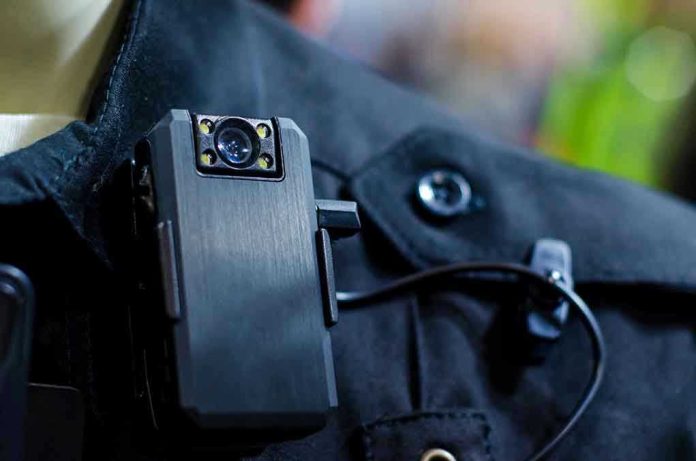
Democrats demanded body cameras for ICE agents as a reform measure, then abruptly reversed course when they realized the footage was exonerating law enforcement instead of confirming their anti-enforcement narratives.
Story Snapshot
- Senate and House Democratic leaders initially demanded body cameras for ICE agents as part of DHS funding negotiations following two fatal shootings in January 2026
- Democrats quickly flip-flopped within days, proposing restrictions on body camera footage after left-wing activists raised surveillance concerns and video evidence exonerated agents
- House passed $20 million in funding for ICE body cameras despite Democratic reversal, with President Trump supporting the measure to protect law enforcement from false accusations
- Footage from the Minneapolis shooting showed the legal observer struck an ICE agent after obstructing operations, contradicting activist claims and undermining Democratic narratives
Democrats’ Quick Reversal Exposes Political Calculation
Senate Minority Leader Chuck Schumer and House Minority Leader Hakeem Jeffries sent a letter to Republican leadership in early February 2026 demanding body cameras for ICE agents as one of ten “guardrails” for Department of Homeland Security funding ahead of a February 13 expiration deadline. Within days of making this demand, Democratic leaders reversed their position and proposed legislation to limit how body camera footage could be used. The sudden flip-flop came after left-wing privacy advocates raised concerns about mass surveillance capabilities, but the timing suggests Democrats recognized a more pressing problem: the cameras were vindicating ICE agents rather than condemning them.
Check Out the Hilarious Whiplash As Dems Flip-Flop on Bodycams When They Realize There's a Problem https://t.co/c3wFzC5U5u
— Eliza (@Elizaluvswinter) February 9, 2026
The catalyst for the original Democratic demand came from two January 2026 incidents. ICE agent Jonathan Ross shot Renee Nicole Good, a legal observer, in Minneapolis on January 7 during an enforcement operation. Border Patrol shot Alex Pretti on January 24. These shootings sparked protests and clashes with federal agents across Minneapolis, with activists demanding accountability and reform. Democrats seized on these incidents to push their body camera requirement as a transparency measure. However, video footage from the Good shooting told a very different story than activists claimed, showing Good physically striking the agent after deliberately obstructing the ICE operation.
Body Camera Footage Undermines Anti-ICE Narrative
The video evidence from agent Jonathan Ross’s phone proved particularly problematic for Democrats and their activist allies. Rather than showing an unprovoked shooting of an innocent bystander, the footage documented Renee Nicole Good’s intentional interference with a federal law enforcement operation and her physical assault on the agent. This contradicted the narrative that left-wing protesters had constructed around the incident. Lora Ries of the Heritage Foundation explained that body cameras protect law enforcement officers from false misconduct claims, which is exactly what happened in this case. The reality that footage shields agents from lies appears to be precisely what prompted Democratic concerns.
President Trump publicly supported body cameras for ICE agents, noting they protect law enforcement from false accusations. DHS Secretary Kristi Noem announced on February 3, 2026, that body cameras would be mandatory for all federal agents operating in Minneapolis, with plans to expand the requirement nationwide as funding becomes available. Noem stood by this policy following Trump’s supportive comments. The bipartisan agreement on body cameras put Democrats in an awkward position when the technology began working against their preferred narrative about aggressive and unaccountable immigration enforcement under the Trump administration.
Privacy Concerns Emerge After Inconvenient Truth Surfaces
Left-wing privacy advocates and organizations like the National Immigrant Justice Center raised concerns that body cameras would enable mass surveillance of protesters through facial recognition technology and other tracking methods. Democrats quickly latched onto these surveillance fears to justify their reversal, proposing new restrictions on how footage could be used and stored. The Department of Homeland Security denied that the cameras would employ facial recognition capabilities, but activists remained concerned about the potential for downloaded footage to be analyzed later. These privacy objections conveniently materialized only after video evidence began exonerating ICE agents rather than incriminating them.
The House passed a homeland security bill that included $20 million in funding for ICE body cameras despite the Democratic flip-flop. Republicans agreed to this funding allocation as a compromise before Democrats pushed for usage limitations. Some Democrats even cited the body camera provision as justification for supporting the broader DHS funding bill, creating further confusion about the party’s actual position. Seven Democrats ultimately broke ranks to support the legislation. The funding represents a windfall for contractors like Axon Enterprise, which already secured a $5 million contract with ICE in March 2025 and has lobbied extensively on homeland security issues.
Pattern of Obstruction Meets Technological Reality
This body camera controversy fits a broader pattern of Democratic opposition to effective immigration enforcement under President Trump’s administration. When Democrats thought cameras would capture footage supporting claims of ICE misconduct, they championed transparency and accountability. The moment video evidence began protecting agents and exposing the tactics of activists who physically obstruct federal operations, privacy suddenly became the paramount concern. This calculated pivot undermines legitimate discussions about surveillance technology and civil liberties by weaponizing those concerns only when politically convenient. The American people deserve honest debate about both immigration enforcement and privacy rights, not opportunistic position-switching based on which narrative benefits Democrats at any given moment.
Body cameras for law enforcement remain a complex policy question with mixed evidence on effectiveness. A 2020 research review found no firm evidence that cameras consistently alter officer behavior, though they may prove effective under specific conditions. What should not be complex is the principle that video evidence deserves consideration regardless of which side it supports. If Democrats genuinely cared about accountability and truth, they would welcome body camera footage even when it contradicts activist claims. Their rapid reversal when cameras produced inconvenient facts reveals that political narrative, not justice or transparency, drives their position on immigration enforcement oversight.
Sources:
Democrats Flip-Flop On ICE Agents And Body Cameras
Democrats ICE Reform Body Cameras
Senate Dems Demand Immigration Agents Unmask Wear Body Cameras and Carry IDs Shutdown Looms
DHS Secretary Noem Stands Body Camera Requirement Federal Agents Following Trump Comments
House GOP Offer to Dems Explicit Funding for ICE Body Cameras Following Minneapolis Shooting