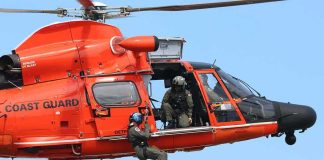

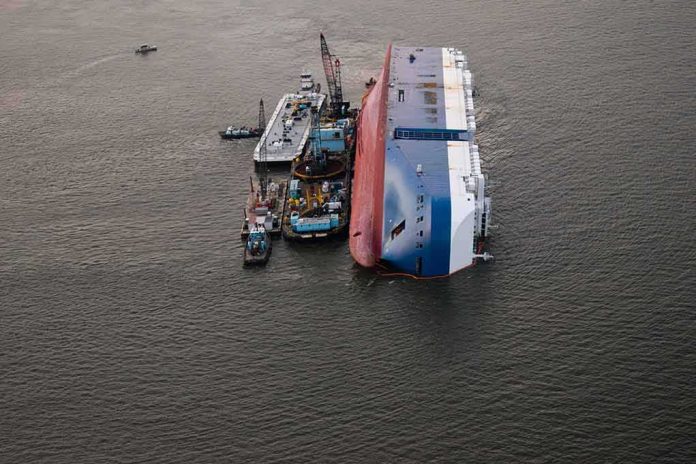
Thirty-five bodies were recovered from a burned Philippine ferry after a nighttime fire left dozens more still missing near Coron, Palawan.
Story Snapshot
- Authorities said MV June Aster caught fire Wednesday evening near Coron, Palawan.
- Rescuers first confirmed five dead, 43 survivors, and many missing as searches began.
- The death toll reached 35 after recovery teams brought bodies ashore the next day.
- Officials said the cause is under investigation, with rough seas slowing the response.
What Happened Off Coron, Palawan
Philippine Coast Guard officials said the passenger ferry MV June Aster caught fire around 6:45 p.m. Wednesday, about 1.2 nautical miles northeast of Barangay Marcilla in Coron, Palawan. The vessel listed 117 passengers and 17 crew members on its manifest, for a total of 134 people on board. Early in the response, the Coast Guard confirmed five deaths and reported 43 survivors rescued from the water and nearby vessels. Search teams began overnight operations as smoke and heat limited access.
Coast Guard units, local responders, and fishing boats joined the effort to find the missing and reach the ferry’s decks. Officials said the fire’s cause was still unknown and would be the focus of a formal probe. Poor weather and choppy seas made boarding the ship dangerous and slowed recovery, a common challenge in maritime fires at night. Reported survivor accounts differed on where the blaze began, with some pointing to the cargo area, but investigators have not confirmed an origin.
Rising Toll As Recovery Teams Board The Wreck
By the next day, recovery teams were able to board parts of the burned vessel and bring more victims to shore. Agence France-Presse reported that authorities recovered 30 additional bodies, bringing the known death toll to 35, while dozens were still unaccounted for. Officials continued to reconcile the ship’s manifest against survivor lists and dock records as searches extended along the current lines. The Coast Guard kept patrols active to spot life rings, debris, and any sign of those missing.
Early counts of the missing varied across outlets as crews cross-checked names and confirmed who had actually boarded, which often happens in ferry disasters. The Philippine Coast Guard and local authorities emphasized that confirmed numbers can shift as survivor interviews, hospital intakes, and family reports come in. During prior maritime incidents in the Philippines, investigators followed the same pattern before issuing a final tally and a cause report once evidence collection finished.
Why The Counts Shift And What Comes Next
Maritime investigators in the Philippines aim to find the cause and safety lessons, which is why early statements focus on rescue, not blame. That process starts with stabilizing the scene, then recovering victims, and finally inspecting the wreck for fire patterns and ignition points. In this case, responders faced strong winds, hot surfaces, and the risk of reignition, which delayed a full walkthrough of the ferry. Those hazards explain why details about where the fire started remain unsettled at this stage.
Philippines ferry fire death toll rises to 35 after 30 more bodies recovered
Firefighters boarded the MV June Aster near Palawan and found 30 more victims, lifting the toll from 5 to 35; 43 survivors were rescued.#Philippines #Palawan #FerryFire
Read more:…
— Minute Brief (@theminutebrief) September 12, 2026
Officials are expected to examine the ship’s safety records, crew actions, cargo loading, and emergency gear. They will also review radio logs and survivor statements to confirm the timeline from first smoke to evacuation. Ferry travel links many of the Philippines’ more than 7,600 islands, so each investigation can drive better training and stricter checks. After the June Aster fire, the goal is clear: learn what failed, fix it fast, and prevent another night like this one.
Sources:
bbc.com, apnews.com, reuters.com, philstar.com, maritime-executive.com, sunstar.com.ph, newsinfo.inquirer.net