
France moved to let local officials ban protests after city halls burned and thousands marched, raising a hard question about safety versus freedom.
Story Snapshot
- Large protests over living costs erupted nationwide; most were peaceful, but violence spiked.
- Limoges City Hall was badly damaged by fire as crowds clashed with police in several cities.
- President Emmanuel Macron told prefects to work with mayors and ban gatherings when needed.
- Arrest counts varied widely as officials and media rushed out fast-changing tallies.
What sparked France’s hard turn on protests
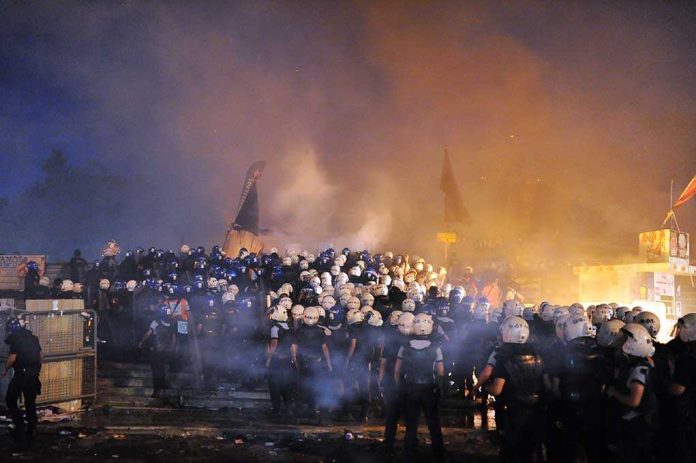
Hundreds of thousands marched across France on October 17, 2026, over rising prices, fuel costs, school conditions, and public service cuts. Most people protested peacefully. But masked groups smashed windows, looted shops, and set fires in several cities. In Limoges, flames tore through City Hall and partly collapsed its roof. Police clashed with violent groups in Paris and other cities, making mass arrests as fires and street battles spread after nightfall.
Paris authorities said they faced organized groups seeking fights with officers and symbolic targets. Reporters on the ground described assaults on town halls and other public buildings. Arrest numbers jumped through the night as patrols moved to secure key sites. Media outlets cited differing totals as events unfolded, reflecting shifting counts by city and time. The images were stark: burning municipal buildings, smashed storefronts, and lines of police racing to hold downtown areas.
Macron’s directive: protect buildings, narrow routes, ban when necessary
After an emergency meeting, President Emmanuel Macron told prefects to coordinate with mayors to protect public buildings and businesses. He said they could prohibit specific gatherings when necessary to restore order. His message paired two ideas: hear public anger and act on its causes, while firmly enforcing republican order. He promised those who attacked police prefectures, businesses, or town halls would be prosecuted and punished under the law.
Paris put the approach into practice. The police prefect used the internal security code to partially block planned protest routes linked to the student mobilization while allowing modified marches to proceed. The orders cited public-order risks, narrowed paths away from likely flashpoints, and kept demonstrations under tighter control. That showed how officials could restrict higher-risk segments without imposing blanket bans across entire cities.
Scale, violence, and the data gap
Newsrooms and officials reported different arrest counts as they compiled updates. Some reports put the figure around 1,200; others cited 1,800 or higher. The gaps likely came from changing time windows and city-by-city reporting. These swings let political actors pick the numbers that best fit their message. That tug-of-war over data matters because it shapes whether the country sees a policing failure, a hijacked protest, or a broader social crisis.
Interior Minister Laurent Nuñez described the violent actors as radical and extremely aggressive. He backed authorizing police to use intermediate weapons, from tear gas grenades to defense launchers, if urban violence resumed. Rights groups will likely press for transparency on deployments and injuries. Supporters of tough tactics will argue they stopped worse harm. The policy debate will hinge on whether targeted bans calm hotspots without turning into rolling limits on assembly.
Why this matters beyond France
This clash hits a fault line that both conservatives and liberals in the United States know well. People want safe streets and respect for civic buildings. People also want their voice heard when costs rise and public services falter. France’s strategy—narrow routes, prosecute arsonists, and ban high-risk gatherings—shows one model. Its risk is mission creep, where temporary rules become a habit and the state hardens while problems that fueled anger remain.
Scholars warn that democratic backsliding often advances through small steps that curb rights in the name of order. France is not suspending elections or shutting the press. But it is testing limits on assembly amid real violence. That is why clear rules, narrow tailoring, and public data on arrests and injuries matter. They anchor trust. Without that, both sides can claim the system serves elites first, while everyday people face high prices, frayed schools, and fewer ways to be heard.
What to watch next
Watch whether bans stay targeted and time-limited, with appeals open to organizers. Track whether prosecutors distinguish peaceful protesters from those who torched buildings. Look for talks with students, teachers, and unions that address costs and conditions, not only security. Finally, demand clean numbers: arrests by city, charges filed, injuries, and damage. Sunlight will not fix everything. But it can check both street violence and state overreach before either becomes the new normal.
Sources:
gpb.org, bbc.co.uk, cnbc.com, cnn.com, euronews.com, bbc.com, academic.oup.com