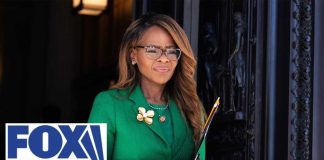

As Americans brace for another overseas conflict, a resurfaced controversy around Rep. Ilhan Omar is forcing uncomfortable questions about who gets to claim “human rights” credibility in Washington.
Quick Take
- Allegations circulating since 2019 and resurfacing in late 2025 claim Omar’s late father, a Somali National Army colonel under dictator Siad Barre, was connected—by rank, proximity, and postings—to the Isaaq genocide in today’s Somaliland.
- The Isaaq genocide (1987–1989) is broadly documented as a state-led campaign, with large-scale civilian killings and the devastation of major cities such as Hargeisa.
- Available reporting emphasizes the key limitation: no public legal finding or definitive proof shows Omar’s father personally committed atrocities, and Omar herself was a child during the period.
- Renewed attention has intersected with U.S. political fights, including debates about Somaliland recognition and Omar’s record of “genocide” rhetoric in congressional settings.
What the renewed allegations claim—and what remains unproven
Reporting and activist commentary from Somaliland-oriented outlets allege that Omar’s family story as “innocent civil war victims” omits her father’s status inside Siad Barre’s security state. The core claim is not that Omar participated—she was roughly five to seven during the genocide years—but that her father’s role as a Somali National Army colonel placed him within the machinery of a regime accused of mass atrocities. The evidence cited publicly is largely circumstantial, not judicial.
Those claims rely on rank, clan and regime proximity, and reported archival material—photos and footage said to show connections to senior figures such as Mohammed Said Hersi Morgan, widely nicknamed the “Butcher of Hargeisa.” Even sympathetic summaries of the allegation acknowledge uncertainty: a colonel’s posting and professional proximity can suggest knowledge, but they do not automatically establish personal criminal responsibility. That distinction matters, especially when accusations are weaponized for U.S. politics rather than adjudicated by courts.
What is widely documented about the Isaaq genocide
Separate from the Omar dispute, the historical record on the Isaaq genocide is stark. The campaign, generally dated to 1987–1989, is described as state-directed violence by the Somali Democratic Republic against Isaaq civilians in northern Somalia—an area now governed as de facto independent Somaliland. Accounts describe executions, torture, rape, starvation tactics, and aerial bombing, with destruction reported across key cities, including catastrophic damage in Hargeisa and Burao.
The crackdown is commonly tied to the broader Somaliland War of Independence and the Somali National Movement uprising, and it is associated with regime leadership under Siad Barre and senior commanders, including Morgan. Multiple summaries cite death toll estimates spanning tens of thousands to hundreds of thousands. While the precise figure is contested across sources, the overall characterization of a government-led campaign against civilians is not. That broader consensus is why the topic remains politically explosive in the diaspora today.
Why the story resurfaced in late 2025—and how it plays in U.S. politics
The controversy spiked again in late 2025 as commentators linked Omar’s posture on Somaliland recognition to intra-diaspora pressures and U.S. political feuds. At the same time, video clips from earlier congressional exchanges re-circulated showing Omar using “genocide” framing in U.S. foreign-policy debates. For conservative voters already disillusioned by Washington’s selective moralizing, the clash of narratives—human-rights rhetoric versus unresolved questions about family history—became the hook.
That does not resolve the central factual gap. Public reporting cited in the research does not show a definitive investigative finding that Omar’s father directly ordered or executed atrocities. Nor does it present a documented response from Omar addressing each specific allegation in detail. What it does show is a recurring pattern: diaspora grievances, old regime crimes, and American partisan incentives merging into a social-media feedback loop that rewards the most inflammatory version of events.
What conservatives should watch: standards of evidence and government power
Two principles matter for a conservative audience trying to stay grounded while the country debates war and foreign entanglements. First, standards of evidence should not collapse just because a target is politically unpopular. Allegations of genocide ties are grave; they should be evaluated with verifiable documentation, not viral certainty. Second, the policy consequences can be real: public anger often gets channeled into demands for sweeping government action—surveillance, censorship, or immigration enforcement shortcuts—without due process safeguards.
Ilhan Omar’s Connection to Genocide in Somaliland https://t.co/qahCPz6jYA
— BrandonHeadrick (@HeaBrandon) March 29, 2026
Limited-government voters can condemn atrocities abroad and still insist on constitutional discipline at home. The research provided points to political motives on multiple sides—Somaliland activists seeking recognition and accountability, and U.S. partisans seeking leverage. Until more concrete, independently verifiable documentation is produced, the strongest defensible position is narrow: the Isaaq genocide itself is widely documented, while the specific claims about Omar’s father remain contested and largely circumstantial in the material cited here.
Sources:
https://saxafimedia.com/evidence-ilhan-omar-butcher-isaaq-genocide/
https://www.israelhayom.com/2025/12/28/why-is-ilhan-omar-silent-on-the-recognition-of-somaliland/
https://www.rootsmetals.com/blogs/news/the-antisemitism-of-ilhan-omar
https://en.wikipedia.org/wiki/Isaaq_genocide