

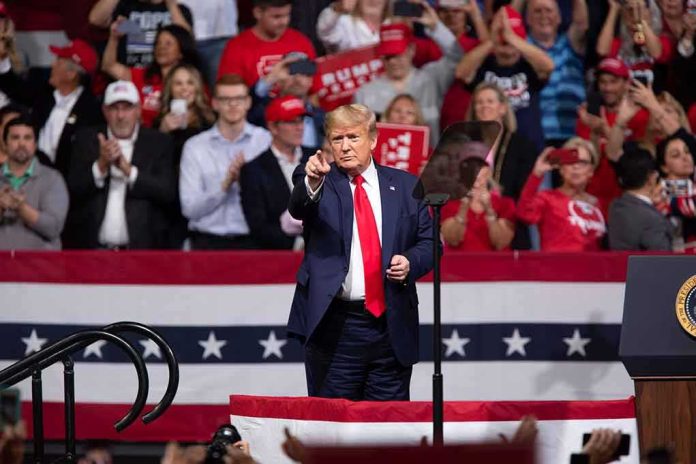
At a Mississippi rally, President Trump said men told him rising 401(k) gains made their wives “finally love” them, tying market wins to marriage turnarounds.
Story Highlights
- Trump linked reported 401(k) gains to men’s claims of better marriages at a Corinth, Mississippi rally.
- He cited a New York police officer who said his wife now sees him as a “genius” investor.
- The remarks fit a broader pattern: money conflicts are a common strain in relationships.
- Researchers have tied financial disputes to lower relationship quality and higher breakup risk.
What Trump Said At The Corinth Rally
At a rally in Corinth, Mississippi, President Trump told the crowd that men have been crediting stock market gains for better marriages. He said people told him, “My wife is in love with me,” and urged attendees to check their 401(k) accounts. He cited figures like “60%,” “65%,” and “up 64%,” presenting them as recent gains. He also repeated a story about a New York police officer whose wife now thinks he is a smart investor, based on those returns.
Trump framed these stories as proof that rising retirement accounts can change how spouses see each other. The New York officer anecdote was the most specific example he gave, but he did not provide names, dates, or documents in the remarks. The comments came as part of a larger pitch about personal finances and retirement savings. The reporting that captured the quotes identified the event, the location, and reproduced the key lines from the speech.
Why Money And Marriage Often Collide
Researchers have long found that fights over money are common and hard to resolve. In one study that tracked 100 couples across hundreds of conflicts, about one in five arguments involved finances. Those clashes tended to last longer and feel more serious than other disputes. Money talks can bring up control, trust, and fear about the future. That mix makes them tougher to fix with a quick talk or a simple budget change.
Other studies link money conflict to lower satisfaction and even divorce risk. One review found that couples who argue about money face higher odds of breaking up than couples who argue about other issues, even when income, assets, and debt are considered. The pattern does not mean money is the only cause. It suggests that financial stress can act like a force multiplier on other tensions inside a marriage, from communication habits to values and goals.
Connecting Market Gains To Relationship Mood
Trump’s message echoed a simple idea: when accounts rise, pressure at home can ease. That has real-world logic. Higher balances can mean fewer hard choices about bills, savings, and college. Less stress can cool tempers and soften blame. The research base does not test his exact claim, but it supports a link between household finances and relationship strain. Better finances may not fix deeper issues, yet they can lower the daily heat couples feel.
Voters also hear this through today’s larger political fight. Conservatives frustrated by inflation, high energy costs, and global pressures often see rising markets as a win for hard work. Liberals worried about inequality and job security may see gains that mainly help the already invested. Many on both sides, though, share a deeper complaint: Washington’s leaders focus on power and reelection while families juggle rising costs and fragile savings. Any hint that real payoffs reach the kitchen table draws strong interest.
The Rally Line And The Bigger Trust Problem
Trump’s rally line worked because it mixed humor with a real pain point: money stress at home. The story about the New York officer gave the punchline a face. The percentages gave it weight, even if the speech did not tie them to named accounts or time frames. That blend is common in political storytelling. It turns large policy claims into personal wins, which audiences can picture in their own lives and share with friends.
For families, the takeaway is practical. Check savings and debt. Talk early and often about money goals. Agree on a plan for spending, saving, and risk. The research suggests these steps lower conflict and boost confidence when markets swing. For citizens, the wider question remains. Can leaders in Washington, across parties, deliver steady, broad gains that reach beyond headlines and actually calm life at home? Many Americans, left and right, are still waiting for that answer.