
Iran’s leaders are urging “youth” to stand in human chains at power plants as U.S. strike threats escalate—an old-world tactic that turns civilians into strategic leverage.
Quick Take
- Iran’s Ministry of Sports and Youth called for nationwide “human chains” around power plants and key infrastructure as President Trump warned of major strikes.
- Iranian officials described the action as symbolic unity, but the timing and locations raised concerns about civilians being used as protective buffers.
- Reporting and official messaging remain unclear on ages; some coverage highlights “children,” while other accounts describe broader “youth,” including students and young adults.
- U.S.-Israeli strikes reportedly continued during the human-chain effort, with additional civilian deaths reported as the conflict widened.
Tehran’s Human-Chain Call Puts Civilians at the Center of a Military Standoff
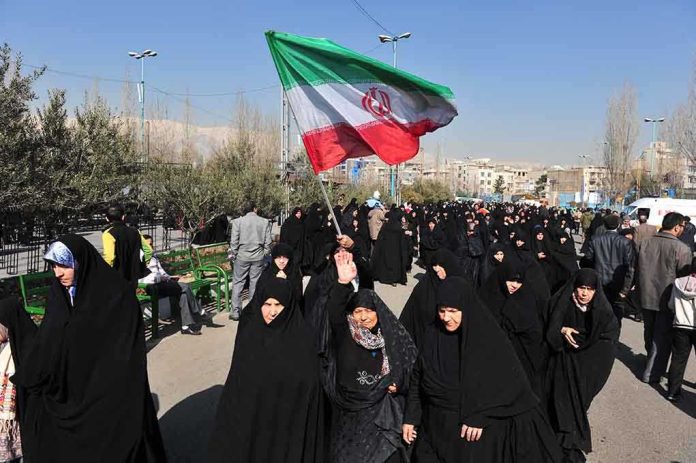
Iranian authorities, led by the Ministry of Sports and Youth, called on young people to gather at power plants and other critical sites in early April 2026 as tensions with the United States intensified. State messaging branded the effort a “Human Chain of Iran’s Youth for a Bright Future,” emphasizing national unity and infrastructure protection. The most disputed detail is who exactly was mobilized: some coverage uses “children,” while other reporting points to students, athletes, and artists, which can include adults.
President Trump’s warnings created the immediate backdrop. Multiple reports tied the initiative to Trump’s threats to target Iranian “power plants and bridges,” with an explicit deadline connected to reopening the Strait of Hormuz. That chokepoint is a major artery for global shipping and energy markets, which is why Washington has treated it as a national security and economic pressure point. Tehran’s response, however it is labeled, amounts to placing civilians near dual-use targets at the exact moment pressure is rising.
What We Know—and What Remains Unclear—About “Children” Versus “Youth”
The phrase “human shields” is not a neutral label, and the research itself flags a genuine ambiguity: Iranian officials framed the gatherings as symbolic, while some coverage frames them as children being positioned to deter strikes. The available reporting does not provide a clear age breakdown for participants at each site. That matters because international norms treat the use of minors in conflict-related activities far more severely, and because public understanding shifts dramatically depending on whether participants are school-age children or university-age adults.
Video and state-media documentation reportedly showed hundreds assembling at sites including the Kazerun combined cycle power plant. Even if participation was voluntary, the state-directed nature of the campaign raises basic questions about coercion and consent—especially in a system where “volunteering” can be socially enforced. For American audiences, the key point is not to take slogans at face value: governments under pressure often use mass mobilizations to shape foreign decision-making, dominate domestic narratives, and signal resolve.
Strikes, Civilian Harm, and the Limits of Deterrence by “Human Chain”
The human-chain effort did not appear to stop military operations. Reporting indicated U.S.-Israeli strikes continued as the gatherings were documented, including claims of at least 18 civilians killed on April 7 in Alborz Province, among them two young children. Real-time casualty reporting can change as investigations proceed, but the near-term lesson is straightforward: putting civilians near infrastructure does not guarantee protection when a conflict escalates, and it can increase the stakes for everyone nearby.
That risk is amplified by what happened earlier in the escalation. Amnesty International investigated a February 28 strike that hit Shajareh Tayyebeh Elementary School in Minab, killing 168 people, including more than 100 children, and concluded the U.S. violated international humanitarian law by failing to take feasible precautions. Amnesty’s reporting argued the attack may have relied on outdated intelligence about the building’s status as a school. If accurate, that finding underscores why “civilian presence” strategies are reckless: they assume perfect targeting and perfect information in an imperfect, fast-moving war.
Why This Matters for Americans Watching Washington and the “Deep State” Debate
For conservatives wary of endless foreign entanglements and for liberals worried about civilian harm, the same core question is back on the table: who is steering decisions when deadlines, threats, and strikes collide? Trump’s posture emphasizes decisive leverage—especially around Hormuz—but the operational reality depends on intelligence, targeting discipline, and the bureaucracy that executes orders. The school-strike findings cited by Amnesty, if upheld, would fuel public skepticism that federal systems always act with the competence and restraint leaders promise.
The broader trend is familiar: when governments feel cornered, they often stage mass civilian symbolism to deter attacks, and when great powers escalate, civilians pay first. The United States has strategic interests in keeping Hormuz open and deterring regional threats, but American legitimacy also depends on tight compliance with the laws of war. Iran’s mobilization campaign—and the contested “human shields” framing—should be judged with disciplined skepticism: verify ages, verify intent, and demand accountability for targeting decisions that put children at risk.
Sources:
U.S. responsible for killing over 100 children in Iran school attack
Iran Calls For Human Chains Around Key Power Plants As Trump’s Hormuz Deadline Nears
Iran war live updates: Trump deadline, power plants, human chains, Israel, train strikes