
A former U.S. Attorney General couldn’t answer a sitting senator’s pointed question about whether any president has ever ordered the Justice Department to prosecute political enemies — and that moment may tell you everything about where we are as a country right now.
Quick Take
- Sen. Adam Schiff grilled former Attorney General John Ashcroft at a Senate Judiciary Committee hearing, asking whether a president can legally direct the Justice Department to prosecute political opponents.
- Schiff claimed the current Justice Department pursued prosecutions against political opponents even when grand juries unanimously refused to indict — but named no specific cases.
- Ashcroft affirmed the president leads the executive branch and must enforce the law, but said enforcement should not favor or target anyone based on politics.
- When Schiff asked Ashcroft if he had ever seen a grand jury unanimously refuse to indict in a politically charged case, Ashcroft replied simply, “I don’t know.”
The Exchange That Sparked the Debate
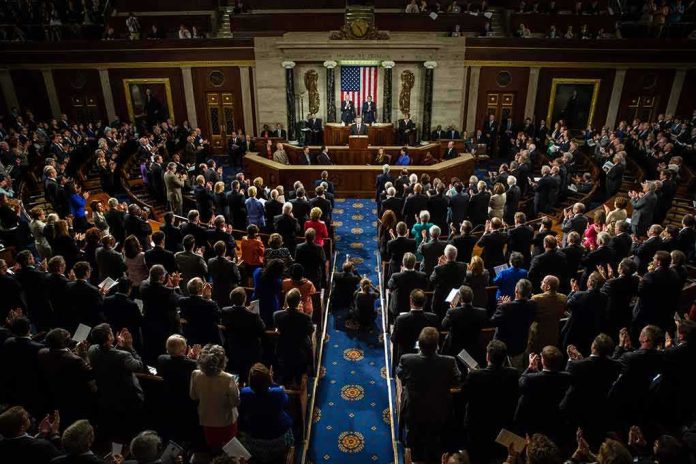
At a recent Senate Judiciary Committee hearing, Sen. Adam Schiff of California questioned former Attorney General John Ashcroft about the limits of presidential power over federal prosecutions. Schiff asked directly: can a president call the Attorney General and order prosecutions of political enemies? Schiff argued that post-Watergate reforms were built specifically to prevent that kind of political interference, saying, “there was an effort to make the Justice Department independent from the White House.”
Schiff went further, claiming the current Justice Department has gone after political opponents “even without any basis to do so,” and that grand juries in some cases “unanimously refused to indict.” He used vivid hypotheticals to make his point — asking whether it would be acceptable to prosecute someone for taking photos of seashells, or to charge senators for speaking out against illegal orders. However, Schiff did not name any specific defendants, cases, or court records to back up his grand jury claim, which weakens the argument considerably.
What Ashcroft Said — and Didn’t Say
Ashcroft defended the president’s role as head of the executive branch, responsible for enforcing the nation’s laws. He said the president should push for strong law enforcement — but added a clear limit: that enforcement must be applied “without regard to the political preferences of the people who are perpetrators or accused individuals.” In other words, Ashcroft drew a line between vigorous law enforcement and targeted political prosecution.
But Ashcroft’s answers left gaps. When Schiff asked if he had ever seen a grand jury unanimously refuse to indict in a high-profile political case, Ashcroft said, “I don’t know.” He also did not engage with Schiff’s specific hypotheticals or offer legal precedents to show where presidential authority ends. It’s worth noting that Ashcroft’s own record as Attorney General included documented controversies over executive power, with the American Civil Liberties Union (ACLU) reporting he worked to limit federal courts’ ability to review certain Justice Department actions.
Why This Moment Matters to Everyday Americans
This exchange cuts to a question that bothers millions of Americans across the political spectrum: is the Justice Department a neutral enforcer of the law, or a tool for whoever holds power? After Watergate, the government made promises to keep politics out of prosecutions. But both sides today accuse the other of breaking those promises. Conservatives point to what they see as politically driven cases against Trump allies. Liberals point to what they see as retaliation against Trump’s critics.
Schiff’s claim that no Democratic president ever called the Attorney General to order a prosecution is a sweeping historical statement — and he offered no documents or records to prove it. Ashcroft couldn’t confirm or deny it either. That uncertainty is the real story here. Decades after Watergate, the guardrails meant to keep the Justice Department independent from the White House remain unwritten norms, not hard laws. And unwritten norms, as history shows, are only as strong as the people in power choose to make them.
Sources:
justice.gov, pbs.org, aclu.org