

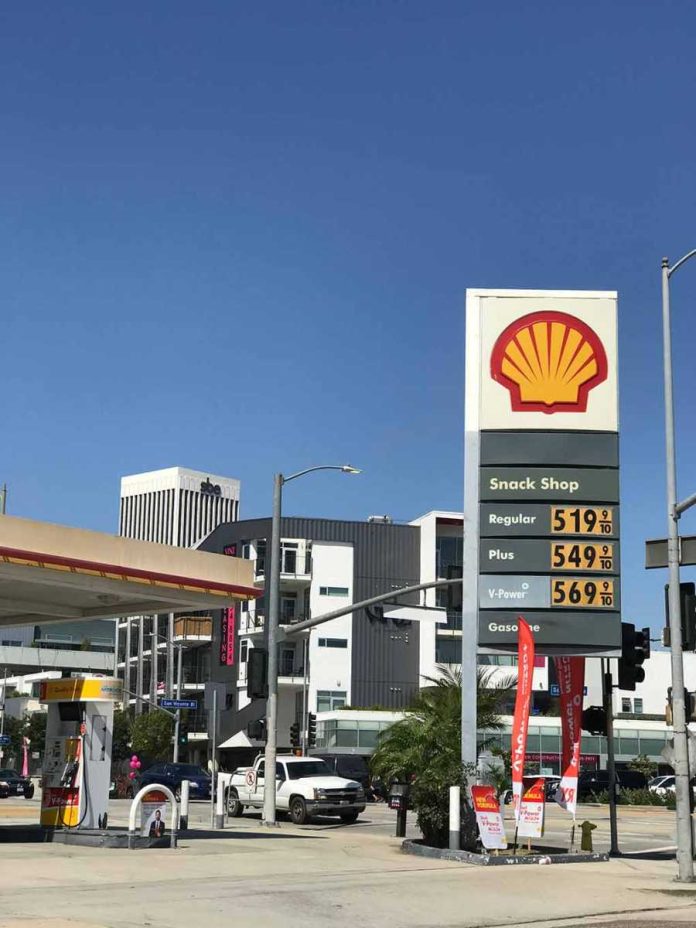
America is heading into another busy driving season with gasoline reserves sinking toward historic lows, leaving families exposed to sharp price jumps even though pumps are still flowing.
Story Snapshot
- U.S. gasoline stockpiles have fallen for weeks and sit well below normal levels for this time of year.
- Major banks warn inventories could drop under 200 million barrels by late summer, the lowest modern summer levels on record.
- Analysts say this tight market points to higher prices at the pump, not an immediate nationwide fuel shortage.
- Crude oil and emergency reserves are also near multi‑decade lows, limiting Washington’s ability to cushion any new shock.
Gasoline Inventories Slide Toward Record Summer Lows
Energy Information Administration data shows gasoline stockpiles have been shrinking week after week as drivers hit the road and refineries struggle to keep up. National gasoline inventories recently stood near 211 to 222 million barrels, down from peaks above 250 million barrels before the war in Iran disrupted global flows. That is roughly five to six percent below the normal five‑year average for this time of year, making supplies low by modern standards but not yet in crisis territory.
Morgan Stanley, a major Wall Street bank, warns that this slide may not be over. Its analysts project gasoline inventories could fall to about 198 million barrels by the end of August if current trends only partly ease, which would be the lowest level ever recorded for that period. In a more severe case, with continued supply trouble, stockpiles could sink toward 190 million barrels, levels last seen in 2012 but now paired with higher demand and fewer backup reserves.
Why Tight Stocks Mean Price Pain, Not Empty Pumps
Forbes and other analysts stress a key point for drivers: low inventories are an early warning for higher prices, not proof that gas stations are about to run dry. History shows the system can operate with lean stockpiles as long as refineries run hard and imports arrive, but there is less “buffer” to absorb any new shock. Right now, the United States market is described as tight but functional, with no widespread reports of stations closing, even as wholesale prices and futures markets brace for possible spikes.
Inventory drawdowns matter because they show how quickly the country is burning through its safety margin. Since mid‑February, gasoline stocks have fallen by more than 40 million barrels in about fifteen weeks, a pace Forbes calls unprecedented in three decades of federal data. Reuters notes this matches the longest streak of weekly declines on record and comes just as summer driving reaches its peak, a moment when any refinery outage, hurricane, or foreign conflict can shove prices sharply higher.
Crude Oil Reserves And Washington’s Limited Safety Net
The story does not stop at gasoline. Crude oil inventories backing the fuel system have also dropped to their lowest combined levels in more than forty years, according to federal data. Commercial crude stocks have fallen week after week as exports rise and refineries pull more barrels to meet demand, while the Strategic Petroleum Reserve, the government’s emergency stash, is now around its lowest point since the early 1980s. That leaves fewer tools in Washington’s toolbox if prices spike or if global supply is hit again.
Crude oil futures (/CL) saw some profit-taking selling on Friday, even as heightened Middle East tensions, disruptions to Kazakhstan’s oil exports, and continued drawdowns from the U.S. Strategic Petroleum Reserve helped keep supply concerns in focus. As of July 17, the reserve…
— LOUIS WOOLF (@torvale1953) July 27, 2026
This picture feeds the growing anger that many Americans feel toward the federal government and the energy system. Older conservatives see low fuel reserves as the cost of years of attacks on domestic drilling and pipeline projects, plus bets on expensive renewable power that did not protect drivers from global chaos. Older liberals look at the same data and see big oil companies and foreign wars squeezing working families while leaders talk more about elections than about basic affordability. Both sides sense a system run for powerful interests, not for them.
What It Means For Households And The Political Climate
For most families, the immediate risk is not showing up to a closed gas station but watching prices climb again just as budgets are already stretched. Past episodes of low inventories and tight markets have translated into sudden price jumps at the pump, hitting commuters, truckers, and small businesses that cannot easily cut back on driving. Marketplace and others warn that today’s historically low petroleum stocks could bring “more pain at the pump” if any new shock lands, from a hurricane in the Gulf of Mexico to an escalation in the Iran conflict.
These trends also deepen the sense that leaders in Washington, including President Trump and Congress, are failing to build a resilient energy system that serves ordinary people. The federal government drew down emergency oil reserves in past years but has been slow to rebuild them, even as global risks grew. Meanwhile, gasoline inventories were allowed to slide toward unheard‑of seasonal lows while officials fought over messaging and policy labels. To many on the right and the left, that looks less like a serious plan and more like another sign of a government captured by short‑term politics and distant elites.
Sources:
feedpress.me, reuters.com, tradingeconomics.com, finance.yahoo.com, ttnews.com, theglobeandmail.com, foxbusiness.com, linkedin.com