

As Iran’s missiles kill Americans on a base in Jordan, the war that elites promised would stay “limited” is suddenly hitting home for U.S. troops, gas prices, and trust in Washington itself.
Story Snapshot
- Two U.S. service members were killed and one is missing after an Iranian missile and drone strike on Muwaffaq Salti Air Base in Jordan.
- Iran’s Islamic Revolutionary Guard Corps said it targeted U.S. aircraft at the base, while U.S. Central Command launched new strikes to “swiftly punish” Iranian forces.
- Jordan is becoming a major flashpoint in the U.S.–Iran war, with repeated attacks and rising American casualties.
- Confusing timelines, conflicting Jordanian and U.S. reports, and rising costs at home are fueling public doubt about whether Washington is leveling with the American people.
Deadly Strike On U.S. Troops In Jordan
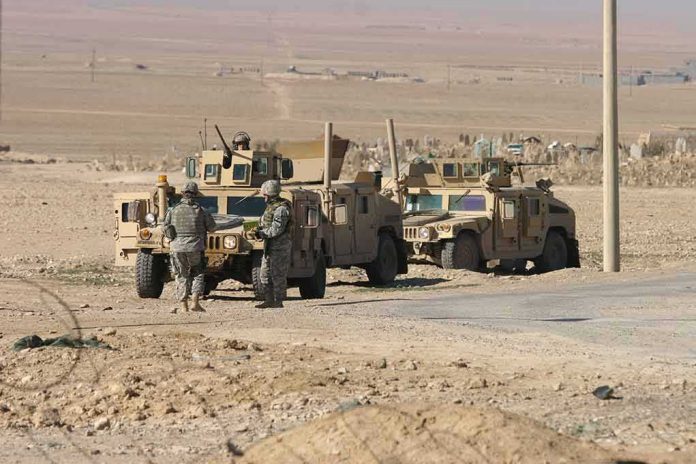
On July 17, Iranian ballistic missiles and drones hit the Muwaffaq Salti Air Base in Azraq, Jordan, killing two American service members and leaving a third missing in action. U.S. Central Command said the troops died “in action” while American and partner forces tried to defend the base against the incoming attack. Four other U.S. service members were wounded, flown to Jordanian hospitals for treatment, and then released. This marked the first U.S. combat deaths from direct Iranian fire since a short-lived ceasefire collapsed.
Iran’s Islamic Revolutionary Guard Corps claimed responsibility for the strike through state media, saying it targeted U.S. military transport aircraft stationed at the base with missiles and drones. Video shared by major outlets appears to show the moment one missile slammed into the airfield, followed by a fireball and chaos on the ground. The Pentagon has not yet publicly confirmed the identity of the missing service member, noting only that remains found at the scene are still being identified.
Jordan Turns Into A New Front Line
Current and former officials say Iran has been stepping up attacks on American forces in Jordan to create U.S. casualties and to turn the country into a pressure point in the wider war. The weekend strike at Muwaffaq Salti was not an isolated event but part of a broader campaign of missile and drone raids on U.S. sites in Jordan, Bahrain, Kuwait, and other regional bases. Analysts argue Tehran wants to punish Jordan for hosting American forces and to scare Washington away from deeper military action by showing it can kill U.S. troops far from Iran’s borders.
Since late 2023, Iran-backed militias and Iranian forces have carried out more than 170 attacks on American bases in Syria, Iraq, and Jordan, wounding hundreds of service members and damaging at least 17 facilities. A deadly drone strike on a remote U.S. outpost in Jordan in January 2024 killed three American soldiers, offering a grim precedent for the latest attack. The Wall Street Journal reports that officials now see Jordan as a central battleground in a test of wills between Washington and Tehran, with troop deaths rising and the risk of wider war growing.
U.S. Response And Rising Costs At Home
Within hours of confirming the deaths, U.S. Central Command announced new airstrikes against Iranian targets, including forces believed to have launched the Jordan attack. Officials said the strikes aimed to “swiftly punish” Islamic Revolutionary Guard Corps units and degrade Iran’s missile, drone, and air defense systems that threaten U.S. troops and global shipping. President Donald Trump, backed by key Republicans, has vowed that Iran will “pay” for every American killed, signaling continued military escalation rather than a pause for deeper investigation.
Those decisions are landing at a time when Americans are already feeling the war’s impact at home. National gas prices have climbed above four dollars a gallon in parts of the country as fighting near the Strait of Hormuz threatens oil flows and raises transport costs. Analysts say the conflict has caused hundreds of millions of dollars in damage to bases used by the United States, along with broader economic fallout across the region. For many citizens on both the right and the left, these costs deepen a long-standing belief that Washington’s foreign wars serve distant elites more than working families.
Confusing Facts Feed Public Distrust
Even with the core facts accepted—that Iranian missiles and drones killed two U.S. soldiers at a Jordanian base—several details remain murky and feed public skepticism. Reports disagree on dates, with some outlets tying the deadly strike to waves of attacks reported on July 9, July 13, July 14, and July 17. Jordan’s official news agency first said it intercepted all missiles in a July 9 attack with “no casualties,” which clashes with later U.S. claims of American deaths from Iranian strikes on Jordanian bases.
#BREAKING:🔥Alicia: “…today, we’re watching a growing death toll in the war that the president once said would be over in TWO WEEKS, but has now lasted more than TWENTY. We now know two American troops were killed by an Iranian strike on a US base in Jordan on Friday. A third… pic.twitter.com/1N191USvOc
— Emoluments Clause (@Emolclause) July 20, 2026
So far, no independent forensic report has been released that traces the exact missile debris or confirms its origin beyond Iran’s own claims and U.S. intelligence statements. That does not mean the U.S. account is false, but the lack of publicly shared technical proof leaves room for doubt in a country already wary of defense and intelligence agencies. Many Americans remember past wars where official stories changed over time, and they now question whether leaders across both parties are fully transparent about why troops are dying and how close the region is to a wider, long‑term war.
Sources:
feedpress.me, independent.co.uk, defencesecurityasia.com, airandspaceforces.com, aninews.in, seattletimes.com, tass.com, facebook.com, washingtonpost.com, instagram.com, youtube.com, bbc.com, abcnews.go.com, france24.com, vaticannews.va