

Federal agents say they captured the fugitive accused of striking an on-duty New York City police officer with a white SUV in the South Bronx and fleeing the scene.
Story Snapshot
- U.S. Marshals arrested the suspect less than two days after the hit-and-run that injured an NYPD officer.
- A federal release links the suspect to a white Honda SUV that sped off after the collision.
- A court-account summary describes repeated vehicle movements toward the officer before the suspect fled.
- Separate reporting says the man was arrested in September in an unrelated assault case.
What Officials Say Happened in the Bronx
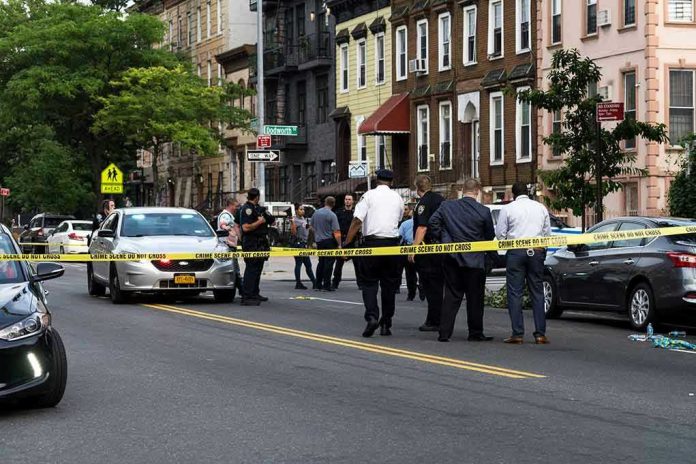
On October 19, the United States Marshals Service said its New York and New Jersey Regional Fugitive Task Force arrested a man accused of a violent hit-and-run that injured an on-duty New York City Police Department officer in the South Bronx. The agency said the suspect was allegedly driving a white Honda SUV, struck the officer, and then accelerated away from the scene. The officer was taken to Lincoln Hospital and treated for significant leg injuries, according to the federal account.
The arrest followed a manhunt that lasted less than two days, according to the Marshals. Officials said the fast capture involved coordination among federal, state, and local partners. The swift arrest provides an official attribution of who investigators believe was behind the wheel. The federal release focused on the collision, the officer’s injuries, and the suspect’s flight rather than on later courtroom steps or final charges, which are handled by city prosecutors and state courts.
Allegations in Court-Focused Reporting
A detailed description reported from court filings says the driver ignored commands to stop, reversed, then turned the wheels toward the officer and accelerated more than once before fleeing. That account, if proven in court, points to intent rather than a simple crash. The same report describes pain and swelling in the officer’s legs, ankles, knees, hips, and back after the impact. These details come from a media summary of complaint language and law enforcement sources.
Separate coverage says the same man had been arrested on September 14 in a parking-lot altercation that led to an assault charge. That reporting links the recent case to a prior police contact about one month earlier. It does not include a docket number or the final outcome of the September arrest. As with many early cases, the public record at this stage centers on arrests and allegations, not trial results or convictions.
Why This Case Hits Bigger Public Nerves
New York has seen other prosecutions where drivers hurt officers while trying to get away. Outcomes often hinge on proof of intent, the driver’s actions, and the level of injury. In one Queens case, an appellate court upheld convictions for assault and reckless driving after a driver fled, blew a stop sign, and caused injuries. That history shows how prosecutors frame vehicle-as-weapon cases and what courts have allowed when evidence of intent and harm is strong.
This Bronx case also touches a separate and hot political debate about immigration enforcement. Some outlets have highlighted the suspect’s reported immigration status and an immigration detainer. Those details can shape how people judge risk and policy. But they are distinct from the core legal test here: what the driver did, what the officer suffered, and whether the evidence proves the charged mental state beyond a reasonable doubt in court. Keeping those questions separate helps the facts lead.
People on the right and left share anger when violent suspects slip through the cracks, and when street chaos leaves police and neighbors at risk. They also worry that officials often talk tough but move slow. This case will be a measure of follow-through. The Marshals’ fast arrest shows the system can move with urgency. The next test is in court: clear charges, tested evidence, and a result that fits the facts. That is how trust is built, step by step.
Sources:
nypost.com, usmarshals.gov, bronx.news12.com