
Iran’s president accused the United States of hitting civilian essentials like water and medicine, while Washington insists it struck only military targets.
Story Snapshot
- Iran’s president said the United States targeted civilian infrastructure and vowed Iran “won’t surrender.”
- United States Central Command said recent strikes hit Islamic Revolutionary Guard Corps military sites, not civilians.
- Reuters noted Iranian claims of strikes near a civilian airport amid broad United States attacks on military assets.
- The White House told the BBC the strikes were “exclusively” on military targets, highlighting a sharp dispute.
Pezeshkian’s Charge and Defiant Message
Iranian President Masoud Pezeshkian accused the United States of attacking civilian infrastructure and basic supplies. He cited water, food, medicine, and livelihoods, and said Iran “won’t surrender.” He challenged the United States to face Iran’s military instead of hitting civilian systems. Multiple outlets carried his remarks, which were framed as a direct public warning during ongoing clashes. His message amplifies fears that the fight is spreading beyond front-line targets to daily life for ordinary people.
Reuters reported that Iran also claimed strikes occurred near civilian areas, including by Jiroft airport, while United States Central Command listed Iranian military sites it hit. That list included air defenses, radar, maritime assets, and communications. The tension is not only about where bombs fell, but about what counts as a military target when infrastructure can serve both troops and civilians. That gray zone is where war often harms the public most, even when armies say they aim at fighters.
United States Position: Military Targets Only
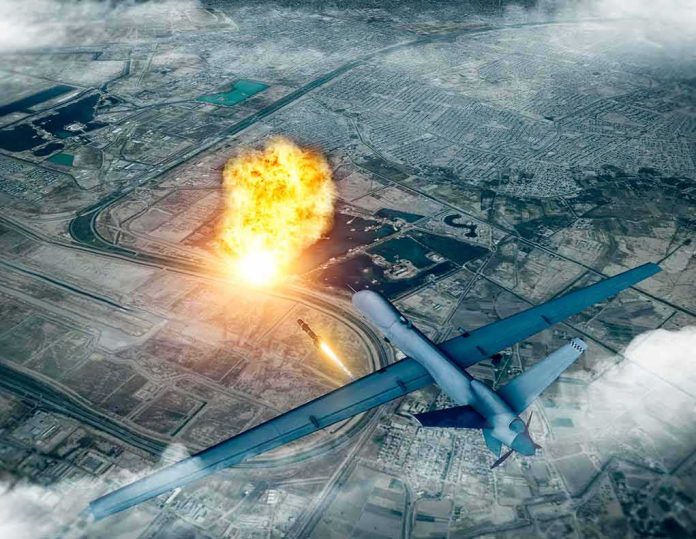
United States Central Command said its latest wave hit more than 90 Iranian military targets. The command named air defense positions, radar systems, mine-laying capabilities, maritime facilities, and communications nodes. The framing is clear: degrade the Islamic Revolutionary Guard Corps and reduce its ability to threaten shipping, strike neighbors, or launch drones and missiles. This account rejects any aim at civilians and repeats a long-standing claim that the United States avoids civilian targets.
The White House told the BBC that strikes were “exclusively” on military targets and logistics sites. That message underscores a sharp divide with Tehran’s account. It also shapes early public understanding during fast-moving events. Governments often speak first and set the frame, while outside checks lag. That delay fuels mistrust on both the left and the right, who already doubt that officials level with citizens when the stakes are high and the facts are messy.
Evidence Gaps and Civilian Harm Concerns
BBC reporting earlier in the conflict said schools and hospitals in Iran have been damaged, raising broader civilian-harm concerns. That pattern, if confirmed, points to the risks when militaries hit infrastructure that may be dual-use. Airports, ports, bridges, and power sites can support troops and civilians at once. Without independent site checks, it is hard to sort lawful targets from protected ones. That is the core dispute here, and it remains unresolved in the public record provided.
'They want to starve our people': Pezeshkian attacks US sanctions.
In an #exclusive interview with Geeta Mohan, Iranian President Masoud Pezeshkian accuses the US of blocking food, medicine, trade and transport routes to pressure Iran into surrender.
He questions Washington’s… pic.twitter.com/qWJZ1LKeAf
— India Today Global (@ITGGlobal) September 12, 2026
For Americans, the stakes go beyond Iran. People across the spectrum see a repeat of a familiar script: leaders promise precision and restraint, yet civilians suffer and answers arrive late. Conservatives worry about never-ending overseas fights and the costs of global policing. Liberals worry about human rights and growing inequality at home while funds flow to war. Both sides see elites managing narratives while ordinary families bear the hit through higher prices, instability, and less trust.
What To Watch Next
Independent damage reviews could clarify what was hit and why. Satellite images, on-site inspections, and hospital records would help verify or refute Iran’s claims of civilian targeting. Disclosure of United States target files and legal reviews, even in part, could show how risks to civilians were weighed. Until then, expect a credibility contest. The danger is drift: each new strike normalizes blurred lines, and the public, here and abroad, pays for that fog with doubt and fear.
Sources:
tehrantimes.com, reuters.com, gulfnews.com, bbc.com