

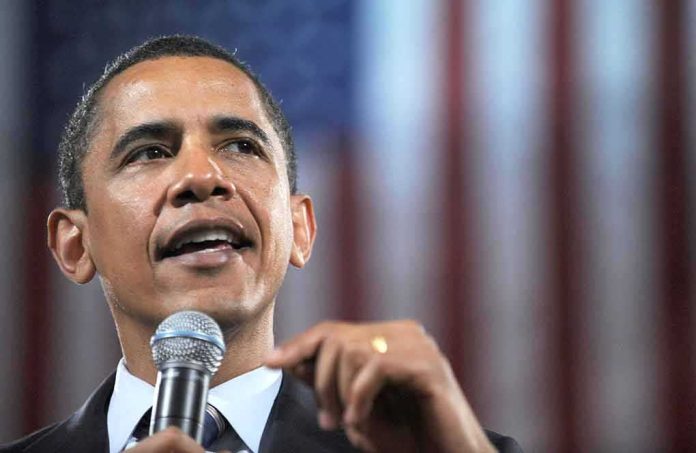
Two days after tagging Republicans as a “golf country club,” Barack Obama urged America to “rebuild social trust.”
Story Highlights
- Obama promoted “social trust” days after describing Republicans as all looking the same.
- The timeline shows a tight two-day gap between the remarks and the trust pitch.
- His trust message urged talks with people who “might seem different”.
- The juxtaposition fueled charges of hypocrisy across conservative outlets.
What Obama Said, And When He Said It
RedState reported that Barack Obama told incoming House Democrats that, in the House chamber, “on one side, everybody looked the same,” comparing Republicans to a “golf country club,” while saying Democrats “looked like America.” Two days later, on November 20, 2026, Obama posted a video urging Americans to rebuild “bonds of social trust,” and to sit down with people who “might seem different,” with the message tied to his Democracy Forum in Chicago.
The two statements landed close together and drew quick reactions on the right. Critics argued the “country club” line painted Republicans as a monolith, clashing with his new call to bridge divides. The RedState piece centered on the contrast and highlighted the timing to underscore what it called a lecture on trust arriving right after a broad jab at the other side’s look and makeup, not its policy ideas.
Why The Contrast Hit A Nerve With Conservatives
Conservatives have watched elites excuse partisan slights while preaching unity. Obama’s “everybody looked the same” comment sounded to many like a swipe at Republican voters who value faith, family, and tradition. When he then promoted trust-building with people who “might seem different,” the gap between rhetoric and practice felt glaring to critics. The message asked Republicans to extend grace days after being framed in narrow, identity terms by a leading Democrat figure.
The trust theme matters because Americans already report low faith in each other and in institutions. When leaders speak in group labels, trust falls even more. Research links perceived polarization with lower social trust, which makes broad characterizations especially costly in a tense climate. Calls to rebuild trust work best when they model respect for individuals first, not categories or stereotypes that harden divides before dialogue starts.
What We Know, And What We Do Not
The RedState account cites excerpts attributed to Obama’s office, but a full transcript or full video of the Democrat meeting is not included. That limits certainty about his tone or any qualifiers. The trust video exists with clear lines about talking to people who “might seem different.” The core facts are the quotes as reported and the tight timeline. The charge of hypocrisy rests on the contrast between those quoted lines, not on proof of intent beyond the words themselves.
That said, the facts support a fair criticism: leaders cannot champion trust on Friday and sort millions of opponents into a look-alike box on Wednesday without backlash. If trust is the goal, it starts with seeing people as more than a group label. That is common sense to parents, church members, small business owners, and veterans who live out respect daily. Real trust grows when leaders talk policy, protect speech, and defend every American’s dignity—without the cheap shots.
Why This Matters Under President Trump’s America-First Direction
President Trump’s team is pushing secure borders, lower energy costs, and strong families. Those goals rely on open debate and equal treatment under the law. When high-profile Democrats cast Republicans as a uniform “country club,” it feeds the same identity playbook that powered “woke” sorting and masked failures on spending, inflation, and crime. Americans deserve leaders who argue ideas, not appearances. Trust rises when government is limited, rights are guarded, and each citizen is judged by character, not category.