

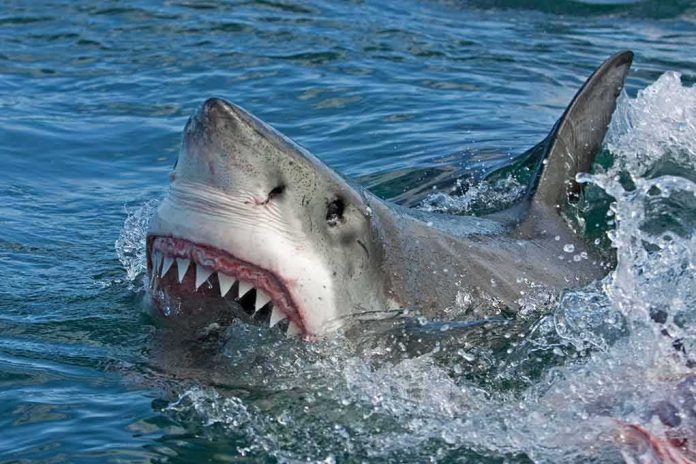
A rare government order to hunt and kill a great white shark followed a fatal attack that left a well-known Perth grandfather-to-be dead at Sorrento Beach.
Story Snapshot
- Greg O’Neill, 63, was identified as the swimmer killed near Sorrento Beach’s shore during a morning swim.
- Western Australia closed nearby beaches and launched search operations after the attack.
- Fisheries Minister Jackie Jarvis issued a rare catch-and-kill order for the shark believed responsible.
- Family and media described O’Neill as a devoted husband, father, and grandfather-to-be.
Confirmed Details of the Sorrento Beach Attack
Western Australia police and state agencies responded after a shark fatally attacked swimmer Greg O’Neill, 63, during a morning swim close to shore at Sorrento Beach, in Perth’s northern suburbs. Reports placed the attack around mid-morning, with O’Neill in the water near a friend when a large shark struck. Authorities said they were confident the swimmer died as a result of the attack, and multiple outlets named O’Neill as the victim with family confirmation of his identity and tributes.
Officials closed Sorrento Beach and nearby beaches while search crews worked to find the shark and recover remains. Water police, lifeguards, and fisheries teams patrolled the area by boat and air. The response treated the event as a fatal attack based on witness accounts and evidence at the scene. Several reports noted that the body had not yet been recovered during the early phase of operations, which aligned with the ongoing search status at the time.
Unusual Catch-and-Kill Order and What It Means
Western Australia’s Fisheries Minister Jackie Jarvis authorized a catch-and-kill order aimed at the individual shark believed responsible. The order allowed officers to destroy the shark if captured, while state leaders ruled out a broader cull. Officials and reporting described the directive as rare and very unusual, with some coverage indicating it may be the first such order in roughly a decade in the state’s waters.
This approach fits a pattern in Western Australia: leaders move fast to show action when a fatality occurs near popular beaches. Previous reviews and academic work show shark deaths in the state rise and fall over time, but each fatal attack draws major attention and pressure on policy. Analysts have recorded long periods with few or no deaths, followed by clusters that heighten public fear and push officials toward visible steps like targeted kill orders.
Who Greg O’Neill Was to His Family and Community
Family tributes described O’Neill as a devoted husband, father, and grandfather-to-be. Friends and relatives shared that he was generous and active, and that his loss hit them hard. Media reports echoed those themes and noted that he was swimming close to the shoreline of a well-used beach. The human cost is clear in the family’s public statements, which framed him as the center of a close network who now mourn an avoidable-seeming tragedy in a place meant for everyday life.
Witnesses at the beach reported a large shark and a fast, violent encounter, with beachgoers and O’Neill’s companion left in shock. Police and emergency crews secured the scene and urged people to stay away from closed waters. The state’s beach warning systems and patrols remained active as the response continued. Officials balanced respect for the grieving family with public safety needs, offering updates while avoiding speculation about the exact shark species and movements.
Safety Trade-offs, Public Expectations, and What Comes Next
State leaders face a familiar bind after high-profile shark attacks. People expect quick action to protect swimmers, yet experts question if hunting one shark makes beaches safer. Prior analyses found that reactive measures, like targeted hunts after an attack, do not clearly reduce future risk. Long-term strategies focus on education, patrols, technology, and alerts, which aim to lower risk without routine lethal control of protected species.
Capture gear has been set 1.5km off Sorrento Beach as the family of shark attack victim Greg O’Neill pays tribute to the much-loved swimmer.
READ IN COMMENTShttps://t.co/Sw84UCoaGc
— The West Australian (@westaustralian) September 20, 2026
For families and local swimmers, the next steps are practical and personal. Authorities will review response times, patrol coverage, warning signs, and incident logs. Beach reopenings will depend on surveillance and confidence that the area is safe. People on both sides of politics tend to agree on one thing here: when systems fail to prevent a clear danger in a public space, leaders must answer with steps that work, not just steps that look tough. Evidence-based safety is the shared goal.
Sources:
foxnews.com, abc.net.au, yahoo.com, nine.com.au, aol.com, nypost.com, capetownetc.com, 7news.com.au