

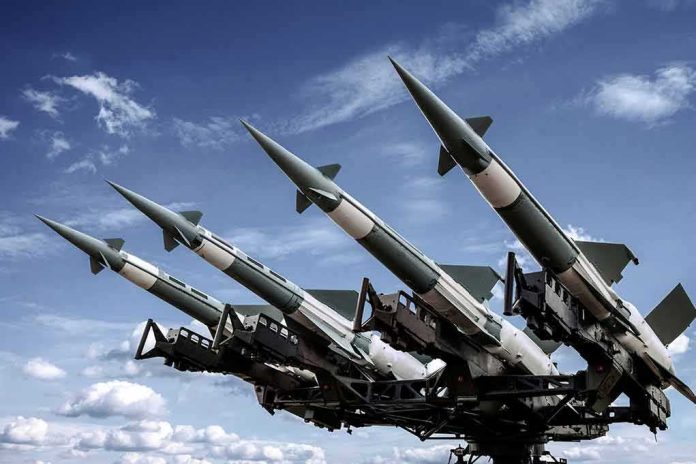
Washington’s 2019 decision to eject Turkey from the F-35 program over the Russian S-400 showed the system is treated as a real threat to U.S. stealth — not a paper tiger.
Story Snapshot
- The Pentagon removed Turkey from the F-35 program after it bought Russia’s S-400, citing security risks.
- Analysts say the S-400 can likely detect stealth jets at long range but may struggle to get a weapons-quality track.
- Public estimates put likely F-35 targeting ranges near 20 miles, far below headline radar ranges.
- No verified combat has tested S-400 vs. F-22 or F-35, so real-world performance remains unproven.
Why the S-400 vs. Stealth Fight Still Matters
U.S. officials pushed Turkey out of the F-35 program in 2019 after Ankara bought Russia’s S-400 air defense system. The Pentagon called the S-400 a risk to the F-35’s stealth secrets and supply chain, underlining that the system could collect sensitive data if both operated together. That move cost Turkey industrial work and sent a clear signal to allies: combining a fifth-generation jet with Moscow’s top-tier air defense is a no-go for Washington.
Russia’s S-400 is built as a layered “kill chain.” A long-range radar scans for targets. A command post picks threats. A fire-control radar provides the precise track. Then launchers fire long-range missiles, including the 40N6 family with advertised reach out to several hundred kilometers. On paper, this network can handle many targets at once. In practice, each step has to work cleanly to engage a low-observable jet designed to break that chain.
The Key Technical Split: Detection vs. Weapons Lock
Analysts and technical summaries draw a hard line between seeing “something” and being able to shoot it. Lower-frequency radars can sometimes detect a stealth aircraft’s rough position. But they do not give the sharp, stable track a missile needs. That precision usually comes from higher-frequency fire-control radars that stealth shaping tries to defeat. This is why many experts frame the issue as tracking and guidance, not raw detection at long range.
Public estimates reflect that split. A cited analysis passed through The Diplomat reported that open-source data put detection distances at about 21 kilometers for an approaching F-22 and 34 kilometers for an approaching F-35, far less than headline ranges. AeroCorner notes that an S-400 battery might not get a weapons-quality track on an F-35 until the jet is roughly 20 miles away, depending on conditions and tactics. Those numbers suggest stealth jets can often fire first from stand-off range.
What We Still Do Not Know From Combat
No verified combat case shows the S-400 engaging an F-22 or an F-35. MilitaryMachine reports that real-world detection and tracking against fifth-generation fighters remain unproven and that many claims lean on manufacturer specs, not battle data. That lack of proof cuts both ways. Supporters of the S-400 argue the system is powerful and networked. Skeptics say the toughest step—maintaining a weapons-quality track—has not been shown under fire.
For American taxpayers and allies, the stakes are clear. If the S-400 can close a weapons-quality track early, U.S. and allied air plans get riskier and more costly. If stealth jets keep the upper hand, then Western forces can strike from beyond reach and leave fast. Both left and right worry that elites oversell programs while missing real threats. Here, the prudent path is to invest in the whole chain: stealth, stand-off weapons, electronic attack, and tight coalition tactics that deny the S-400 the clean lock it needs.
Sources:
congress.gov, 19fortyfive.com, reuters.com, militarymachine.com, theaviationgeekclub.com, defenseone.com