
Israel’s strike on Tehran fuel depots has turned military logistics into a literal “river of fire,” exposing how fast regional conflict can spill into everyday life—and global energy markets.
Story Snapshot
- The IDF confirmed airstrikes on multiple Tehran-area fuel depots it says supplied Iran’s military fuel distribution.
- Video from March 8 showed major fires, thick black smoke, and burning fuel spilling into drainage infrastructure near Koohsar Boulevard.
- Iran cut Tehran fuel rations after the depot hits, signaling immediate pressure on civilian life and transport.
- The strikes followed earlier attacks on IRGC-linked sites and unfolded amid a broader U.S.-Israel campaign that began Feb. 28.
IDF Says Fuel Depots Were Military Targets, Not Random Infrastructure
Israel’s military said the March 7 strikes hit several oil and fuel depots in Tehran because they served Iran’s military. The Shahran depot was among the locations widely referenced in subsequent reporting and footage. The central claim from Israel is that these sites supported fuel distribution tied to military infrastructure, placing them in the category of logistics nodes rather than purely civilian refineries. That distinction matters for how the operation is framed and understood internationally.
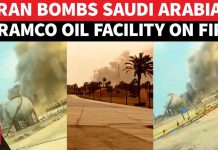
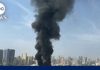
Footage emerging the next morning showed why the strikes drew instant attention: towering flames, dark smoke over western Tehran, and explosions near the impacted facilities. Reports described burning oil spilling into Tehran’s drainage system along Koohsar Boulevard, a detail that underscores how quickly an attack on fuel infrastructure can create cascading hazards beyond the immediate blast zone. Public-facing visuals made it difficult for Iranian authorities to downplay the scale of the damage.
“Fire Rivers” and Smoke Over Tehran Highlight Civilian Spillover Risks
Reports on March 8 described ongoing fires at Shahran, including destroyed oil trucks and persistent smoke. One of the most alarming operational details was fuel entering sewage or drainage channels and continuing to burn as it traveled, spreading flames across nearby areas. Even when a military claims it is targeting a specific supply chain, fuel depots sit close to neighborhoods, roads, and utilities—meaning secondary effects can threaten residents who had no role in the conflict.
Iran’s response included fuel-rationing changes in the capital. Iranian media reported Tehran’s personal fuel card quota was cut from 30 liters to 20 liters after the strikes, indicating that the attacks created immediate supply stress or distribution disruption. Ration cuts also function as an internal signal: authorities prioritize regime stability and security needs first, while ordinary families absorb the inconvenience and economic impact. The reported quota change put a measurable number on what the strikes meant for daily life.
Escalation Context: A Wider Campaign and Competing Narratives
The fuel-depot strikes landed inside a broader escalation that began with a large-scale U.S.-Israel attack on Feb. 28, followed by Iranian retaliation against U.S. bases and Israeli cities, according to reporting summarized across outlets. Separate analysis also described earlier Israeli strikes on IRGC-associated sites in Tehran on March 4, aimed at degrading command and retaliation capacity. In that context, targeting fuel depots fits a classic strategy: constrain an adversary’s ability to move forces and sustain operations.
Israel’s public messaging emphasized degrading what it called Iranian military infrastructure and limiting the fuel supply that supports Iran’s security apparatus. Iranian messaging, by contrast, cast the attacks as aggression and highlighted the resulting fuel constraints. For American readers who watched years of foreign-policy “strategic ambiguity” under prior leadership, the competing narratives matter less than the measurable facts: the strikes happened, the depots burned, and Tehran residents faced ration cuts—real-world consequences that do not disappear with press statements.
What to Watch: Energy Chokepoints, Retaliation Risk, and U.S. Interests
Energy infrastructure sits at the intersection of military power and civilian economics, and that is why these strikes carry outsized risk. Separate reporting and analysis in the research package referenced disruption to Gulf energy traffic and a sharp drop in vessels transiting the Strait of Hormuz during this period, illustrating how quickly markets react to perceived instability. If the conflict expands, Americans could feel it through higher prices and supply uncertainty—exactly the kind of kitchen-table pressure voters demanded Washington stop ignoring.
From a constitutional, common-sense perspective, this episode also reinforces why energy independence and credible deterrence remain core national interests. The research provided does not establish U.S. involvement in the specific March 7 fuel-depot strikes, even while it describes broader U.S.-Israel operations beginning Feb. 28. With key details still contested, the public’s best guide is verified reporting: confirmed strikes, visible fires, rationing changes, and continued volatility that can reach U.S. households through global energy exposure.
Sources:
https://understandingwar.org/research/middle-east/iran-update-evening-special-report-march-4-2026/