

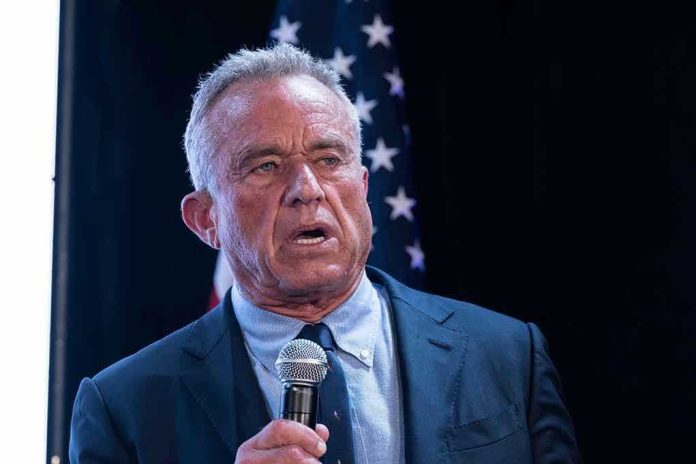
HHS Secretary Robert F. Kennedy Jr. confronted Senator Elizabeth Warren during a fiery Senate Finance Committee hearing, exposing a rare intersection where Washington’s healthcare reform rhetoric collides with entrenched industry interests—yet partisan battles over vaccine policy threaten to derail reforms both sides claim to support.
Story Snapshot
- RFK Jr. and Sen. Warren clashed during April 22 budget hearing over vaccine access and Trump administration health policies
- Trump’s 2027 budget proposes revolutionary payment reforms to address 38% pay gap between primary care doctors and specialists
- Unlikely alignment emerges between RFK Jr., Dr. Oz, and Warren on dismantling industry control over physician payments
- Partisan vaccine disputes overshadow potential bipartisan breakthrough on addressing primary care shortages
Heated Exchange Reveals Deep Partisan Divide
Senator Elizabeth Warren grilled HHS Secretary Robert F. Kennedy Jr. during testimony on President Trump’s 2027 budget request before the Senate Finance Committee on April 22, 2026. The Massachusetts Democrat pressed Kennedy on vaccine access policies, particularly COVID-19 shots and other immunizations, in a confrontation described as visibly tense. Warren’s pointed questioning focused on accountability for vaccine oversight and budget allocations, highlighting the ongoing friction between Democratic lawmakers and Trump’s second-term health leadership. The exchange underscored how partisan conflict continues to dominate healthcare debates even when underlying policy goals may align.
JUST NOW: RFK Jr. calls out Sen. Elizabeth Warren for criticizing the administration's push to lower health care costs for the American people – telling her Congress has more power to help consumers than he does.
WARREN: “You and Donald Trump are actually making the problem… pic.twitter.com/9ylgMHB9GV
— Fox News (@FoxNews) April 22, 2026
This public clash follows earlier tensions dating to January 2025, when Warren raised ethics concerns about Kennedy’s personal financial interests in HPV vaccine lawsuits. Kennedy pledged to cease collecting fees from those cases, but Warren’s scrutiny has persisted throughout his tenure as HHS Secretary. The Senator’s aggressive oversight reflects broader Democratic concerns about Kennedy’s controversial vaccine skepticism history and its influence on federal health policy. For conservatives watching, Warren’s attacks exemplify how establishment politicians weaponize hearings to obstruct reforms that challenge the healthcare status quo rather than engaging substantively with policy merits.
Administration Targets Root Causes of Healthcare Crisis
Beneath the partisan fireworks lies a substantive policy proposal that exposes uncomfortable truths about America’s broken healthcare system. The Trump administration’s 2027 budget includes reforms to physician payment structures that currently pay specialists 38% more than primary care doctors despite similar training requirements. This payment disparity has created severe primary care shortages, particularly in rural and underserved communities where Americans struggle to access basic medical services. Kennedy, alongside Trump health official Dr. Oz, is pushing to challenge what they describe as industry groups’ stranglehold on payment models that prioritize specialized procedures over preventive primary care.
The proposed reforms would shift funding toward primary care physicians, addressing what policy experts recognize as an underrated problem in American medicine. Current payment structures incentivize doctors to specialize rather than provide frontline care, leaving millions without accessible family physicians. This creates higher overall healthcare costs as patients resort to emergency rooms for routine issues or delay treatment until conditions worsen. For Americans frustrated by skyrocketing medical expenses and limited access to doctors, these reforms target the root cause rather than applying superficial fixes. The administration’s willingness to confront powerful specialty lobbies and medical associations represents the kind of swamp-draining action that resonates with voters tired of industry-captured policymaking.
Unexpected Alliance Exposes Washington’s Contradictions
The most revealing aspect of this controversy is the unexpected alignment between Kennedy, Dr. Oz, and Senator Warren on challenging industry control over physician payments. Warren has built her political brand criticizing pharmaceutical pricing and corporate capture of healthcare policy, yet she now attacks an administration pursuing similar objectives. This contradiction highlights how partisan tribalism prevents Washington from addressing shared concerns about industry influence. Both conservative and liberal Americans recognize that healthcare lobbyists wield excessive power over policies that determine whether families can afford or access medical care, yet elected officials prioritize political theater over substantive reform.
The primary care payment reforms could deliver tangible benefits for everyday Americans across the political spectrum. Higher compensation for family doctors would encourage more medical students to enter primary care, improving access in communities currently experiencing physician shortages. Better primary care access reduces overall healthcare costs by catching health problems early and managing chronic conditions effectively. Rural areas and working-class communities would particularly benefit from increased primary care availability. However, the proposal faces fierce opposition from specialty medical associations and established healthcare interests that profit from current payment structures. Whether Republicans can overcome both Democratic obstruction and industry lobbying to implement these reforms will test their commitment to dismantling the deep state apparatus that serves elites rather than ordinary citizens struggling to achieve the American Dream.
Sources:
RFK Jr., Dr. Oz, and Elizabeth Warren Are Teaming Up
Watch: Warren and RFK Jr. clash over vaccine access
RFK Jr. says he’ll stop collecting fees from HPV vaccine lawsuit, but other ethics questions remain