
Two pilots died and dozens suffered injuries when a landing airliner collided with a fire truck that air traffic control had cleared onto an active runway at one of America’s busiest airports, exposing critical questions about coordination protocols during overlapping emergencies.
Story Snapshot
- Air Canada Express Flight 8646 struck a Port Authority fire truck on LaGuardia’s Runway 4 at 11:45 p.m. on March 22, 2026, killing both pilots and injuring 41 of the 76 people aboard
- Air traffic control cleared the emergency vehicle to cross the active runway while responding to a separate United Airlines incident, then issued a frantic stop command seconds before impact
- Transportation Secretary Sean Duffy debunked rumors of single-controller staffing but pressed Congress for air traffic control funding upgrades
- The NTSB launched a full investigation into the first fatal LaGuardia crash in over three decades, with Runway 4 closed until Friday and ripple effects across New York aviation
When Emergency Response Becomes the Emergency
The sequence of events that turned LaGuardia Airport into a disaster scene began innocuously enough. A United Airlines flight aborted its takeoff due to a cabin odor, triggering a standard emergency response protocol. Port Authority firefighters dispatched their Aircraft Rescue and Firefighting vehicle to the scene, receiving clearance from air traffic control to cross Runway 4 at the Delta intersection. What happened next illustrates the razor-thin margins separating routine operations from catastrophe at major airports. As the ARFF truck entered the runway, Flight 8646 was decelerating after landing at approximately 100 miles per hour, its pilots unaware of the obstacle ahead.
Audio recordings captured the controller’s desperate attempt to avert disaster. The transmission “Stop, stop, stop, truck one” came too late. The CRJ-900 regional jet, carrying 72 passengers and four crew members from Montreal, plowed into the fire truck with devastating force. The impact killed both pilots instantly, young aviators at the start of their careers according to Air Canada representatives. The aircraft’s nose crumpled, and passengers faced a terrifying evacuation through emergency exits while first responders scrambled to manage casualties. Port Authority Executive Director Kathryn Garcia reported 41 people hospitalized, with 32 released by Monday morning. The two firefighters in the struck vehicle survived with stable injuries.
The Controller’s Confession and the Staffing Controversy
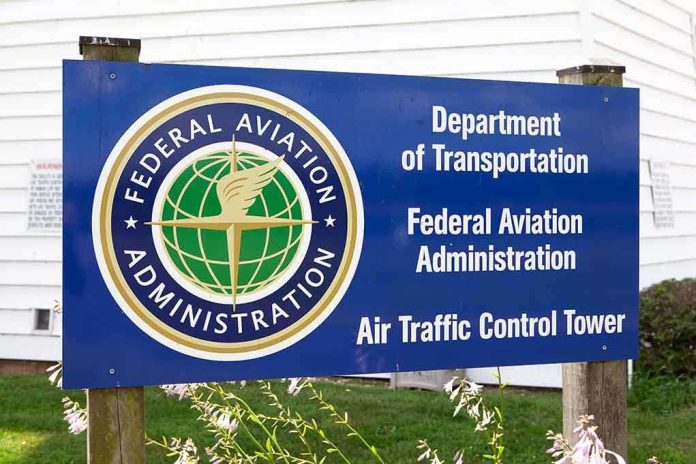
The air traffic control audio revealed something else troubling beyond the failed stop command. The controller acknowledged distraction from the earlier United Airlines emergency, a candid admission that raises uncomfortable questions about managing simultaneous incidents at congested airports. Transportation Secretary Sean Duffy moved quickly to address rumors spreading through aviation communities and social media that LaGuardia’s tower operated with only a single controller that night. Duffy explicitly debunked this claim, asserting the tower was properly staffed. Yet his defensive posture underscored broader anxieties about air traffic control resources that have plagued the Federal Aviation Administration for years.
FAA Administrator Bryan Bedford confirmed the basic sequence: the controller cleared the fire truck onto Runway 4, then issued the stop command as Flight 8646 approached. Bedford declined to speculate on fault, appropriately deferring to the National Transportation Safety Board’s investigation. This restraint contrasts with Duffy’s more politically charged messaging. The Transportation Secretary proclaimed his team was “working our hearts out for safety” while simultaneously leveraging the tragedy to pressure Congress for increased air traffic control funding. The timing was awkward but predictable. Federal agencies rarely waste crises that validate their budget requests, and the FAA has legitimate modernization needs that predate this accident.
Runway Incursions and America’s Aviation Blind Spot
The LaGuardia collision belongs to a category of aviation incidents that should terrify anyone who flies regularly: runway incursions. The FAA reports approximately 1,000 unauthorized runway entries annually across the United States, though fatal outcomes remain mercifully rare. Recent close calls at Boston, JFK, and other major hubs prompted safety directives, yet the fundamental problem persists. Ground operations at busy airports involve a complex choreography of landing aircraft, departing planes, emergency vehicles, maintenance equipment, and service trucks. One miscommunication or moment of distraction can produce catastrophic results, as LaGuardia demonstrated with brutal clarity.
The NTSB deployed its “go-team” to LaGuardia within hours, initiating what will likely become a months-long investigation into air traffic control procedures, emergency vehicle protocols, and communication systems. The Canadian Transportation Safety Board joined the probe given Air Canada’s involvement, adding international scrutiny to an already high-profile case. New York Governor Kathy Hochul and Mayor Zohran Mamdani praised first responders while absorbing the shock of LaGuardia’s first fatal crash since the early 1990s. The airport reopened with reduced capacity by Monday afternoon, but Runway 4 remained closed until Friday, forcing cancellations and reroutes to JFK and Newark that rippled through the national aviation system.
Questions That Demand Uncomfortable Answers
The preliminary facts point toward human error in air traffic control decision-making, compounded by the challenge of managing overlapping emergencies. The controller’s admission of distraction suggests a potential breakdown in situational awareness, the mental model controllers must maintain of every aircraft and vehicle under their supervision. Whether this represents individual failure, inadequate training, insufficient staffing, or systemic protocol deficiencies will emerge through the NTSB investigation. Conservative principles of accountability demand honest answers rather than bureaucratic evasion. If controllers lack resources or support to safely manage complex scenarios, taxpayers deserve to know. If protocols failed to account for predictable emergency response conflicts, those protocols require immediate revision.
What DOT, NTSB Are Saying About the LaGuardia Crashhttps://t.co/eMPWv1iW1D
— RedState (@RedState) March 23, 2026
Duffy’s push for congressional funding raises legitimate questions about priorities. The FAA’s NextGen modernization program has languished for years, struggling with implementation challenges and cost overruns. Throwing money at dysfunctional systems rarely produces solutions that improve safety. What matters more than budget increases is whether the FAA can demonstrate competent stewardship of existing resources and articulate specific improvements that funding would enable. The families of two dead pilots and dozens of injured passengers deserve better than political theater masquerading as aviation safety policy. They deserve a transportation infrastructure that doesn’t require tragic reminders to function properly.
Sources:
CBS New York – LaGuardia Plane Crash Airport Air Canada
FAA – Statement Air Canada Express Incident LaGuardia Airport
WUNC – LaGuardia Reopens After the Crash That Killed 2 and Hurt Dozens