
A Michigan synagogue attack shows how fast foreign conflict and failed threat-screening can collide on American soil—until one last line of defense stops it.
Story Snapshot
- Authorities say Ayman Mohamad Ghazali, a Lebanese-born U.S. citizen, rammed a truck into Temple Israel in West Bloomfield, Michigan, then exchanged gunfire with security before taking his own life.
- Investigators say Ghazali had recently suffered major family losses tied to an Israeli strike in Lebanon; officials have not confirmed a final motive.
- The synagogue’s security posture—training, drills, and onsite personnel—helped prevent congregants from being harmed.
- Dozens of responding officers were treated for smoke inhalation, highlighting the “secondary” toll these incidents inflict on first responders.
What happened at Temple Israel—and why the outcome could have been worse
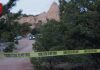
Officials say the March 12, 2026 attack unfolded in broad daylight at Temple Israel in West Bloomfield, near Detroit. Ghazali allegedly waited in the parking lot for more than two hours before driving a truck through the synagogue’s doors and into a hallway. The truck carried fireworks and flammable liquids that ignited after the vehicle became lodged. Security personnel exchanged gunfire with him, and he later died from a self-inflicted gunshot wound.
Authorities reported one security guard was injured after being struck by the vehicle, while no congregants were harmed. The response, however, carried a significant cost: dozens of officers suffered smoke inhalation during the incident, with reports indicating roughly 50 or more required hospital evaluation and many were later released. The FBI and local officials have treated the case as targeted violence against the Jewish community while the motive investigation continues.
The ex-wife’s 911 call and the limits of “see something, say something”
Reporting indicates Ghazali’s ex-wife contacted authorities after he called her in a way that raised alarms, including concern he was suicidal and discussion about arrangements for their children. That type of warning is exactly what public-safety messaging encourages: a family member recognizes a destabilizing moment, alerts police, and tries to intervene before tragedy. Even so, the case underscores how narrow the window can be between a credible welfare concern and a full-scale attack.
Based on the available reporting, the call did not lead to a prevention stop before Ghazali reached the synagogue. That is not a knock on the ex-wife, who acted, or on law enforcement, which often must work with incomplete information and rapidly evolving facts. It is a reminder that Americans are routinely asked to rely on institutions that can only respond as fast as the legal process and situational awareness allow—while threats can move at the speed of a steering wheel and a match.
A legal immigrant, a naturalized citizen, and persistent screening questions
Federal officials said Ghazali entered the United States legally in 2011 on a spousal visa, later becoming a naturalized citizen in 2016. Investigators also said he was not on a terrorism watchlist and had no prior criminal record. At the same time, reporting noted he had “flagged” Hezbollah contacts, even though officials did not identify him as a member of Hezbollah. Those facts together fuel a familiar public concern: what “flagged” means in practice, and when it triggers meaningful scrutiny.
The Constitution protects due process for citizens and non-citizens alike, and responsible policy must avoid guilt-by-association. Still, Americans have a legitimate interest in whether national-security databases, vetting processes, and interagency coordination are calibrated for today’s threat environment—where lone actors can be motivated by personal grievances tied to overseas conflict. The public facts here show both realities at once: lawful status and no watchlist placement, alongside warning indicators that did not amount to an intervention.
Foreign war, domestic targets: what investigators can confirm—and what they can’t
Authorities and reporting connected the timeline to the March 5 deaths of Ghazali’s relatives during an Israeli strike in Lebanon that reportedly killed his two brothers, identified as Hezbollah rocket unit members, along with other family members. Investigators have not publicly finalized a motive, but the sequence is clear: days after those deaths, Ghazali purchased thousands of dollars in fireworks and then carried out the attack. Officials have described him as devastated and increasingly isolated in the period leading up to March 12.
Even without a final motive finding, the choice of target matters. A synagogue is not a random location; it is a faith community with a long history of being threatened and attacked. That is why many Jewish institutions have invested heavily in security—often at great cost to congregants and donors—just to hold services safely. In this case, the synagogue had reportedly bolstered preparedness, including training and drills, and it resumed services shortly after with heightened precautions.
Man who attacked a Michigan synagogue was suicidal, ex-wife told police in 911 call https://t.co/r4xM6bbyPz
— EYEWITNESS NEWS (@cnyhomepage) March 17, 2026
For conservatives, the practical takeaway is not to politicize grief, but to face a sober reality: public safety depends on layered defenses. When prevention fails—whether because warning signs are incomplete, the watchlist threshold is too high, or agencies cannot act in time—the last line becomes trained security and an alert community. That is not “fearmongering”; it is the hard-earned lesson of a country where soft targets are repeatedly tested, and where preparedness often makes the difference between property damage and mass casualty tragedy.
Sources:
https://www.cbsnews.com/news/synagogue-shooting-michigan-what-we-know/
https://en.wikipedia.org/wiki/Temple_Israel_synagogue_attack