

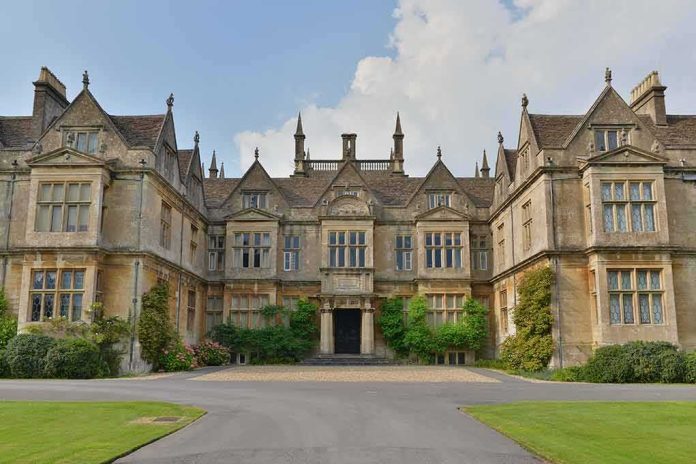
The transformation of Trent Park from a discreet wartime listening post for captured Nazi generals into the Trent Park House of Secrets museum is one of the clearest examples of how intelligence history, once literally buried in the walls, is now being recast as public heritage.
Key Points
- Trent Park was a stately home requisitioned in the Second World War to hold high-ranking German prisoners whose conversations were secretly recorded by British intelligence.
- The new Trent Park House of Secrets museum restores the mansion’s interwar glamour upstairs while reconstructing the hidden surveillance operation in its basement.
- A team of German‑speaking “secret listeners,” largely Jewish refugees, monitored and transcribed the prisoners’ conversations, generating intelligence on weapons programs and war crimes.
- The museum’s opening follows a decade‑long campaign and major restoration, raising broader questions about how museums turn covert operations into accessible, credible narratives of the past.
From Country House to Intelligence Asset
To understand the museum, you have to start with the building itself. Trent Park began as one of London’s grand country estates, part of Enfield Chase, and by the early 20th century it had become the home of Sir Philip Sassoon, a politically connected aristocrat whose guest lists included Winston Churchill, Charlie Chaplin, Fred Astaire, and senior members of the royal family. The house functioned as a glamorous social hub in the 1920s and 1930s—a setting of conspicuous comfort, art, and status. That ambience is not incidental; it later became a tool of war.
When Sassoon died in June 1939, the British state moved quickly. Within months the government requisitioned Trent Park for wartime use, initially as a holding centre for captured Luftwaffe pilots and then, more decisively, as a specialized prisoner‑of‑war camp for senior German officers. Officially the site was “No. 11 Camp,” a POW facility on the outskirts of London. Unofficially, it was a highly controlled stage set: a stately home in which every wall—and eventually, many of the furnishings—could listen.
The “House Full of Spies”: How the Operation Worked
What distinguished Trent Park from other POW camps was not the prisoners’ rank alone but the method used to mine their conversations. British military intelligence, through MI19, fitted rooms with hidden microphones and wired them to a basement listening centre. These devices were not limited to obvious fixtures. Reporting on the site’s wartime use describes bugs concealed in walls, light fittings, plant pots, billiard tables, even garden benches—anything that could unobtrusively sit near relaxed conversations without arousing suspicion.
The prisoners were treated strikingly well for men captured from a hostile army. Accounts describe over 80 generals and more than 100 high‑ranking Germans passing through Trent Park, served by valets, given special rations including whisky, and allowed walks in the grounds or even day trips into London. The generous treatment was deliberate. The goal was to keep officers talking freely—to one another, not to interrogators—on the assumption that candid peer conversation would reveal more than formal questioning ever could.
Downstairs, the reality was very different. In the basement, teams of “secret listeners” monitored live feeds from the microphones, took shorthand notes, and produced transcripts for analysis. The operation was one node in a wider system of “M‑Room” intercept sites, but Trent Park was distinctive in focusing on the German military elite and in the technical sophistication of its wiring.
The Secret Listeners: Refugees Turned Intelligence Professionals
The story that the museum places at its ethical and emotional centre is that of the listeners themselves. Many were German‑speaking Jewish refugees from Germany and Austria, men who had fled Nazi persecution and were now deployed for their linguistic and cultural fluency. Their work required more than language: it demanded sensitivity to dialect, military jargon, regional attitudes, and the subtext of conversations among officers steeped in Prussian traditions of honor.
Contemporary coverage and institutional material repeatedly highlight individual figures such as Ernst Lederer, a refugee from Czechoslovakia and grandfather of comedian Helen Lederer, who worked as a listener at Trent Park. His role remained largely unspoken during his lifetime, only surfacing through family testimony and later historical work. The National Lottery Heritage Fund’s grant of £250,000 to Trent Park Museum Trust explicitly targets these “secret listeners” stories—an effort to recover personnel histories that were suppressed by wartime secrecy and later overshadowed by more famous intelligence narratives like Bletchley Park.
Quantitative claims about the scale of the operation vary across sources—figures range from “3,000 conversations recorded at Trent Park” to much larger totals when all associated M‑Room sites are counted. What is consistent is the qualitative picture: the listeners produced a substantial body of transcripts that were analysed for references to weapons development, operational planning, and attitudes toward the Nazi regime and its crimes.
Intelligence Yield: Rockets, War Crimes, and Military Minds
How much difference did Trent Park actually make to the course of the war? The museum and related reporting make specific claims. Heritage and museum sources credit the site with contributing intelligence on Hitler’s weapons programmes—especially long‑range rockets—and on atrocities being carried out in occupied Europe. These intercepts are described as feeding into scientific intelligence assessments and, in some accounts, informing the RAF’s targeting of facilities such as the Peenemünde research centre, where V‑weapons were developed.
Equally important, though perhaps less operationally tangible, were the insights into the German army’s own understanding of the war. Officers spoke candidly about the Eastern Front, about mass shootings, and about the murder of Jews, undermining later post‑war narratives that the regular army was ignorant of or detached from such crimes. For historians of the Wehrmacht, these conversations are evidence that knowledge of atrocities extended well beyond the SS and that guilt and unease were part of the internal discourse even before defeat.
It is crucial to note that in the public record accessible today, these claims often come mediated through secondary reporting or museum interpretation rather than a full transcript corpus. The National Archives do hold M‑Room material, but most general‑audience accounts rely on curated selections. The museum’s long‑term research programme—including its Lottery‑funded project on the listeners—is aimed at closing that gap by systematically connecting exhibition narratives to underlying archival documents.
From Secret Camp to Public Museum
The opening of Trent Park House of Secrets is the culmination of nearly a decade of local activism, institutional negotiation, and physical restoration. After the house ceased its role as a university campus and stood empty from 2012, campaigners argued that its wartime significance justified public access rather than complete conversion into private housing. When developer Berkeley Homes secured permission in 2017 to turn the upper floors into luxury flats, part of the bargain was a commitment to support a museum on the ground floor and basement.
That museum is now a reality. The House of Secrets presents what its own materials describe as “an untold story of espionage and deception,” combining stately‑home interpretation with intelligence history. Visitors move from reconstructed interwar spaces—evoking Sassoon’s parties and political salons—down into exhibition areas that recreate listening posts, display disguised microphones, and explain how surveillance wiring ran through the building fabric.
Tickets are priced on a mid‑range London model (around £14 for adults, with concessions for children and students), and the museum sits within a 413‑acre country park that functions as a wider public amenity. In this sense, the House of Secrets is both a specialist site for wartime history enthusiasts and a family‑friendly destination folded into North London’s leisure landscape.
Curating Secrecy: How Museums Tell Intelligence Stories
Trent Park’s new museum belongs to a wider trend: the conversion of formerly secret military or intelligence facilities into heritage attractions. Historic England has already recognised Trent Park House as being of national and international significance on a level with Bletchley Park, the code‑breaking centre that pioneered this genre of modern “intelligence museum.” Both sites face the same curatorial challenge: translating complex, covert operations into narratives that feel intelligible, trustworthy, and engaging to non‑specialists.
In practice, that means the House of Secrets must balance dramatization with documentation. Its very name, the emphasis on “untold stories” and “hidden history,” and media descriptions of walls, lamps, and garden benches that “had ears” all push toward a cinematic framing. At the same time, the museum carries a responsibility to distinguish clearly between well‑evidenced facts (such as the presence of concealed microphones and the existence of MI19’s listening programme) and interpretive claims about impact or motive that necessarily rest on partial records.
This tension is not unique to Trent Park. Exhibitions such as “Spies, Lies and Deception” at the Imperial War Museum explicitly grapple with how to present deception, clandestine work, and psychological operations without either glamorising them or flattening their moral and human complexity.[Spies video] Trent Park’s House of Secrets sits in that lineage, but with a more focused brief: a single house, a single core operation, and a particular cast of characters—German generals upstairs, refugee listeners below.
Trent Park, Britain's Secret WWII Spy Mansion, Opens As A Museum https://t.co/TowBT0xwj1
— The Right News, Right Now. (@BradPorcellato) August 5, 2026
Why This Story Resonates Now
For many visitors, the most arresting aspect of Trent Park’s story is its moral inversion. The Nazi regime drove Jewish families out of their homes, stripped them of citizenship, and murdered their relatives. Some of those same refugees then used their expertise to help Britain penetrate the private conversations of the regime’s own generals, producing intelligence that strengthened the Allied war effort and exposed the army’s complicity in atrocity. The House of Secrets foregrounds this irony, not as a simple tale of justice, but as a reminder of how displaced people have repeatedly been central to the functioning of liberal democracies in wartime.
At the same time, the museum offers a more intimate perspective on high command. Rather than treating German generals as distant names in operational histories, it invites visitors to imagine them at breakfast tables, billiard games, and walks in the park—talking freely because they believed themselves among peers, unseen by the ears in the walls. The recordings, and now the exhibition, pull those moments back into view.
As with any heritage site built on secret archives, Trent Park’s narrative will evolve as research progresses and as curators refine how they present uncertainty. But the core reality—the mansion’s dual life as a glamorous social hub and a meticulously bugged intelligence facility, and the presence of refugee listeners in its basement—is now firmly part of the public record. The House of Secrets exists to make that record tangible, room by room.
Sources:
trentparkhouse.org.uk, bbc.com, londonist.com, facebook.com, barnetsociety.org.uk, enfielddispatch.co.uk, theartnewspaper.com, instagram.com, bbc.co.uk, en.wikipedia.org, museumsassociation.org, timesofisrael.com, ndtv.com, theguardian.com