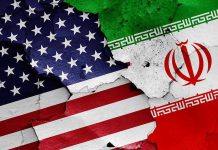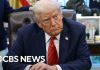

President Trump has publicly demanded veto power over Iran’s next Supreme Leader, declaring the slain Ayatollah Khamenei’s son “unacceptable” in an unprecedented assertion of American authority over the Islamic Republic’s internal succession—a move that reflects hard-won leverage after decades of failed diplomacy but raises urgent questions about sovereignty and regional stability.
Story Snapshot
- Trump explicitly rejects Mojtaba Khamenei as Iran’s next Supreme Leader, calling him a “lightweight” unfit to govern
- President compares Iran strategy to Venezuela model where U.S. forces ousted Maduro and installed cooperative leadership
- Ayatollah Ali Khamenei was killed in Israeli strike February 28, creating succession crisis within Iran’s clerical establishment
- Trump warns of renewed war within five years unless Iran installs leader committed to “harmony and peace” with U.S. interests
Trump Demands Voice in Tehran’s Leadership Transition
President Donald Trump stated in a March 5, 2026 Axios interview that he must personally participate in selecting Iran’s next Supreme Leader following Ayatollah Ali Khamenei’s death in an Israeli airstrike. Trump categorically dismissed Mojtaba Khamenei, the late leader’s son and a hardline cleric with Revolutionary Guards connections, as “unacceptable” and a “lightweight.” This marks the first time a U.S. president has explicitly demanded involvement in Iran’s internal clerical succession process, traditionally controlled by the Assembly of Experts, a body of staunchly anti-American Shi’ite clerics.
Venezuela Precedent Shapes Iran Strategy
Trump drew direct parallels to his handling of Venezuela, where U.S. forces ousted Nicolas Maduro on January 3, 2026, and established interim leader Delcy Rodriguez under explicit resource-access agreements favorable to American interests. The president emphasized his preference for regime modification rather than complete overthrow, seeking an Iranian leader who will bring stability and cooperation instead of continued confrontation. This approach distinguishes Trump’s position from traditional regime-change rhetoric that previously supported exiled figures like Reza Pahlavi, the Shah’s son who advocates complete secular transition and deems any clerical successor illegitimate.
Strategic Implications for American Security
Trump’s intervention follows years of maximum pressure campaign renewal, including reinstated sanctions throughout 2025 and failed nuclear negotiations where Iran rejected uranium enrichment limitations. The president warned that without a favorable leadership outcome in Tehran, the United States could return to war within five years—a sobering assessment that underscores the stakes for American security and Middle East stability. His demand for involvement reflects hard-earned military leverage gained through successful strikes that eliminated Khamenei, positioning Washington to influence outcomes previously determined solely by Iran’s theocratic establishment. This represents a practical application of strength-based diplomacy that prioritizes American interests over failed multilateral appeasement strategies.
Constitutional Concerns and Regional Dynamics
Trump’s unprecedented assertion raises questions about enforcement mechanisms and Iran’s sovereign succession process controlled by the Assembly of Experts. While the president leverages military success and economic pressure to influence Tehran’s decision, no formal framework exists for American veto power over Iran’s leadership selection. The situation creates short-term risks of Iranian reprisals or escalation while offering long-term potential to fracture clerical unity and enable internal reform aligned with U.S. security priorities. Regional actors including Saudi Arabia and Qatar monitor developments closely given nuclear proliferation risks and energy sector implications that echo Trump’s Venezuela resource-access model.
Sources:
Trump says he needs to be involved in selecting Iran’s next leader – The Straits Times
Trump to POLITICO: It’s time to look for new leadership in Iran – Politico
Trump demands role in choosing next Iran leader – The Independent
2025–2026 Iran–United States negotiations – Wikipedia