
Colombia’s 7.4 magnitude earthquake triggered a fast-moving emergency, with airports shut, rescue teams in the rubble, and casualty numbers still shifting.
Quick Take
- Officials said the quake killed at least 111 people and injured at least 87 as assessments continued.
- Authorities suspended flights at several western airports while engineers checked for damage.
- Local leaders in Pereira, Cali, and other hard-hit cities reported deaths, collapsed buildings, and trapped residents.
- The United Nations said damage included homes, health centers, schools, roads, and transport facilities.
Response Teams Raced to Stabilize the Scene
Colombian authorities moved quickly after the quake hit near San José del Palmar in Chocó. The United Nations said the government had activated emergency response mechanisms and was continuing search and rescue operations as the death toll rose. News reports said President Abelardo de la Espriella also convened an emergency meeting with the National Unit for Disaster Risk Management to review damage and coordinate the response.
That early response centered on the most urgent tasks: finding survivors, checking unsafe structures, and stopping people from entering damaged sites. The aviation authority suspended operations at airports in Pereira, Manizales, Quibdó, Armenia, Cartago, and Buenaventura while inspections were underway. That kind of shutdown can look like collapse from the outside, but in this case the reports described it as a safety step while crews checked buildings and runways.
Damage Spread Across Cities and Public Services
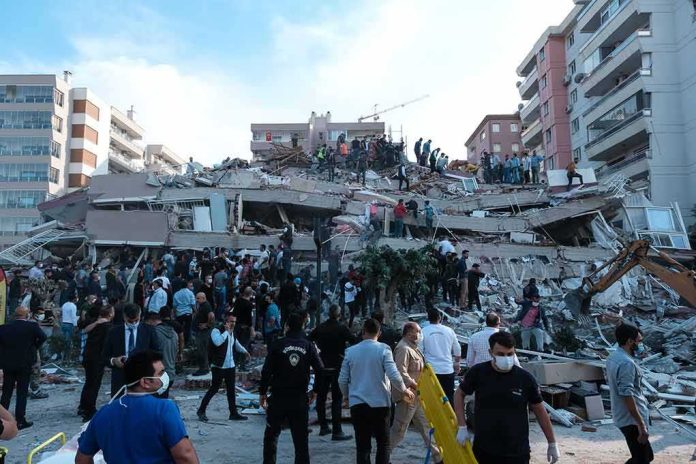
The damage was not limited to one city block or one local system. Reuters and other outlets reported dozens of collapsed buildings, damaged homes, and growing casualty counts as officials updated the picture hour by hour. The United Nations later said the official tally included 1,575 damaged homes, 37 destroyed homes, 61 collapsed buildings, 18 damaged health centers, and 52 damaged educational facilities. Those numbers show why the emergency response had to cover housing, hospitals, and transport at once.
Municipal leaders gave some of the clearest early snapshots from the ground. Reporters quoted officials in Pereira saying at least 18 people died there, while leaders in Cali said about 25 buildings collapsed and rescue crews were still searching for people trapped inside. The Associated Press described volunteers and rescue workers passing rubble hand to hand in Cali, a scene that underscored how quickly ordinary residents were pulled into the response.
Why the Early Numbers Changed So Fast
The public record shows a familiar disaster problem: the story moved faster than the paperwork. Early counts varied sharply across outlets, with death tolls reported at 20, 47, 69, and then 111 as more areas were reached and more reports were reconciled. That does not mean the response was fake or absent. It means officials were still building a full picture while rescue crews worked in damaged neighborhoods.
BREAKING / UPDATE: A powerful magnitude 7.4 earthquake struck western Colombia on the morning of Monday, August 10, 2026 (around 7:34 a.m. local time / 12:34 UTC), causing widespread destruction, collapsing buildings, and claiming at least 111 lives so far, with dozens more…
— Naija Daily Update (@9jaDailyUpdates) August 10, 2026
One clear fact stood out even as the totals changed: authorities said there was no tsunami threat. That mattered because it helped narrow the emergency to land-based rescue, damage checks, and public safety messaging. The quake also came with scientific confirmation from the United States Geological Survey and Colombia’s geological service, which placed it at magnitude 7.4 near San José del Palmar. In a country already strained by disasters, the event exposed how fast infrastructure, communication, and trust can come under pressure at the same time.
Sources:
youtube.com, cnn.com, theguardian.com, reuters.com, abcnews.com, bbc.com, foxweather.com