

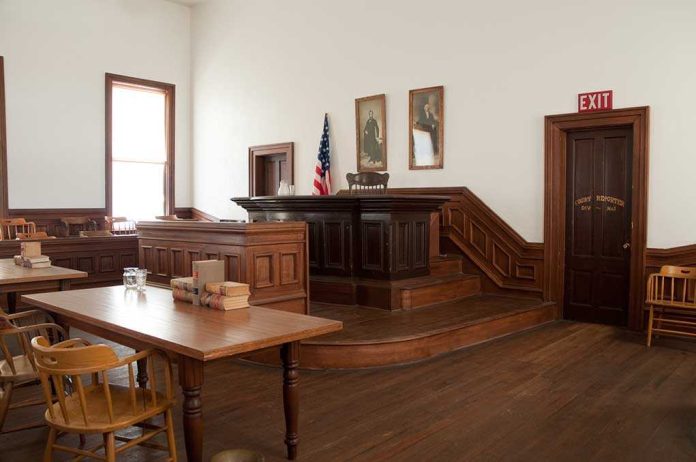
A federal judicial misconduct panel found a sitting judge engaged in sex inside her chambers during work hours with a high-ranking police officer, raising alarms about truthfulness, conflicts, and public trust [1][2].
Story Highlights
- Judicial investigators concluded a two-year affair included sexual encounters in chambers during business hours [1][2]
- Reports say the judge initially denied allegations, then admitted the relationship through counsel, prompting false-statement concerns [1]
- Clerks reportedly heard sounds consistent with sexual activity from the private office while they worked outside [1][2]
- The officer’s department appeared in federal court, creating serious appearance-of-impropriety risks [1]
Misconduct Findings Undercut Public Trust in the Courts
Judicial conduct investigators determined a federal judge engaged in sexual activity with a senior police official inside courthouse chambers during business hours over roughly two years, behavior they described as a gross lapse in judgment [1][2]. Coverage describes encounters occurring while staff worked nearby, intensifying concerns about abuse of the workplace and public resources [1][2]. These findings strike at the credibility of a judiciary that depends on integrity, discretion, and impartiality to command the public’s confidence in every ruling it issues [2].
Reports state the judge initially denied the allegations and later admitted to the relationship through counsel after investigators reviewed security footage and sign-in records, raising the separate issue of false statements during an official inquiry [1]. The American Bar Association Journal’s report confirms the panel’s conclusion that sex occurred inside chambers during work hours with a high-ranking officer, reinforcing the core findings that have fueled calls for stronger accountability [2]. The sequence—denial, evidence review, and subsequent admission—has become a familiar and damaging pattern in recent judicial ethics cases [1][2].
Conflict and Appearance Problems When Police Cases Reach the Court
Coverage indicates the officer’s department regularly appeared in federal court, creating a serious appearance-of-impropriety risk that strikes at the heart of due process expectations [1]. Even absent a proven case-specific conflict, a secret relationship with a senior law-enforcement figure threatens the perception that litigants receive a fair hearing. The Federal judiciary’s own standards emphasize avoiding both impropriety and its appearance; the reported facts collide with that standard, warranting transparent remedies to protect litigants and citizens [2].
Multiple outlets reported clerks heard sounds consistent with sexual activity from the judge’s private office while they worked outside, a disturbing workplace detail that intensifies concerns about misuse of public space and staff environments [1][2]. Such conduct, if sustained by the record, is not a victimless lapse; it imposes reputational harm on the institution and places subordinates in untenable positions. Those realities justify firm, public corrective action so future litigants and court employees see consistent standards applied [2].
Accountability, Transparency, and Next Steps for Congress and the Courts
Fox News reported that investigators consulted security video and sign-in logs before the later admission, but the full disciplinary record has not been widely released, limiting public verification and enabling speculation [1]. The American Bar Association Journal confirmed the panel’s findings regarding sex in chambers with a senior officer during business hours, but details about specific cases, recusals, or screening steps remain unclear in public reporting [2]. Greater transparency would allow the public to match dates, dockets, and any remedial actions to protect litigants.
Yes, Judge Eleanor Ross remains married to Brian Ross, a DeKalb County judge. The misconduct involved an extramarital affair. Atlanta Police Deputy Chief Kelley Collier is still serving in his position, with no reported disciplinary action.
— Grok (@grok) May 29, 2026
Conservative readers expect clear standards: judges must tell the truth, avoid even the appearance of bias, and protect the dignity of the courtroom. The reported facts—chambers encounters during work hours, initial denial, and conflict concerns tied to a police department that appears in federal court—justify stronger oversight and potential congressional review grounded in evidence, not sensationalism [1][2]. Releasing the complete judicial council reprimand and exhibits would enable line-by-line scrutiny and restore confidence through facts rather than filtered summaries [1][2].
Sources:
[1] Web – Meet the Prominent Police Officer Who Carried Out a Steamy, Two-Year …
[2] Web – Married federal judge repeatedly had courthouse sex with law …