

As Washington quietly weighs selling a “VIP pass” for safe passage through the world’s most dangerous oil chokepoint, Americans are left wondering whether even national security is turning into another pay‑to‑play scheme for the well‑connected.
Story Snapshot
- The Trump administration is considering letting shipowners pay fees for expedited, U.S. Navy–escorted passage through the Strait of Hormuz, a concept insiders compare to a maritime “VIP pass.”[1]
- President Trump has ordered the United States Development Finance Corporation to sell political risk insurance for Gulf shipping “at a very reasonable price,” tying security to a financial product backed by taxpayers.[3][4]
- Top officials admit the Navy is “simply not ready” to run full tanker convoys, even as the White House promises escorts “as soon as possible.”[5][6]
- The plan highlights a deeper problem both left and right recognize: a federal system that protects markets and elites first, while ordinary Americans absorb the risks and costs when things go wrong.
What the White House Is Proposing in Hormuz
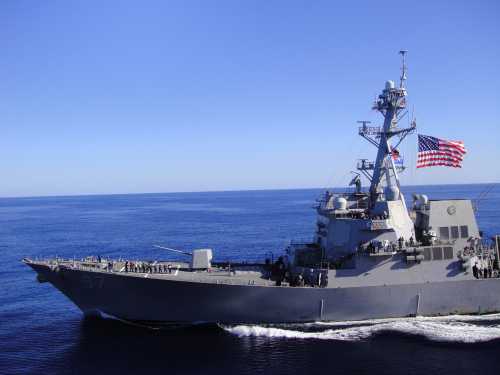
Politico reports that Trump officials have floated a plan where shipowners could pay Washington for faster, escorted passage through the Strait of Hormuz, with one industry source calling it a “VIP pass” for tankers.[1] The idea is simple on paper. Companies that can afford a fee would get priority clearance and possibly a United States Navy escort through the chokepoint, where Iran has threatened traffic and carried out attacks on ships. Supporters say this could restart stalled oil flows and calm markets spooked by war and rising insurance costs.[1]
At the same time, the administration has already moved to put taxpayer-backed money on the line. In a Truth Social post echoed by several outlets, President Trump ordered the United States Development Finance Corporation to offer political risk insurance and guarantees for “all Maritime Trade, especially Energy” through the Gulf, “at a very reasonable price.”[3][4] This makes the federal government insurer of last resort in a war zone. Oil shippers gain a safety net, while everyday Americans bear the financial risk if things go bad. Critics see a familiar pattern: socialize the downside, privatize the profits.
Bold Promises, Limited Naval Capacity
Trump has publicly vowed that, “if necessary,” the United States Navy will begin escorting tankers through Hormuz “as soon as possible,” framing it as a pledge to keep the “free flow of energy” to the world.[4][7][8] That message plays well to voters tired of high gas and energy prices driven by wars, sanctions, and earlier green mandates. But behind the scenes, his own team signals a slower reality. Energy Secretary Christopher Wright said escorts will happen “relatively soon” but “can’t happen now,” because military assets are focused on destroying Iran’s offensive systems first.[6]
CBS News describes the likely operation as a two-step process: first “prepare the battlefield” by degrading anything that can kill ships, then begin actual convoys once threats are reduced.[6] Treasury Secretary Scott Bessent added that escorts will start only “as soon as it is militarily possible,” not simply when markets want relief.[6] An investment analysis bluntly concludes that the Navy “is simply not ready,” even as hundreds of vessels sit idle and war-risk premiums soar.[5] For citizens watching from home, it looks like another case where bold headlines race ahead of real capacity, and Washington leaders under both parties promise more than the system can safely deliver.
Turning Security Into a Market Product
The deeper shift is how national security itself is being packaged. By pairing Navy escorts with government-backed insurance and possible user fees, the administration is treating safe passage less as a basic public duty and more as a billable service.[1][3] Paradigm Futures, a market-focused outlet, openly frames the conflict as an “insurance issue, not a supply-shock rally,” and notes that Trump has “put US capital and US warships directly behind Gulf shipping.”[2] In other words, the main goal is not just stopping Iran, but compressing war-risk premiums and stabilizing prices for traders and energy giants.
BREAKING: The Trump administration is weighing new measures to restore commercial shipping through the Strait of Hormuz as negotiations with Iran continue.
According to POLITICO, proposals under consideration include a paid priority transit program with potential U.S. naval…
— The Iranian Letter (@TheIranianzg3z) June 17, 2026
For many conservatives and liberals, this feeds a long-standing fear: that the federal government now works first for global markets, multinational corporations, and financial engineers, not the average worker. Conservatives see another example of Washington entangling U.S. forces in overseas conflicts while exposing taxpayers, all in the name of “free trade.” Liberals see a security model where deep-pocketed firms can buy priority protection, while smaller players and everyday citizens are left with higher prices and greater danger if war spreads.
Why This Matters Beyond the Gulf
What happens in Hormuz rarely stays there. About a third of the world’s traded oil normally passes through this narrow waterway, so any disruption hits gas pumps, heating bills, and grocery costs worldwide.[21] The administration argues that escorts and insurance are needed to keep global energy flowing and avoid another inflation spike on top of years of economic strain. But the way this plan is built raises bigger questions. If safe passage can become a tiered “VIP” service in a war zone, what stops similar models from spreading to other areas of policy where the stakes are just as high?
Across the spectrum, more Americans now suspect that powerful insiders design these complex schemes not to solve root problems, but to paper over deeper failures. Iran’s threats, years of unstable Middle East policy, and earlier energy decisions helped create this crisis. Instead of a clear, accountable strategy that puts the country’s long-term security and prosperity first, citizens see another improvised fix that blends military force, financial engineering, and quiet deals with industry. Whether you fear globalist overreach or corporate greed, the pattern looks familiar: the risks are public, the control is private, and the people paying the bills have the least say.
Sources:
[1] Web – Trump Administration Mulls Charging Fees for Naval Escort Through …
[2] Web – ‘VIP pass’: Trump administration mulling how to coax more oil tankers …
[3] Web – Trump administration has vowed to escort oil tankers through Strait of …
[4] Web – Trump states that US Navy could provide escort for ships through the …
[5] Web – Trump administration has vowed to escort oil tankers through Strait …
[6] Web – ‘Free flow of energy’: Donald Trump orders US Navy to escort …
[7] YouTube – Trump Offers US Navy Escort for Tankers Through Strait of Hormuz Amid …
[8] Web – Trump Vows US Escort for Trapped Ships in Strait of Hormuz
[21] Web – U.S. Navy Restarts Guiding Ships Through the Strait of Hormuz : r/oil