

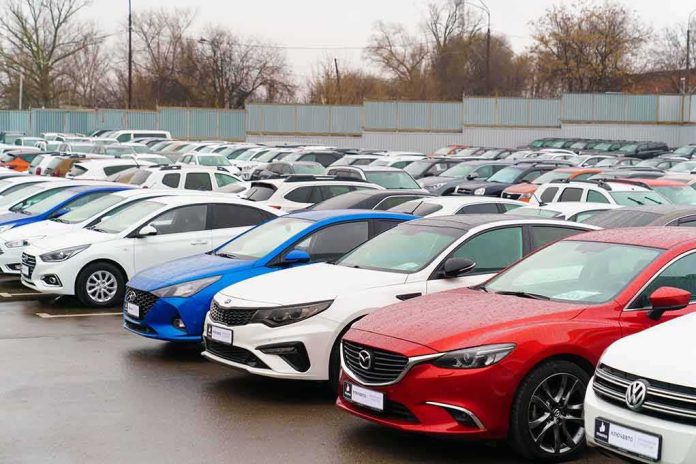
America’s record $20,000-plus gap between new and used car prices is pushing more families toward older used vehicles, with Toyota’s reputation for long-term reliability putting its aging sedans and crossovers near the top of the list.
Story Snapshot
- Average new cars now cost tens of thousands more than used ones, a record-breaking gap.
- Many households can no longer responsibly afford any new car under common budget rules.
- Older Toyotas are widely seen as durable value plays but are not the only rational choice.
- Total cost of ownership, financing rates, and safety features still matter as much as sticker price.
Record price gap is reshaping car buying decisions
Edmunds data for late 2024 showed the average new vehicle selling for about $47,542 and the average used vehicle for $27,177, a difference of $20,365 and the widest gap on record. Follow-up market coverage by finance outlets and auto sites confirmed the same gap level, noting that new cars had never been this far out of reach for typical buyers. By 2026, affordability research estimated the gap had grown a bit further, to about $20,347 on average for similar vehicles. Taken together, these numbers show a market where the “normal” path of buying new has become unrealistic for millions of Americans and where used vehicles are now the main way to stay mobile.
One 2026 study framed the situation bluntly: using a common 20/4/10 budget rule, roughly half of American households cannot responsibly afford any new car at all. Under that rule, even the cheapest new model requires an income right at the national median, leaving lower earners effectively locked out of the new car market. This reality echoes a broader frustration many Americans feel in other areas of life: wages and savings lag, while big-ticket costs like housing, health care, college, and transportation keep marching upward. When the basic act of getting to work by car demands more than a working family can safely spend, it reinforces the sense that the system is tilted toward lenders, automakers, and wealthy consumers instead of everyday drivers.
Why older used cars, and Toyotas in particular, look appealing
Because the price gap is so large, many analysts now say a three- or four-year-old vehicle is the financially responsible default for most buyers. A three-year-old car often costs 30 to 40 percent less than the same model new, while still offering several years of reliable use. Reliability-focused guides add that it is smart to choose brands and models with strong resale value and a track record of lasting past 150,000 miles when maintained. Toyota’s mainstream models — including Corolla, Camry, Prius, and RAV4 — are consistently described as emphasizing reliability and value, making them popular candidates for this strategy. This combination of lower upfront cost and perceived long life is why many shoppers narrow their search to older Toyotas when budgets are tight and trust in the broader market is low.
Used-car cost breakdowns reinforce that sticker savings can translate into real long-term savings when buyers pick durable vehicles and avoid overpriced loans. One 2026 analysis found that, even after accounting for higher interest rates on used-car loans, the lower purchase price and slower depreciation often leave buyers $20,000 to $25,000 better off over five years compared with buying new. Another financial comparison tool showed that, for most buyers, a two- to four-year-old car offers the best mix of price and remaining life, especially because new cars lose 20 to 25 percent of their value in the first year alone. In a time when many Americans feel squeezed by inflation, government policies, and corporate pricing decisions, the idea of “letting someone else eat the big depreciation hit” fits a broader instinct to avoid being the sucker in an unfair game.
The limits of the “only rational buy” claim
Some commentary has pushed a stronger claim: that old Toyotas are now the only rational buy in this distorted market. The evidence, however, does not go that far. While Toyota enjoys a strong reputation for reliability and used Toyotas can be smart buys, experts emphasize that the best choice depends on each driver’s budget, loan terms, mileage, and safety needs. Total cost of ownership tools stress that buyers must consider financing costs, fuel, insurance, maintenance, and resale value, not just the purchase price alone. In some cases, especially when used prices are unusually high for certain trucks and sport utility vehicles, buying new can actually deliver more value per dollar over time.
This is what peace of mind looks like.
The right car doesn't need excuses.
Foreign Used Toyota Corolla LE 2013
Price: 12 Million Naira Only.
Key Entry
Key Start Ignition
AM/FM/CD/MP3 Audio System
Bluetooth Hands Free Calling
USB & AUX Connectivity
Steering Wheel Audio… pic.twitter.com/OBRfaxdT78— Matarab Autos RC:8000162. (@Matarab_Autos) July 24, 2026
There are also tradeoffs that come with older cars, even from reliable brands. Consumer and industry reports warn that used vehicles can carry higher interest rates, shorter or no warranty coverage, and a greater risk of surprise repairs once factory protections expire. Safety and technology features have advanced quickly, and newer vehicles may offer better crash protection, driver-assistance systems, and emissions performance than cars built a decade ago. Analysts therefore advise caution with high-mileage older vehicles, suggesting buyers focus on thorough inspections, maintenance records, and realistic repair budgets rather than assuming any “old Toyota” is a safe bet. The message from serious research is clear: older Toyotas can be very rational buys, but they are part of a wider set of sound used-car options, not a magic exception to the hard math of car ownership.
Sources:
military.com, edmunds.com, digitaldealer.com, youtube.com, webuyanycarusa.com, carscoops.com, whatcarcaniafford.com, cnbc.com, cars.zone, finance.yahoo.com