
A van-and-knife attack that killed a woman and injured dozens at Berlin’s Pride celebration is now forcing Germans to ask how much their leaders really protect public safety and core freedoms.
Story Snapshot
- One woman was killed and more than a dozen people were injured when a vehicle hit crowds near Berlin’s Christopher Street Day Pride event.
- German leaders quickly labeled the incident an Islamist terrorist attack and launched a major manhunt for the suspect.
- Police shot and killed the 21‑year‑old suspect a day later, after he allegedly charged officers with a weapon during an arrest attempt.
- The attack shut down one of Europe’s largest Pride events and deepened public doubts about elite leadership, immigration policy, and security at big gatherings.
How the Berlin Pride Attack Unfolded
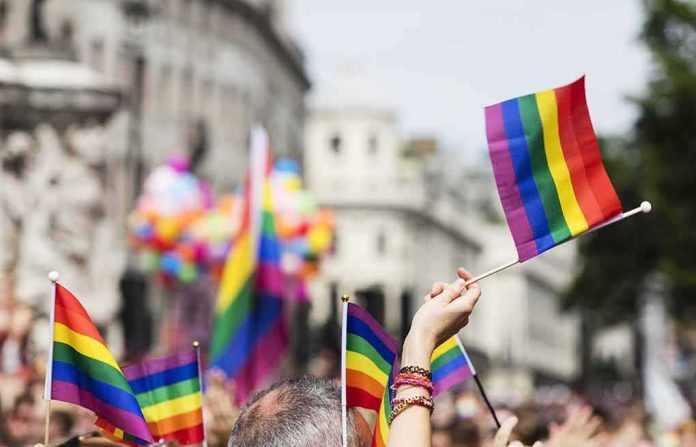
On Saturday night in Berlin, a white van drove into a crowd near the Christopher Street Day Pride celebration at about 10 p.m., turning a day of joy into chaos within seconds. Police say the vehicle struck people in or near Tiergarten park, close to the Brandenburg Gate, an area packed with attendees leaving or lingering after the main parade. One woman died at the scene, while between 16 and 29 others suffered injuries, including several listed as critical.Authorities report that after the crash, the driver fled, and early witness accounts also mention a bladed weapon, suggesting a combined vehicle-and-knife assault.
Berlin officers moved in with a large deployment, sealed off streets, and ordered people to clear the festival area as emergency crews treated the wounded and tried to stabilize the scene. Police quickly identified a 21‑year‑old German citizen with Lebanese roots, known to them from the Islamist scene, as the main suspect in the attack. A huge manhunt followed through the night and into Sunday, with public alerts and warnings that the suspect was dangerous and might have support from extremist networks. This rapid mobilization showed that local officers understood the threat, but it also exposed weaknesses in preventing known radicals from striking crowded public events.
Authorities Call It Islamist Terror, But Facts Are Still Settling
Germany’s interior minister, Alexander Dobrindt, told the country that “everything we see here” points to an Islamist terror attack, and national outlets repeated that phrase almost immediately. Officials say the suspect, often referred to as Abdul B., had ties to Islamist circles and allegedly tried in the past to join the group that calls itself the Islamic State. By Sunday, the case was formally classified as an Islamist terrorist incident, and leaders framed it as an assault on Germany’s free and open society, not only on LGBTQ citizens.
Yet even as politicians spoke in strong terms, investigators admitted they still did not know the full motive or exact sequence of the attack. Injury counts shifted from 16 to 29 in different reports, and sources differed over whether the van hit people inside the official event zone or just outside it. Police spokesman Florian Nath stressed that officers lacked clear information on any accomplices and on the suspect’s detailed role early on, showing how much about the case remained fluid while the terrorism label hardened in public debate.
Pride Events Shut Down and a City Mourns
Organizers canceled the remaining Christopher Street Day events after the attack, cutting short what is usually a huge weekend of visibility and celebration for LGBTQ people across Germany. The parade and closing party, which had brought hundreds of thousands into central Berlin, stopped as music was cut and crowds were told to evacuate the area for their own safety. For many, the sudden end of the festival felt like a victory for fear, with a single attacker able to silence an entire city’s celebration, at least for the night.
By Sunday, candles, flowers, and handwritten notes began to appear near the crash site, as Berlin residents gathered to pay respects and support victims they did not know personally. Mayor Kai Wegner called the incident “an attack on our free and open society,” and urged people not to let violence drive them off the streets or divide them further. These messages tried to hold the city together, but for many Germans—both conservative and liberal—the event confirmed deeper worries that the political class talks about values yet fails to stop known extremists from acting in the first place.
What This Means for Trust in Government and Public Safety
For years, Germans have watched a pattern repeat: warnings about radical Islam, angry debates over immigration and integration, and then sudden attacks in public spaces that raise the question of whether elites truly take everyday safety seriously. The Berlin Pride incident fits that pattern, with a suspect reportedly on police radar still able to drive a van into a dense crowd near one of Europe’s biggest Pride events. People on the right see this as more proof that leaders downplayed extremist threats; many on the left worry that every new attack will be used to push harsh policies that still do not solve root problems.
Across the spectrum, a growing number of citizens now share a core fear: that the state reacts loudly after each crisis, but never fixes the systems that allowed it. The rapid terrorism branding, uneven casualty counts, and lack of clear answers about security gaps at the Berlin event all feed suspicion that those in charge care more about speeches than solutions. As Germans mourn the woman who died and hope the injured recover, the bigger test will be whether this attack leads to real changes in tracking violent extremists and protecting crowded events—or becomes just another tragedy folded into the country’s long list of unanswered warnings.
Sources:
youtube.com, washingtonblade.com, nytimes.com, en.wikipedia.org, newser.com, thejakartapost.com, nbcnews.com, news10.com, bbc.com, apnews.com, kstp.com