

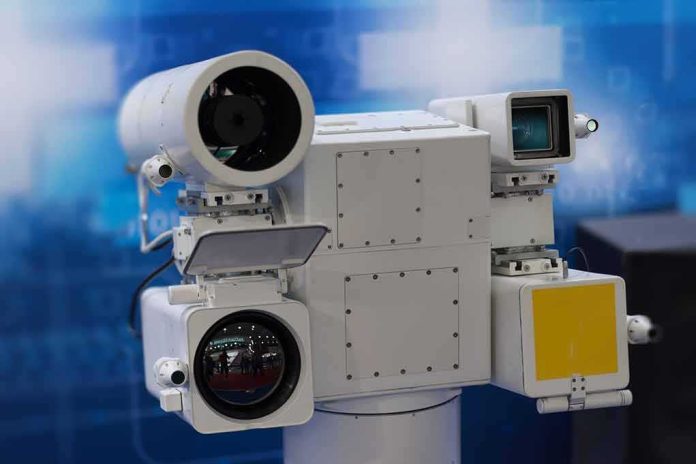
China’s export of AI-enabled surveillance tools is spreading fast to governments worldwide, raising real risks that public-safety platforms can harden into digital control.
Story Highlights
- U.S. and research reports say China exports surveillance systems that can enable repression.
- Vendors market “Safe City” and “Smart City” tools with both safety and control uses.
- Huawei-linked “Safe City” projects span dozens of countries, including fragile democracies.
- Adoption patterns track political unrest and low domestic AI capacity, heightening risks.
What Is Spreading: Tools That Watch, Sort, and Decide
U.S. government analysis describes a surge of Chinese digital systems that help monitor people, filter the internet, and link vast databases across agencies. Researchers and journalists report exports now include facial recognition, network filtering, and integrated command platforms that fuse camera feeds with police records. These systems promise faster response to crime and disasters. The same features can track protests, flag dissidents, and profile minorities. The line between safety and control can vanish once data flows to a central hub.
Analysts at Brookings say many countries now run public security platforms from the People’s Republic of China, with adoption shaped by both supplier push and local demand, such as crime or unrest. A 2023 study finds autocracies and weak democracies are especially likely to import facial recognition from China when they lack local artificial intelligence capacity. That mix—strong security need, weak checks and balances, and cheap turnkey tech—creates fertile ground for digital rule by dashboard.
How It’s Sold: “Safe City” and “Smart City” Packages
Chinese firms market these tools under “Safe City,” “Smart City,” or crime-control labels that stress traffic flow, energy use, and emergency response, not political control. Independent reviews highlight the dual-use nature of the gear: the same cameras, sensors, and data platforms can serve real public safety or enable repression, based on how leaders use them and what rules bind them. The business model often bundles hardware, software, financing, and training, lowering barriers for cash-strapped agencies.
Open-source tracking by a Washington policy project identified 73 “Safe City” agreements across 52 countries tied to Huawei-branded surveillance and analytics offerings. A separate academic and policy record places Chinese surveillance and policing technologies in more than 80 countries, spanning democracies and autocracies. Scale matters: once a city installs thousands of networked cameras, swaps data with ministries, and builds habits around automated alerts, rolling back becomes costly and slow.
Why It Matters: Power Shifts From People to Platforms
A U.S. congressional report framed these exports as part of a wider model for digital authoritarianism—tools that can manipulate and repress at home while boosting influence abroad. The New York Times recently described the spread as “Mao-era policing on steroids,” arguing that practices refined inside China are now moving into places where institutions are weaker and courts are slower to limit abuse. Rights advocates warn that once leaders can watch everyone, they can chill speech, crush rivals, and lock in power without tanks on the streets.
Brookings notes that countries important to Beijing are more likely to adopt its platforms, but so are places with high crime and tight budgets. That dual track links geopolitics with street-level pressures. Local officials chasing quick wins on safety may accept opaque code, data sharing, or service contracts they cannot easily audit. Without clear laws on retention, access, and appeals, mistakes can spread through databases and harm the poor first. Both conservatives and liberals see a common risk: more power flows to unaccountable systems and the elites who run them.
Limits, Choices, and Guardrails
Researchers caution against simple blame. Preexisting politics drive much of what these tools do. The same platform can reduce crime under strict privacy rules or crush dissent under emergency decrees. The open question is not whether the tech can enable repression—it can—but how much abuse comes from the imports versus local leaders and weak courts. That is why procurement rules, transparency, and audits matter as much as supplier names.
@elonmusk exports digital freedom to the rest of the world thru @Starlink, and China in turn exports digital surveillance to dictators all around the world.
— $itizen (@fk4561) August 16, 2026
For U.S. policymakers under President Trump, the challenge is twofold: help allies meet real safety needs without inviting digital control, and compete with credible alternatives. Practical steps include funding open standards, requiring human review of high-risk decisions, and tying any exports to on-site inspections and public reporting. Cities should ask five basics before they buy: what data is collected, who can see it, how long it stays, who audits the code, and how a citizen can appeal a wrong flag.
Sources:
zerohedge.com, irp.fas.org, amnesty.org, wm.edu, brookings.edu, theconversation.com, scholarworks.uark.edu, strausscenter.org, cfr.org