

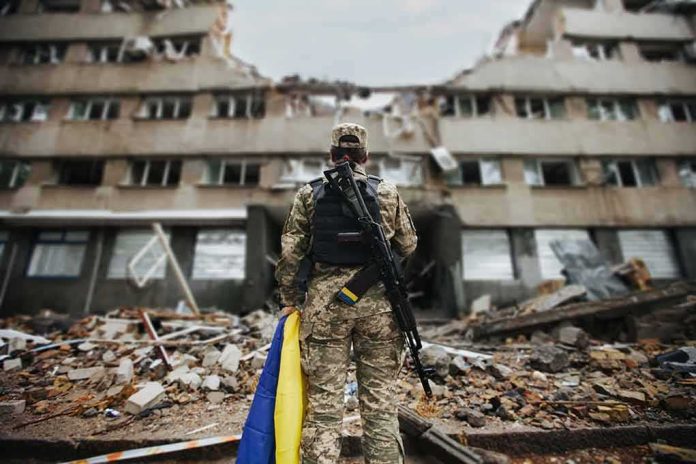
Weeks of fierce assaults have pushed the fight into Kostiantynivka’s streets, leaving shattered blocks as Russian forces press closer.
Story Snapshot
- Ukrainian reports counted dozens of daily assaults near Kostiantynivka through August.
- Independent analysts say Russia is infiltrating the city while Ukraine holds northern areas.
- Reuters recorded rubble and bomb damage as fighting crept toward the town.
- Russia claimed capture in July, but frontline assessments described continued combat.
Frontline Pressure Mounts Around Kostiantynivka
Ukraine’s General Staff reported sustained attacks on the Kostiantynivka axis throughout August 2026, listing 26 to 35 assaults on several days as fighting concentrated in Donetsk region. These tallies placed Kostiantynivka among the hottest sectors for more than two weeks, alongside nearby directions and villages that anchor the approach routes to larger cities. The pattern signals a grinding push that strains defenses, drains supplies, and erodes infrastructure as artillery, glide bombs, drones, and infantry assaults cycle day after day.
Reuters reporting captured the human cost that follows this kind of pressure. A December 2025 video showed residents sheltering in buildings scarred by bomb damage and shrapnel as Russian forces edged nearer. Those scenes tracked with the war’s logic: when the line moves closer, utilities fail, roofs vanish, and families live among broken walls, not by choice but because they cannot safely leave. That visual record set the stage for what the town faced across 2026.
Control Claims Versus Street-Level Reality
Russia’s defense ministry told President Vladimir Putin in early July 2026 that its forces had captured Kostiantynivka and posted images of destroyed structures that it said were from the city. Capture announcements aim to show momentum, and the images showed why urban battles are so punishing. Yet later assessments described continued engagements and unclear lines inside and around the town, reflecting a common wartime pattern where claims of control overlap with ongoing block-by-block combat.
Independent mapping and analysis added detail as August wore on. An August 26 assessment from the Critical Threats Project said Russian forces were infiltrating into and around Kostiantynivka while Ukrainian units held positions in the northern and northwestern parts of the city. That split picture matched other field notes describing Russian consolidation in northern areas and continuing fights for streets and industrial sites. The bottom line was simple: the city was not quiet, and the fight had moved inward.
Daily Assault Counts And What They Mean For A City
Daily summaries citing 29, 31, 33, or more clashes near Kostiantynivka throughout mid to late August point to a specific risk for any town in the line of fire. Frequent assaults signal near-constant indirect fire, more drones overhead, and more damage to homes, power, water, and roads. Several Ukrainian outlets carried those counts, echoing official summaries and underscoring that this sector stayed “hot” for days on end. Numbers alone do not map every broken wall, but they forecast what residents will face next.
Reuters also reported on August 9 that Russian forces claimed new gains in eastern Ukraine, including two villages, as the front in Donetsk region shifted toward more populated zones. Taken together with the Kostiantynivka assault tempo, the report shows how pressure can ripple outward. When nearby villages fall or turn into military zones, the next town absorbs more fire and more risk. The pattern is slow, costly, and hard on civilians who remain behind the front.
Why This Matters For Americans Watching From Afar
Americans of many views see a familiar problem here: a slow war that grinds down cities while leaders trade claims and pictures. This kind of urban attrition drains budgets, upends supply chains, and raises energy and food prices that hit family wallets at home. When a town like Kostiantynivka absorbs wave after wave of strikes, it reminds us that distant conflicts can raise costs, stress allies, and pull attention from fixing problems inside our own borders.
2/ Russian Chief of the General Staff Army General Valery Gerasimov continues to make greatly exaggerated claims of Russian advances that do not match battlefield realities in order to construct a narrative of pervasive Russian military success.
Gerasimov’s exaggerated claims of…
— Institute for the Study of War (@TheStudyofWar) August 28, 2026
Both the right and the left worry about elite drift and policy whiplash. On the right, people see global entanglements that spend big while roads and borders struggle. On the left, people see growing inequality and social strain as crises abroad expand. The facts on this front are clear: Kostiantynivka has faced heavy combat for weeks, Russian forces are pushing in, and Ukrainian troops are still fighting for parts of the city. Those realities carry a price that does not stop at a map line.
What To Watch Next On The Donetsk Front
Watch three signals in the coming days. First, changes in the daily assault count near Kostiantynivka and along adjacent approaches will show whether the pressure is peaking or shifting. Second, verified reports of street control by named blocks or neighborhoods will clarify who holds which parts of the city. Third, images of infrastructure damage and utility outages will tell the civilian story that tallies cannot. For now, the operational trend still points inward toward the city’s core.
Sources:
youtube.com, censor.net, pravda.com.ua, reuters.com