

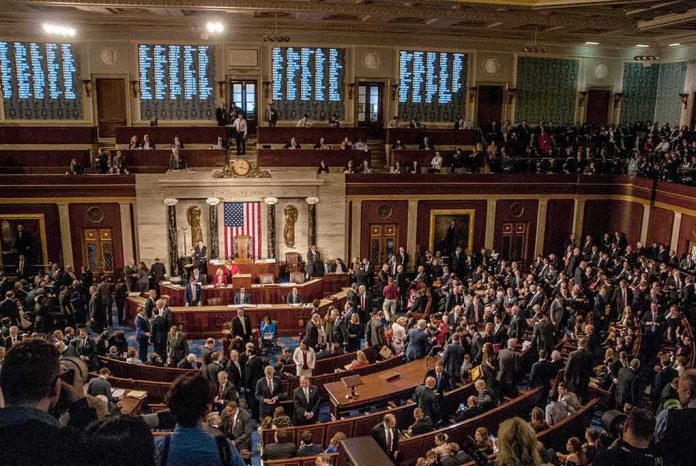
Congress moved to end U.S. hostilities with Iran even as the war dragged on, exposing a mission launched without clear goals or broad backing.
Story Snapshot
- House and Senate advanced measures to terminate U.S. hostilities with Iran, signaling shaky authorization.
- Congressional debate recorded disputes over war aims and legal basis, not a united plan to win or exit.
- Analysts say the campaign lacked defined objectives and an exit strategy, clashing with the Powell Doctrine frame.
- The administration cited active Iranian threats but did not secure durable public or congressional support.
Congressional Pushback Shows Disputed Authority
Congress introduced multiple war-powers measures ordering the President to end hostilities with Iran within set timelines. Sponsors used the War Powers Resolution to compel withdrawal unless Congress explicitly authorized force. House concurrent resolutions directed removal of U.S. Armed Forces from hostilities against Iran, while a joint resolution pressed for termination if no authorization followed. These actions signaled institutional doubt about legal authority and strategic direction, even with Republicans controlling both chambers.
The official Congressional Record captured debates over aims, costs, and limits during the spring of 2026. Lawmakers from both parties questioned objectives, end-state planning, and how far the conflict might widen. The record shows formal consideration of Iran-related measures and concerns about executive overreach under the War Powers Resolution. That paper trail matters. It documents that the country’s elected branch was not aligned on the who, what, and how-long of the fight, a core warning sign for any military campaign.
Powell Doctrine Test: Clear Goals And Exit Strategy
Commentary rooted in the Powell and Weinberger framework argued the Iran campaign lacked clearly stated political objectives and an articulated exit plan. Analysts said the approach relied on flexible, limited strikes and open-ended coercion, rather than defining victory, massing decisive force, and planning a tidy endgame. The Powell Doctrine emphasizes vital interests, clear and achievable goals, and strong public and congressional support before force is used. The critique argued the Iran mission failed that test in several categories.
The administration and its allies offered a different case. A pro-campaign summary said President Trump justified strikes by citing Iran’s pursuit of nuclear arms, attacks on Americans, and threats to allies. A War Powers report to Congress further argued that Iran’s missiles posed a direct and active threat to U.S. forces, commercial vessels, civilians, and partners. These claims explain why the White House chose force. They do not, by themselves, resolve the question of defined end-state or durable buy-in that the Powell frame demands.
Public Backing And Political Risk
Public support appeared uneven as the war progressed. Surveys and commentary noted many Americans opposed expanding the conflict, reflecting Iraq-era caution and fatigue. Analysts linked that skepticism to the lack of clearly defined goals and a visible exit path. Without strong, sustained public support, presidents often find the cost curve bends against them over time, especially when Congress keeps re-opening authorization and oversight fights. That cycle can drain trust and resources even if initial strikes were justified.
Inside government, process mattered as much as firepower. The War Powers Resolution requires consultation and reporting to Congress. When Congress responds with measures to end hostilities, even if some are not legally binding, it signals a fracture in national resolve. The American Society of International Law summary noted that concurrent resolutions express the will of Congress but lack the force of law, which can blur the line for the public and invite more institutional conflict over next steps. That fog can feed a longer war with less clarity.
Why This Matters Beyond Today’s Headlines
Americans across the spectrum worry that Washington drifts into wars without a clear finish line. Conservatives see cost, mission creep, and strain on deterrence at home. Liberals see humanitarian risk, opportunity costs, and more secrecy than accountability. The Iran fight fits that shared concern. Congress’s actions, the Powell-Doctrine critiques, and uneven public support point to a basic failure: leaders did not agree on the objective, the measure of success, or how to end it on U.S. terms.
That breakdown feeds a larger trust gap. People believe the most powerful grow safer while working families pay more, wait longer, and get fewer answers. A healthier process would force clarity before shots are fired: name the vital interest, define the goal, count the costs, secure the vote, and explain the exit. If leaders skip those steps, the country pays twice—first in treasure and risk, and later in faith that our system still serves the people.
Sources:
congress.gov, govinfo.gov, spykmancenter.org, en.sedaily.com, baltimoresun.com, asil.org, arabamericannews.com