
Trump’s latest claim of a deadly strike in Venezuela raises a bigger question: what proof is the public getting, and what is still being kept behind the curtain?
Quick Take
- Trump said U.S. Southern Command carried out a “swift and lethal” strike against a Tren de Aragua target.
- The announcement said the action was coordinated “closely with our friends in Venezuela.”
- Available reporting gives limited operational detail, so the coordination claim is not publicly backed up.
- The case shows how fast a military event can become a larger fight over trust, legality, and proof.
What Trump Said About the Strike
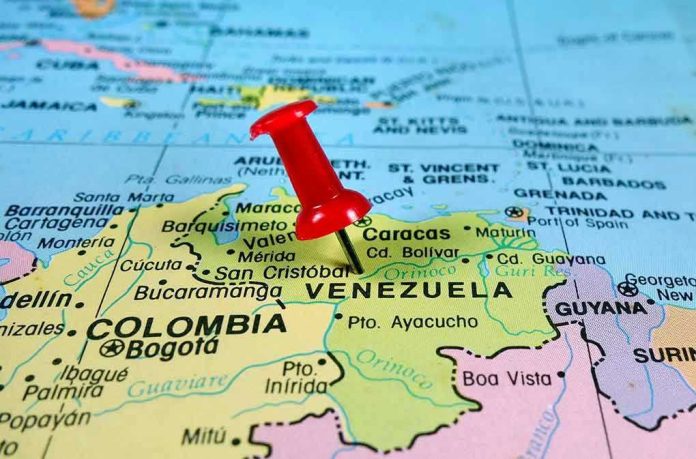
President Donald Trump said Friday night that U.S. Southern Command carried out a lethal strike on Héctor Rusthenford Guerrero Flores, whom he tied to Tren de Aragua [6]. In the same announcement, Trump said the operation was coordinated “closely with our friends in Venezuela” and argued the group no longer has safe haven there or elsewhere [6].
The public record, based on the sources provided, does not show independent proof of that coordination claim. The reporting cited here repeats Trump’s statement, but it does not include a Venezuelan government confirmation, a joint statement, or released operational records showing how any coordination worked [6].
What the Reporting Does and Does Not Show
The clearest fact is that the Trump administration publicly described a U.S. military strike and named a target [6]. That matters because it confirms an operation was announced at the highest level. But the sources also say the report carried limited details, which leaves key questions unanswered. Those include how the target was identified, what intelligence was used, and whether the man named in the post was confirmed through forensic or intelligence checks [6].
That gap matters because event-level proof is not the same as strategic proof. A single strike can show that a target was hit. It does not by itself prove that a criminal group has lost all safe havens, or that a foreign government helped plan the mission. In this case, the public evidence supports the existence of the strike, but not the broader claims attached to it [6].
Why This Story Fits a Bigger Pattern
This episode lands in a broader fight over secrecy, force, and public trust. The administration has already used strong military language in earlier anti-drug operations, and other reporting has shown repeated disputes over legal authority, target identity, and how much Congress and the public are told [2]. That pattern helps explain why this new strike is being met with both support and suspicion across the political spectrum.
#BREAKING President @realDonaldTrump announced that @Southcom executed a lethal strike killing Niño Guerrero, leader of terrorist gang Tren de Aragua, in close coordination with Venezuela. #Trump #TrenDeAragua #BreakingNews pic.twitter.com/ko2ZkkibJp
— jarvis ☠️ (@Vishii14) June 13, 2026
For many Americans, the deeper issue is not one party or one outlet. It is whether the government is telling the full story when it uses force abroad. Supporters see a hard response to cartel violence. Skeptics see another example of power moving faster than proof. With limited public records, both reactions are understandable, and both will grow louder until more documents are released [2][6].
Sources:
[2] Web – Trump says ‘no problem’ releasing video of 2nd strike on alleged …
[6] Web – ‘Wiped out…’: Trump’s lethal kinetic strike on cam; big US operation …