

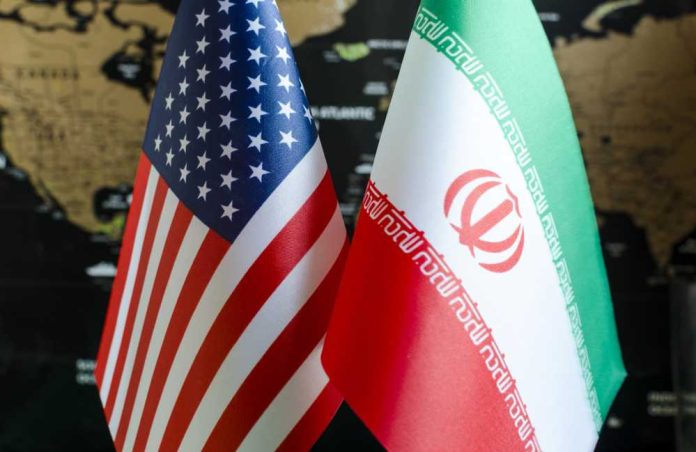
A supposedly “historic” U.S.–Iran ceasefire that leaders sell as peace and prosperity may instead be a 60‑day timeout that leaves the deep state, big oil, and war planners firmly in charge.
Story Snapshot
- The public text of the new 60‑day U.S.–Iran ceasefire and Strait of Hormuz deal is expected soon, but key terms are still shaky and disputed.
- The framework pauses fighting and starts talks on Iran’s nuclear program and sanctions, yet experts warn it looks more like a tactical pause than real peace.
- Reopening the Strait of Hormuz should lower oil prices and help family budgets, but control of the waterway and any fees remain a major flashpoint.
- The deal does not clearly settle Iran’s nuclear ambitions, missile program, or proxy forces, raising fears that Washington and Tehran are just kicking the can.
What We Know So Far About the 60‑Day Deal
Reports from major outlets say American and Iranian negotiators have agreed on a memorandum of understanding for a new 60‑day ceasefire extension after months of war.[5] This plan would build on an earlier two‑week truce and is meant to halt direct fighting while leaders try to hammer out a fuller agreement.[4] The memorandum is not yet formally signed by President Trump or Iran’s top leaders, so it is still a draft, not binding law.[5] That gap matters whenever powerful interests want room to backtrack.
Details that have leaked show the framework pairs a pause in attacks with major economic and strategic steps. The United States would ease or lift its naval blockade on Iranian ports, and Iran would reopen the Strait of Hormuz, the narrow passage that carries roughly one‑fifth of the world’s oil.[1] Washington would also relax some sanctions, letting Iran sell more oil and possibly unfreezing billions in assets, in exchange for nuclear limits and talks on Iran’s enriched uranium stockpile.[1][2] On paper, that sounds like a win for stability and for anyone tired of high gas prices.
The Nuclear Question: Real Limits or Just New Promises?
Backers of the deal claim it will “block Iran’s path” to a nuclear bomb by capping enrichment, managing highly enriched uranium, and pushing Tehran to pledge that it will not pursue nuclear weapons.[1][5] The 60‑day window is supposed to focus on how to handle Iran’s uranium stockpile and set future limits.[5] But independent reporting and analysts stress that the nuclear issue is not truly solved in this first stage; it is mainly pushed into later talks that may or may not succeed.[5][13] Many Americans, left and right, have seen this movie before: temporary nuclear promises with weak enforcement that can be broken once the cameras move on.
There is also a tug‑of‑war over how broad the talks should be. The United States wants to address not just enrichment but also Iran’s missile program and its support for proxy groups across the region.[20][21] Iran, by contrast, insists the conversation stay on nuclear issues and sanctions relief, while keeping its missile force and regional allies off the table.[20] That split touches a core fear for both conservatives and liberals: deals crafted by elites that trade away real security concerns for short‑term headlines and market calm.
Strait of Hormuz: Lifeline for Oil, Lever for Power
The reopening of the Strait of Hormuz sits at the heart of this agreement. Earlier ceasefire terms already demanded “complete, immediate and safe” opening of the waterway in exchange for a halt in U.S. strikes.[1][19] The new 60‑day memorandum reportedly goes further, declaring shipping “unrestricted” and ordering Iran to clear mines within about 30 days.[1] In return, the U.S. lifts its blockade and allows Iranian oil exports, which traders expect will push global energy prices down and ease some pressure on American drivers.[2][20]
Yet control and money around the strait remain contested. Some drafts and regional plans allow Iran, sometimes with Oman, to charge fees on passing tankers to fund reconstruction.[19][9] Other versions say Iran cannot levy tolls or “harass” ships at all.[6] These mixed signals show why many citizens do not trust what they hear the first time from Washington or Tehran. When basic terms like “who controls the chokepoint” are fuzzy, it looks less like clear policy and more like a power game managed by insiders, far from public oversight.
Will This Pause Really Bring Peace and Stability?
For people living under the bombs in Iran, the Gulf, and Lebanon, even a short ceasefire is a blessing. The 60‑day framework is expected to halt direct U.S.–Iran fighting and, at least on paper, extend a ceasefire to the front in Lebanon, where Israel has held ground and launched heavy strikes.[1][4][13] Some reports say the new memorandum requires the United States to lift its naval blockade while Tehran guarantees safe passage for all ships through Hormuz.[13] That is a real, if fragile, shift away from open war.
U. S. & Iran expected 2 hold a virtual meeting on Sunday & ELECTRONICALLY SIGN (<~DEAR GOD!) a memorandum of understanding that will extend the ceasefire by 60 days, reopen the Strait of Hormuz +launch negotiations over Iran's nuclear program.
W/Trump the SNL skit writes itself!
— MK (@MKSRetired1) June 13, 2026
Still, a wide range of experts describe this deal as a “short‑term fix” and “interim” arrangement, not a true peace plan.[5][21] The memorandum mostly commits both sides to keep talking while leaving the most dangerous issues unresolved: Iran’s long‑term nuclear program, its missiles, its proxy networks, and the future of U.S. forces in the region.[13][21] Israel has already argued that earlier ceasefires did not cover its war with Hezbollah, and similar loopholes may appear again.[21] That means ordinary families could see “peace” on television while missiles and drones still fly somewhere off‑camera.
Why Skeptical Americans on Left and Right Are Watching Closely
This ceasefire fits a pattern many Americans now recognize. After more than three months of war, Washington and Tehran frame a limited truce as evidence of “world peace,” even as they keep bargaining over sanctions, oil flows, and nuclear terms behind closed doors.[18][20] Markets cheer, oil prices move, and leaders on both sides claim victory, while the same security state and foreign policy class remain in charge of the levers. Regular citizens who pay the taxes and send their kids to war rarely get a real say.
Conservatives who worry about national security and energy independence see a deal that might reopen a vital sea lane but still leaves Iran’s missiles and proxies largely untouched.[21] Liberals who fear endless wars and global inequality see another case where sanctions and blockades are swapped in and out as bargaining chips, while human rights and democratic accountability take a back seat.[23] Both groups share a deeper concern: that temporary bargains like this mainly protect the interests of oil markets, defense contractors, and entrenched bureaucrats, not the long‑term safety and prosperity of the American people.
Sources:
[1] YouTube – US-Iran ceasefire agreement to be public soon
[2] Web – US-Iran 60-day proposal: What we know – Al Jazeera
[4] Web – Mediators believe Iran and US nearing 60 day extension on …
[5] Web – 2026 Iran war ceasefire – Wikipedia
[6] Web – US-Iran MOU on 60-day ceasefire extension reached, but Trump …
[9] YouTube – US sources say Iran-US 60-day ceasefire deal done
[13] YouTube – U.S.-Iran Ceasefire: A Fragile Peace or Tactical Pause?
[18] YouTube – U.S., Iran reach “tentative ceasefire” deal | Ben Cohen | Fox LiveNOW
[19] Web – Fragile U.S.-Iran ceasefire shows cracks as Israel pounds Lebanon
[20] Web – US-Iran ceasefire deal: What are the terms, and what’s next? |
[21] Web – Iran–United States relations – Wikipedia
[23] Web – What’s in the Iran war ceasefire deal? It depends on which side you …