

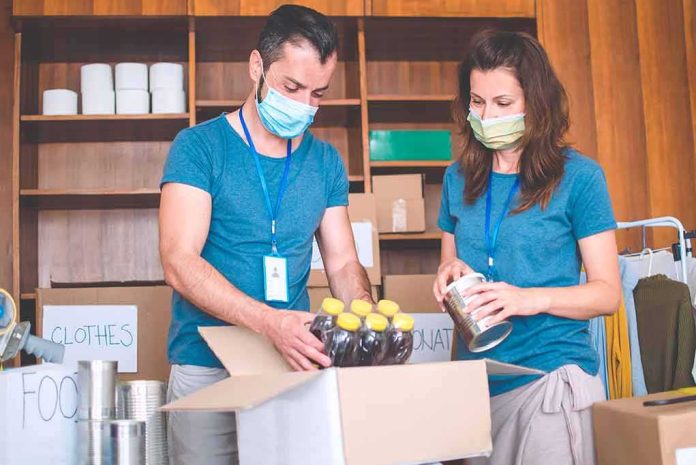
Americans are still told to keep three days of food and water because first responders may not reach everyone for up to 72 hours after a major disaster.
Story Highlights
- Public agencies advise at least three days of supplies, including one gallon of water per person per day.
- Local guidance warns emergency services may be unavailable for 72 hours after a major event.
- A 2015 survey found most people had not assembled a kit and expected help to arrive quickly.
- Recent surveys show more households report having supplies, but gaps and barriers remain.
What Officials Recommend For The First 72 Hours
Unified Fire Authority advises every household to store enough supplies for at least three days. The list includes one gallon of water per person per day for drinking and sanitation, food, first aid, light, and basic tools. Other agencies echo the same baseline. A community college district’s guide frames kits as practical support for basic needs like food, water, first aid, and communication, and says to plan for at least 72 hours or longer. These are everyday items, not extreme gear.
Wayne County, Michigan’s emergency-management office explains why the 72-hour mark matters. After a large disaster, roads can be blocked. Demand can overwhelm crews. Power and water can be out. Because of these limits, help may not reach every home for up to 72 hours. This is not a scare tactic. It is a planning window that buys time until responders open routes, restore service, and set up aid points. Households that bridge those first days reduce strain on emergency teams.
What We Know About How Prepared People Are
In 2015, Chapman University reported that 72 percent of respondents had made no effort to assemble an emergency kit. Many said they expected emergency services to help them, lacked time, did not want to think about disasters, or did not know what to do. That finding matched what many people feel today: life is busy, money is tight, and guidance can be confusing. But it measured kit assembly, not whether homes had enough food or water on hand from normal shopping.
Newer data suggest progress, though not full readiness. The Federal Emergency Management Agency’s 2024 National Household Survey found that 69 percent of respondents had assembled emergency supplies, and most of those said their supplies would last more than three days. This points to a slow shift toward basic stocking. It also shows unevenness. Households vary by income, health, location, and family needs. Supplies are only one part of readiness. Action steps like plans, contacts, and backups still lag for many families.
Why The 72-Hour Standard Still Matters
Public safety agencies keep the three-day goal because it is simple, affordable, and proven in many events. One gallon of water per person per day gives a clear target most families can reach over time. Local guides stress that blocked roads, damaged bridges, and power failures can slow help for days. A short, concrete list lowers the bar for first steps. People can start with water, shelf-stable food, flashlights, batteries, a radio, and copies of key documents. Small moves beat perfect plans.
The One Year Urban Survival Plan for Preppers
Could your household manage a week without power or running water? Tell us the first gap you’d tackle.
Build readiness over the next 12 months through supplies, skills and practice. Address immediate food, water, medical and… pic.twitter.com/xCbKpHBQGC
— The Prepper Almanac (@prepperalmanac) November 15, 2026
For older adults, people with disabilities, infants, and those with medical needs, three days may be the floor, not the ceiling. Medications, special diets, mobility gear, and power for medical devices may need extra planning. Households with pets should include food, water, and records for animals. Rural homes and apartments face different hurdles. What is constant is the value of basics that keep people safe, warm, fed, and informed until help arrives or services return.
Bridging The Gap: Practical Steps That Do Not Break The Budget
Start with water: add one extra gallon each grocery trip until you cover three days per person. Build a simple food shelf with items your family already eats. Rotate cans and dry goods into regular meals. Add a flashlight, spare batteries, a first aid kit, and a hand or battery radio. Write down contacts and a meet-up spot. If money is tight, spread these buys across weeks. Use sales, store brands, and community programs. The goal is steady progress, not perfection in one weekend.
Why This Matters Across The Political Divide
Conservatives and liberals both see a system that often fails to show up on time when it counts. Disasters expose how thin our safety net can be. Crews work hard, but they cannot be on every block at once. A modest home kit cuts risk for your family and frees responders to reach the most urgent cases sooner. In a time of distrust and rising costs, self-reliance for 72 hours is not a luxury. It is the new common ground for community resilience.
Sources:
unifiedfireut.gov, smccd.edu, blogs.chapman.edu, waynecountymi.gov, fema.gov, jamanetwork.com