

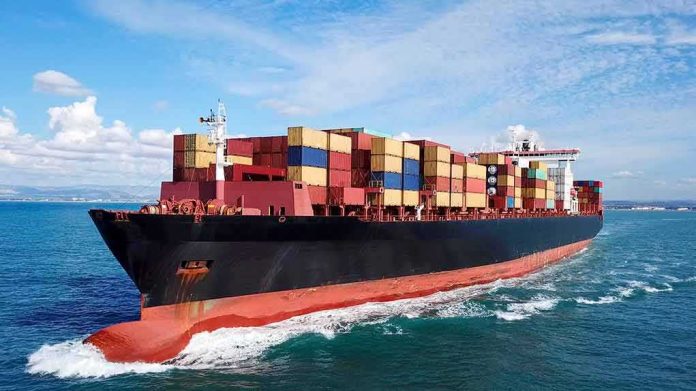
Shipping through the Strait of Hormuz slowed to a crawl as renewed U.S.–Iran strikes and reported attacks pushed daily crossings to some of the lowest counts of the year.
Story Snapshot
- Reuters counted only three commodity ships crossing on July 17, signaling acute disruption.
- Traffic declines tracked with fresh attacks and the U.S. resuming strikes and a blockade posture.
- Counts from data firm Kpler showed multiple single-digit transit days across July and August.
- Baseline before the war exceeded 130 ships per day, highlighting the scale of the drop.
What Happened: Traffic Sank As Fighting Resumed
Reuters reported that just three commodity vessels crossed the Strait of Hormuz on July 17, the fewest daily transits since May, as attacks resumed and tensions rose. The outlet linked the traffic slide to renewed strikes by the United States and Iran and warnings about vessel safety in the waterway. Shipping companies adjusted routes or waited at anchor. Insurers reassessed risk. Crews faced higher danger. The result was a sharp pullback in crossings during peak flareups.
Data from ship-tracking firm Kpler gave the numbers shape and timing. Reuters cited Kpler showing nine vessels crossing on July 16 and again on August 20, well below normal patterns. These snapshots matched day-to-day shifts as skippers weighed threats and guidance. While counts moved around, the theme held: traffic fell when strikes and attack claims spiked. That pattern repeated through July and into August as the conflict see-sawed.
Who Was Hit And Why It Matters
The United Arab Emirates’ Abu Dhabi National Oil Company said two of its vessels were attacked while transiting the strait, putting a major regional energy player in the line of fire. Named companies and crews faced direct risk, not just abstract charts. The Joint Maritime Information Center, led by the United States Navy, raised the threat level for the strait to “severe” after tanker incidents, the highest setting under current conditions. Higher risk ratings raised costs and delayed voyages as operators chose caution.
The United States Central Command said on June 20 that 55 merchant ships transited that day and safe passage held, showing that traffic can move when security improves. That release underscored how conditions shift quickly. Some days were open enough for dozens of ships. Other days saw single-digit crossings. This variability made planning hard for exporters, buyers, and carriers. Markets responded to headlines and counts that changed by the day.
How Today Compares To Pre-War Flows
Before the war began in late February, more than 130 ships passed through the strait each day, according to Reuters, a reminder of how large normal flows are at this choke point. Those baseline levels explain the stakes. When daily crossings fall into single digits, oil, gas, and bulk cargo schedules break. Port backlogs grow. Insurance and freight rates rise. Even brief pauses ripple worldwide because so much energy and trade depend on this narrow channel linking the Gulf to global markets.
2/5
📍The coordinates place the vessel directly in the southern Strait of Hormuz traffic separation scheme, south of Larak Island. The timestamp aligns perfectly with the morning of August 30, right after the targeted strikes and before official statements. High compatibility.— NewsFromSea (@riskiomap) August 31, 2026
Some reports noted that ships can switch off tracking transponders, so public counts likely miss a share of traffic. That caveat aside, the documented trend was clear: far fewer identified vessels crossed during escalations. Reuters tied these drops to renewed attacks, U.S. operational moves, and official warnings from both sides. For families and businesses at home, this means higher energy and shipping costs driven by distant choices and strikes they cannot control.
Why It Resonates With Voters’ Frustrations
Escalation in the strait shows how global power contests can hit everyday wallets. Energy and shipping shocks raise prices for fuel, food, and goods. Many Americans see leaders in Washington and foreign capitals trading strikes while costs climb. They worry that national interests and working families are afterthoughts. The data-heavy reports from Reuters and the United States Central Command outline the facts; the lived effect is higher bills and more uncertainty for people far from the Gulf.