

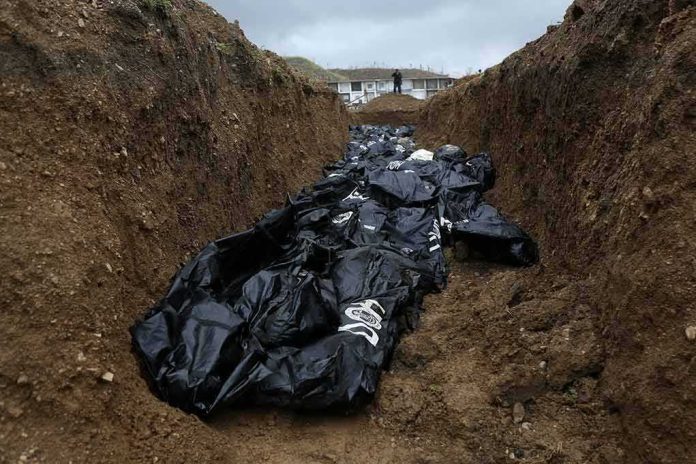
Nepal’s flood death toll climbed to 781 as officials began burying unidentified victims after preserving DNA to allow families a path to answers.
Story Snapshot
- Nepal reported 781 dead and thousands missing after severe floods.
- Authorities started burials after collecting DNA to enable later identification.
- Chitwan officials mapped graves at Devghat to allow exhumation if families come forward.
- Limited morgue space and public health risks drove the burial decision.
Official Toll Rises Amid Ongoing Search
Nepal’s disaster authorities said the death count rose to 781 as search teams kept working across flood-hit districts. Reports also said about 2,500 people remained missing as of August 30, showing the scale of loss and the likely rise ahead. Earlier tallies climbed fast during the week, moving from the hundreds to near 800 as more bodies were found and logged by police and local officials. One caveat: counts are evolving during recovery and may shift as data are reconciled.
Rescue leaders described hard terrain, washed-out roads, and wrecked bridges that slowed access. Police units and local volunteers searched riverbanks and debris fields for days. Medical teams worked in field sites, while district offices collected reports from families seeking loved ones. Officials in several areas asked for more body bags, cold storage, fuel, and protective gear. The pattern mirrors other mass disasters where the first phase focuses on recovery and record-keeping under tight time pressure.
Why Temporary Burials Began in Chitwan
Authorities in Chitwan district began burying unidentified victims after collecting DNA samples to preserve identification chances. Local morgue capacity was quickly overwhelmed as bodies arrived faster than they could be processed. Decomposition after several hot days raised clear public health risks for nearby communities. Officials said they logged each grave with markers above and below ground and recorded precise locations to allow later exhumation when families are identified through DNA matches.
The Chitwan District Security Committee selected Devghat, within Bharatpur Metropolitan City-1, as the burial area. The committee directed teams to assign unique identification numbers, note recovery sites, and keep consistent records. Local administrators coordinated with police and forensic staff to manage the flow of bodies and samples. Reporting from the district described a structured process guided by a standing directive on handling unidentified and unclaimed remains during emergencies.
How DNA and Documentation Protect Families’ Rights
Disaster victim identification methods call for tag-and-log steps, unique numbers, and careful chain of custody to protect future matches. International guidelines say authorities should collect dental, fingerprint, and DNA data when possible, then compare these with records from families to confirm identity. When refrigeration and lab capacity fall short, documented temporary burial can be a practical step that still respects the dignity of the dead and the rights of families to claim remains later.
Nepal Turns to Mass Burials, as Thousands Remain Missing from Floods – The New York Times https://t.co/8WPoZNqyWM
Follow @NewsHubGlobe for 24/7 breaking news from around the world. pic.twitter.com/KZO4ygYScB
— News Hub (@NewsHubGlobe) August 31, 2026
Nepal’s approach aligns with those standards by preserving DNA before burial and by geo-tagging graves for future exhumation. That balance aims to meet urgent public health needs while keeping a path open for closure. Local reports noted that only a small share of victims had been identified so far, which is common early in mass-casualty events. Progress usually improves as labs process samples and as families provide antemortem details and, when possible, DNA reference swabs.
Sources:
youtube.com, khaleejtimes.com, thejournal.ie, english.news.cn, humanitarianlibrary.org