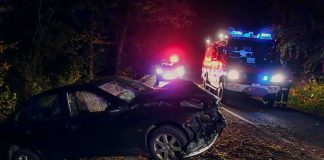

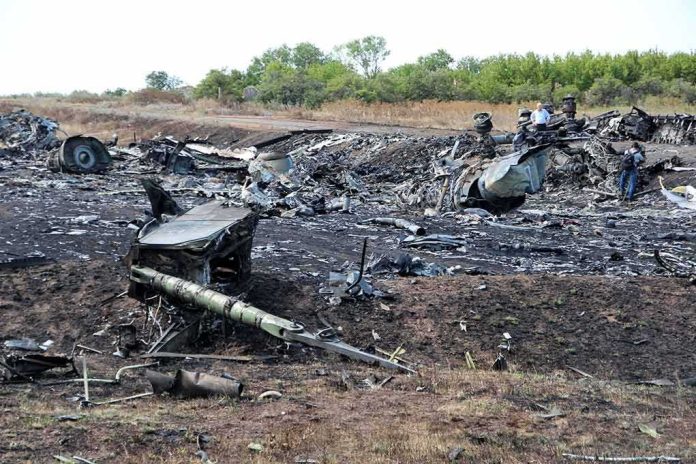
A small Cessna struck a Pennsylvania State Police helicopter during training near Carlisle Airport, killing the airplane’s pilot and injuring two troopers, according to federal and state officials.
Story Snapshot
- Federal Aviation Administration (FAA) confirms a Cessna 150 and Bell 407 collided near Carlisle, Pennsylvania.
- Pennsylvania State Police say the helicopter crew was training when the crash happened; the airplane’s pilot died.
- Investigators from the FAA and National Transportation Safety Board (NTSB) are leading the probe.
- Most midair crashes occur near non-towered airports at low altitude, according to safety guidance.
What officials say happened near Carlisle Airport
Federal Aviation Administration (FAA) officials said a Cessna 150 and a Bell 407 helicopter collided in midair near Carlisle, Pennsylvania, around 7:50 p.m. on Wednesday, August 19. State and local officials reported the Pennsylvania State Police helicopter crew was conducting a training exercise at the time. The pilot of the airplane died in the crash, and two troopers in the helicopter were injured, according to state briefings. Investigators cautioned that the cause has not been determined.
Pennsylvania leaders shared updates after visiting the injured troopers at a local hospital, underscoring that the focus is on care for the families and a thorough investigation. The FAA said it is working with the National Transportation Safety Board (NTSB) to examine the sequence of events, flight paths, and communications. Officials will review wreckage and any available recordings. That process usually takes weeks for initial findings and longer for a final report.
Why this kind of crash often happens near smaller airports
National Transportation Safety Board reports and federal training handbooks show many midair crashes occur at or near non-towered airports, where pilots coordinate on a common radio and rely on “see and avoid” scanning. The FAA’s Airplane Flying Handbook says most such collisions involve aircraft below 1,000 feet and not on a flight plan, which matches typical airport pattern work. Past NTSB cases cite missed visual cues, traffic-pattern conflicts, and radio discipline as repeating issues. Those patterns guide today’s Carlisle inquiry.
Safety investigators also study how pilots enter and fly the landing pattern, where blind spots and closure rates can be tricky. Prior NTSB findings describe collisions during straight-in approaches meeting pattern traffic, overhead entries that cut across flows, or training flights that hold or hover near the runway environment. These cases do not assign blame early. They map how lookout, radio calls, geometry, and speed combined to leave too little time to avoid conflict. Carlisle fits that known risk zone.
What the investigation will likely examine next
NTSB teams typically collect radar tracks if available, review radio calls, and document positions, speeds, and altitudes to seconds. They inspect propellers, rotors, control linkages, and lighting to check for pre-impact issues. They will look at whether each crew used the common traffic frequency, how the helicopter held or moved during training, and how the airplane approached the runway. Prior cases show that see-and-avoid alone can fail in busy, low-altitude airspace.
SHOCKING: New footage captures the exact moment a Cessna 150 single-engine plane PLOWED into a hovering Bell 407 Pennsylvania State Police helicopter at Carlisle Airport on Wednesday evening.
The midair collision killed the plane’s pilot and injured the two troopers on board. pic.twitter.com/SqpDUXU3aL
— Denn Dunham (@DennD68) August 21, 2026
Officials will also review local procedures and training guidance. Earlier NTSB recommendations urged better instruction on pattern entries and controller practices after fatal midair collisions, even when no tower controls the field. The goal is not to second-guess in real time, but to find lessons that help pilots share the pattern safely. That includes clearer calls, more predictable entries, and avoiding holds or straight-ins that surprise other traffic. Carlisle could shape renewed training reminders.
Why this matters to everyday flyers and nearby communities
People living near small airports depend on safe, routine operations. Most flights at these fields are calm and uneventful. But low-altitude, mixed operations—planes flying patterns and helicopters training—leave little margin if crews do not see each other in time. Federal guidance stresses that pilots should broadcast clearly, scan early, and expect others may not see them. Communities expect the same: common sense steps that keep skies orderly without more red tape.
For families of those hurt or lost, the focus is care and answers. For pilots, the case is a sober reminder: predictable flight paths and steady radio work save lives. For officials, the path is clear—collect facts, publish findings, and share fixes. When agencies do this work well and in the open, it builds trust. It also helps prevent the next tragedy at the edge of town, where most of us just want to land safely and go home.
Sources:
independent.co.uk, 6abc.com, wgal.com, youtube.com, instagram.com, assets.publishing.service.gov.uk