
The America 250 “Salute to America” fireworks over Washington’s National Mall were conceived and largely executed as a once-in-a-generation feat of pyrotechnic engineering and patriotic spectacle, even as severe weather turned the evening into a stress test of large-scale public event logistics and political symbolism.
Key Points
- Organizers and contractors designed a fireworks program on an unprecedented scale, with roughly 850,000–860,000 effects launched from ten sites around the National Mall, aiming to surpass the standing world record for the largest display.
- The celebration combined Trump’s late-night speech, an extended pyrotechnic finale, military flyovers, and a live joint armed forces musical program into a single integrated patriotic show.
- Severe thunderstorms forced a full evacuation of the National Mall, canceled remaining flyovers, and pushed Trump’s remarks and the fireworks to near midnight, creating friction between safety protocols and attendee expectations.
- Media and political observers split sharply in their framing: some emphasized the historic scale and visual impact of the display, while others highlighted logistical chaos and Trump’s partisan rhetoric over unifying themes.
- The event sits squarely in a broader pattern in which major civic holidays, especially around America’s semiquincentennial, double as contested stages for defining patriotism, party identity, and the national story.
A Record-Scale Fireworks Design
From the outset, Freedom 250 and its fireworks contractor, Pyrotecnico, positioned the National Mall show as an attempt to redefine what a civic fireworks display could be. Official event materials and pre-event coverage consistently described a plan to launch on the order of 850,000 to over 860,000 pyrotechnic effects, making the show nearly two orders of magnitude larger than Washington’s traditional Independence Day display, which typically uses about 10,000 shells. In the world of pyrotechnics, that is not a marginal increase—it is a different category of show.
The design relied on a multi-point firing architecture. Fireworks were staged along the Lincoln Memorial Reflecting Pool, in West Potomac Park, and on eight barges anchored in the Potomac River, yielding ten distinct launch zones coordinated as a single visual canvas. That layout allowed designers to paint the sky horizontally across the Mall and vertically above the river, with sequences that could ripple from monument to monument rather than simply rise from a single barge. Press materials described the show as lasting roughly 35 to 40 minutes, approximately twice the length of the standard National Mall display, and “the most ambitious fireworks presentation ever attempted.” Pre-event reporting traced the operational scale: more than 50 trucks, around 60 workers, and a complex choreography of firing systems distributed along the Mall.
Guinness World Records recognition was part of the planning narrative. The existing record was held by a 2016 New Year’s Eve display in Manila that used about 810,000 fireworks. Freedom 250’s stated target was to exceed that number and “shatter world records,” as one spokesperson put it. On the night itself, some outlets reported that the grand event “may have achieved” a new Guinness record, but as of the coverage cited here, no formal certification from Guinness had been publicly documented. The technical design, however, was plainly oriented toward that benchmark.
Integrating Speech, Military Spectacle, and Music
The fireworks were not meant to stand alone; they were the capstone to a broader “Salute to America” program that blended presidential rhetoric, military display, and orchestral performance into a single narrative of national strength. Freedom 250 and tourism partners framed the July 4 celebration as the culmination of a 16-day Great American State Fair on the Mall, topped by headline speeches, military demonstrations, and a “breathtaking fireworks finale.” In that design, the evening sequence matters: attendees were supposed to experience a patriotic build-up throughout the day and into the night.
Former President Donald Trump’s role in this choreography was central. He was scheduled to address the nation from the National Mall, presenting America’s 250th anniversary as proof that “the American Dream is back” and emphasizing themes of national renewal, gratitude to veterans, and a self-image of the United States as a “nation of winners.” The Joint Armed Forces Orchestra provided a live soundtrack, with fireworks programmed to match a patriotic musical score performed on-site. This integration of live music with a multi-site pyrotechnic rig is technically demanding: cues must be precisely timed, both for the visual effect and to avoid overloading specific firing locations.
Military aviation was designed as a major visual element as well. The “Salute to America 250 Aerial Program” billed itself as “the greatest aviation spectacle in history,” promising hours of flyovers and aerobatic demonstrations by U.S. military aircraft and heritage planes over the Mall. In the idealized version of the evening, flyovers, Trump’s remarks, orchestral performance, and the fireworks would form one uninterrupted patriotic tableau—from sky to stage to skyline.
Weather, Evacuation, and the Stress Test of Public Safety
That integrated vision collided head-on with the realities of extreme summer weather. Thunderstorms, lightning, and the risk of flash flooding forced authorities to treat the July 4 crowd as a potential hazard rather than a static audience. At 7 p.m., with severe storms approaching, the National Park Service, Secret Service, and other agencies ordered a full evacuation of the National Mall. Attendees who had queued for hours were suddenly routed to designated shelters in nearby federal buildings and museums, including the IRS, Department of Education, and Smithsonian museums.
Accounts from live coverage and subsequent reporting describe a scene familiar to anyone who has managed large-scale evacuations: capacity constraints, confusion about shelter locations, and tension between attendees and security personnel. One shelter, the IRS building, quickly reached capacity, forcing evacuees to seek alternatives. Some people refused to leave or argued with agents, creating bottlenecks at evacuation points and Metro stations. Because security checkpoints were suspended during the evacuation, re-entry required fresh screening, meaning every person who returned to the secure area effectively re-entered the event twice. For a crowd in the tens of thousands, that is a nontrivial logistical burden.
The evacuation and storm delays rippled through the program. Remaining military flyovers were canceled, truncating the aerial spectacle that had been marketed as a defining feature of the celebration. Trump’s speech, originally slated for the 9:45 p.m. window, did not begin until around 11:15 p.m., ending just before midnight, with the fireworks commencing moments afterwards. Gates to the Mall reopened at 9:45 p.m., meaning the total delay from the original schedule to re-entry was about 2.75 hours. From a safety perspective, the decision to clear the Mall was consistent with severe weather protocols; from a participant’s perspective, the evening felt less like a smooth patriotic pageant and more like a prolonged logistical improvisation.
How the Night Looked—and How It Was Framed
When the program finally resumed, observers across networks and social platforms agreed on at least one point: the fireworks themselves were visually extraordinary. Live feeds from local television, national outlets, and independent streaming channels carried sustained sequences of the sky over Washington saturated with bursts of color, layered in waves from the Reflecting Pool to the Potomac. The extended duration and dense firing patterns distinguished the show from standard July 4 displays—more akin to a rolling finale than the usual arc of a fireworks program.
Yet the public story of the evening quickly diverged into two narrative tracks. Organizers, sympathetic media, and many attendees framed the show as a triumphant demonstration of American resilience and spectacle, emphasizing that despite weather delays and evacuation, Trump delivered his remarks and the promised fireworks lit up the capital’s monuments in record fashion. Freedom 250 materials and allied commentary tended to highlight the engineering feat, the patriotic crowd, and the symbolic weight of a 250th-birthday display visible across the region.
Major national outlets, in contrast, led with the disruption. Headlines and live blogs from CNN, CBS News, NPR, and the BBC foregrounded “weather woes,” evacuation orders, and late timing; some coverage described scenes of frustration, crowding, and canceled components of the agenda. AP reporting on Trump’s remarks noted that he mixed expressions of patriotism and praise for veterans with sharp denunciations of communism and partisan themes, a blend critics saw as out of step with an ostensibly unifying national celebration. For these observers, the defining story of the night was not record-breaking fireworks but the convergence of extreme heat, public safety concerns, and polarizing politics.
Patriotism, Partisanship, and Competing America 250 Narratives
The friction over how to interpret the event is not simply about weather or scheduling; it reflects deeper structural dynamics in American civic life. Political scientists studying America’s semiquincentennial note that competing celebrations in Washington and elsewhere illustrate the absence of a shared national narrative and the rise of rival visions of patriotism. In that environment, a state-backed fireworks spectacle anchored by Trump is not just a show; it is a stage on which different factions project different stories about what the country is, and for whom the celebration is intended.
One side treats the event as a quintessential expression of American civic pride: a free public gathering on the National Mall, honoring military service, celebrating 250 years of constitutional continuity, and reminding citizens that the United States remains capable of world-leading feats of engineering and spectacle. Freedom 250’s own rhetoric—calling the show a tribute to “the greatest nation in history” and promising a record-shattering finale—sits squarely in this tradition of high-confidence, national-strength messaging.
Critics, including some media voices and alternative event organizers, cast Freedom 250 as overtly political, contrasting it with “politics-free” America 250 events hosted elsewhere, such as museum-based or community-centered commemorations. In their view, the choice of Trump as the central speaker, combined with his pointed anti-communist and nationalist language, transforms what might have been a unifying civic holiday into a partisan rally in patriotic dress. Research on Fourth of July celebrations suggests that such events do, in fact, shape political behavior over the long term—one study found that rain-free July 4 experiences in childhood modestly increase the likelihood of voting Republican decades later. Against that backdrop, contested interpretations of a record-scale fireworks show are not merely aesthetic disagreements; they are arguments about the downstream political imprint of civic spectacle.
Logistics, Safety, and the Cost of Spectacle
There is also a more mundane, but crucial, dimension to the story: what it takes to manage risk at events on this scale. When a celebration is designated a “national special security event,” as this July 4 day in Washington was, the Secret Service assumes lead operational responsibility, and safety protocols gain primacy over the continuity of the program. Agencies must balance the draw of a once-in-a-generation fireworks display—and the expectations of attendees who traveled and waited for it—against changing conditions that can turn the Mall into a hazard zone within minutes.
For planners and future semiquincentennial organizers, the Freedom 250 evening functions as a case study. It demonstrates that technical ambition in pyrotechnics and aviation can be realized even under duress, but only at the cost of truncating other elements and imposing significant strain on attendees and staff. It also illustrates how quickly media narratives can tilt toward logistical failure when evacuations occur, regardless of how impressive the eventual spectacle might be. Studies of protest and “message events” show similar dynamics: coverage often emphasizes conflict, disruption, and breakdown over the intended message, especially when the sponsor is politically contentious. The America 250 fireworks show fell squarely into that pattern.
What Endures from the America 250 Display
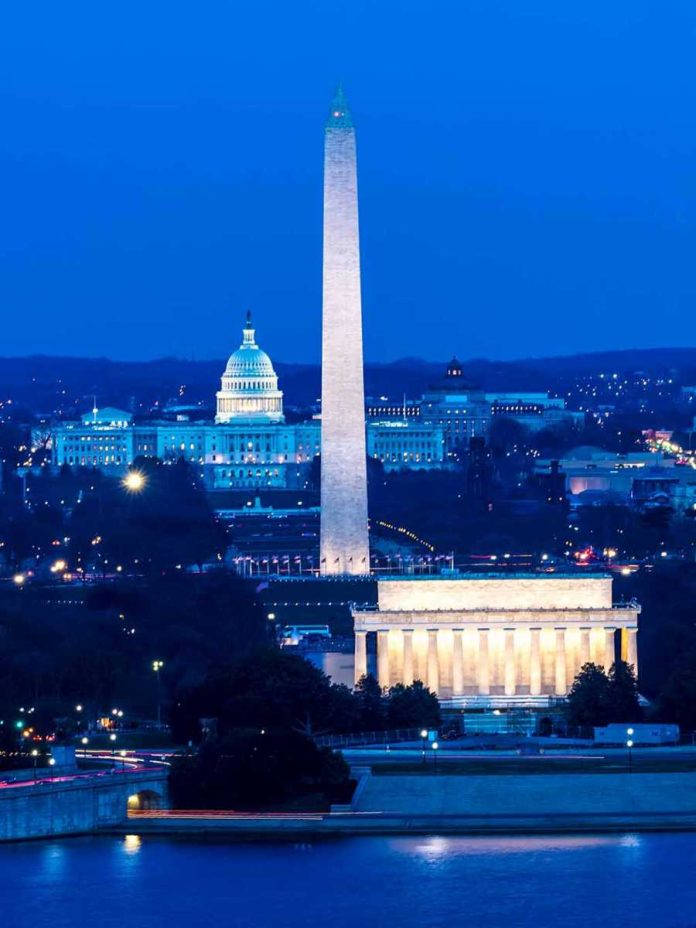
Years from now, most people will not remember the precise timing of the gate reopening or which buildings reached shelter capacity. What they will remember—if they were there, or if they watched—is the image of the capital’s monuments framed by an unusually dense, extended curtain of light, and the sense that the United States marked its 250th year with something visibly out of scale from the routine.
Whether they see that memory as a symbol of shared pride or of partisan spectacle will depend less on the number of shells fired than on the political and media environment in which the event lived. The evidence supports two conclusions at once: technically and visually, the “Salute to America” fireworks achieved what organizers promised—an unprecedented display built to challenge world records; logistically and symbolically, the night became an arena where safety demands, partisan narratives, and media incentives pulled the story in sharply different directions. Both realities are part of the legacy of America’s 250th birthday on the National Mall.
Further Questions for Historians and Planners
Several pieces of the story remain open for those who will document and learn from the event. Official confirmation from Guinness World Records would close the loop on whether the display formally set a new benchmark. Technical reports from Pyrotecnico and safety audits from the National Park Service would clarify how closely the execution matched the design in terms of shell count, duration, and incident-free performance. Detailed accounts of shelter capacity, Metro traffic, and attendee experience would inform future planning for high-profile outdoor events under volatile weather conditions.
For civic leaders, the larger question is how to design national anniversaries that can both accommodate partisan realities and still feel genuinely shared. The America 250 fireworks in Washington showed what is possible when engineering ambition meets patriotic symbolism; they also showed how fragile a unifying narrative can be when extreme weather and polarized politics converge on the same night.
Sources:
facebook.com, cnn.com, cbsnews.com, fox5dc.com, npr.org, bbc.com, nbcnews.com, freedom250.org, 250.dc.gov, air.show, youtube.com, instagram.com, apnews.com, newswise.com