

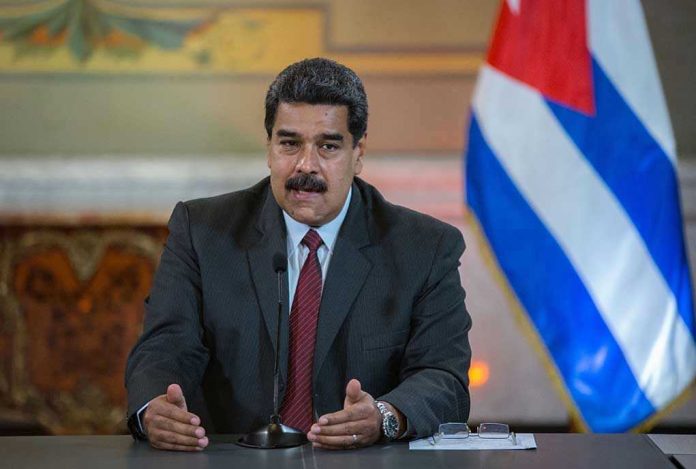
New photos of Nicolás Maduro in U.S. detention landed the same week prosecutors expanded sweeping narco-terrorism charges, underscoring how law, power, and oil politics now collide in plain view.
Story Snapshot
- The Justice Department charged Maduro in 2020 and expanded charges in 2026.
- The State Department says Maduro is in U.S. custody at a Brooklyn jail.
- Media report he appeared in court and pleaded not guilty with his wife.
- Claims link the photo release to oil deal timing, but proof is thin.
What Prosecutors Say Is the Case Against Maduro
The Department of Justice announced charges against Nicolás Maduro and other Venezuelan officials in March 2020. Prosecutors said Maduro joined a narco-terrorism partnership with the Revolutionary Armed Forces of Colombia and conspired to ship cocaine into the United States. Officials later unsealed a superseding indictment on January 3, 2026, broadening the alleged scheme across years and actors. The allegations are charges, not findings. A trial would test the evidence and the scope of the claimed conspiracy.
The State Department says U.S. authorities transferred Maduro to the Metropolitan Detention Center in Brooklyn and that he is awaiting trial on federal charges. That public profile also lists other charged officials and fugitives tied to the case. This aligns with mainstream reports that place him in federal custody. However, the materials at hand do not include a docket number or jail register entry, which limits independent checks on day-to-day confinement records.
What We Know About Custody, Court, and the New Photos
Major outlets reported that Maduro appeared in federal court and entered a not-guilty plea, as did his wife, Cilia Flores. Live updates from a national newspaper recorded the pleas and quoted Maduro’s denial in court. Separate reporting described tight detention conditions at a “jail inside a jail,” a phrase used for special measures that limit contact and communications. The images that sparked attention show him behind bars, but their source files and metadata were not provided in the available record.
Because the chain of custody for the images is unclear, the safest ground is the government’s own statements and the court appearance coverage. Those sources place Maduro in U.S. custody and move the case forward in a standard federal process. Without the underlying photo files, we cannot verify when, where, or by whom the images were captured. That gap does not erase the custody claim; it just narrows what can be proved about the pictures themselves.
Maduro’s Denial and the Oil-Deal Narrative
In court, Maduro said he was innocent and pleaded not guilty. He also cast the case as political, tying it to Venezuela’s oil wealth and accusing the United States of broader aims. Wire and broadcast reports quoted him saying he was “not guilty” and “still president” of his country. These are his claims, not evidence that counters the indictments. Prosecutors, by contrast, framed the case as a years-long drug conspiracy that crossed borders and institutions.
Venezuelan leader Nicolás Maduro has shared the first photos from what appears to be US detention, offering a rare look at him months after his capture.
The images, posted online, show Maduro in a grey tracksuit making peace signs, with reports saying they were taken on June… pic.twitter.com/hU0TfYBPF5
— Safari Reports (@Safari_Reports1) August 31, 2026
Some coverage tied the photo release to a reported oil deal, suggesting the timing was not an accident. The record here is thin. One national outlet described special detention conditions but did not document a direct link to any signed oil agreement. Readers across the spectrum worry that well-connected players cut deals while ordinary people face high prices and weak services. That concern is fair. But linking a court case to a trade pact requires documents, not hunches.
Why This Matters for Americans Tired of Government Spin
The case hits core frustrations on left and right. People see powerful leaders accused of serious crimes while key facts move behind press releases and leaks. The government says it has Maduro in a named federal jail and is bringing him to trial. That is a concrete claim that can be checked through court records. The photos are dramatic, but they are not the proof that counts. Court filings, transcripts, and custody logs will tell the real story.
What to Watch Next
Watch for the docket number, the full superseding indictment, and detention orders. Those records will confirm exact charges, evidence outlines, and custody terms. Look for an arraignment transcript that captures every plea and condition set in court. If an oil agreement exists, look for signed licenses or contracts. Those items will show whether policy and prosecution moved together or only appeared to. Until then, separate strong facts from showy images, and keep your eye on the record.
Sources:
facebook.com, english.elpais.com, news.bloomberglaw.com, state.gov