

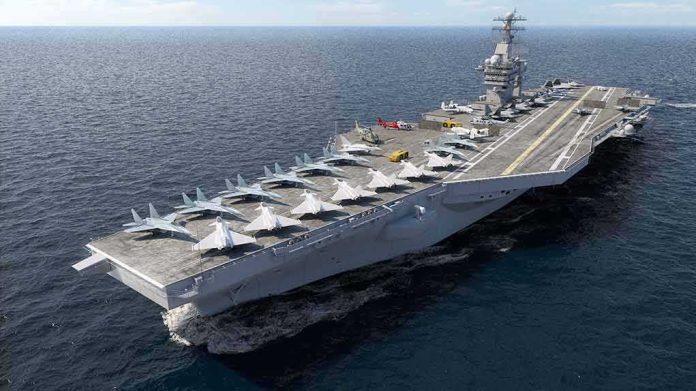
The Pentagon denied deaths and a suicide spike on the USS Abraham Lincoln even as officials confirmed a recent overboard incident and families described repeated jump attempts.
Story Snapshot
- Central Command said no sailors died on the carrier and one overboard sailor was rescued.
- Families and reporters described multiple overboard attempts during the long deployment.
- The Navy said it has not seen an increase in suicidal thoughts or attempts on the ship.
- The clash highlights long-running strain on crews and gaps in public data on mental health at sea.
What Officials Confirmed And What They Rejected
United States Central Command said reports that seven sailors died aboard the USS Abraham Lincoln were false and stated that no service members died on the carrier during the deployment. The command added that one sailor fell overboard on August 3 and was quickly and safely recovered. Defense Secretary Pete Hegseth said media coverage of the carrier’s conditions was “completely misrepresented,” while praising crews working through long deployments and fewer port calls.
The United States Navy told reporters it has not observed an increase in suicidal ideation or suicide attempts aboard the Lincoln. A United States official told CNN that internal tracking of suicidal ideation reports had gone down in recent months. These statements aim to steady public concern. They also draw a hard line against the most alarming claims circulating online about deaths or a mental health “surge” on the ship.
What Families And Reporters Say From The Deck Plates
Military Times and other outlets reported that family members described multiple attempts by sailors to go overboard during the deployment. One sailor’s wife said her husband tried to jump and is now on medical hold. News accounts across several outlets repeat themes of exhaustion, low morale, and shortages, citing relatives and some crew. These reports do not claim deaths on the ship, but they do point to repeated crises that required quick action by shipmates and leaders.
Three United States officials told CNN that a sailor went overboard earlier this month as the carrier remained on an extended deployment tied to the war with Iran. That single confirmed event gives weight to family claims that sailors are under heavy stress, even if the total number of attempts remains unclear. The Navy has not provided a precise count, citing operational security and privacy rules, which leaves the public with pieces rather than a full picture.
Why This Clash Feels Familiar To Voters On Left And Right
Long deployments, tight quarters, and limited port calls put real pressure on sailors. Past research has found hundreds of self-directed violence cases across several carriers over many years, showing this is a recurring challenge for the fleet, not a one-off crisis. Studies also show high rates of depression risk during deployment cycles. These facts help explain why families sound alarms when tours stretch and routines break, even as leaders push back on claims of a sudden spike.
A sensational story claiming seven American sailors were killed in a knife-wielding brawl aboard the USS Abraham Lincoln has run smack into one rather significant problem, the United States military says it never happened. U.S. Central Command issued an unusually blunt statement…
— Common Sense with Chad Law (@chadparkerlaw) August 14, 2026
Americans across the spectrum see a pattern: institutions share reassuring summaries while holding the data that could settle debates. That fuels distrust. In this case, the record shows clear points. Officials reject death rumors and deny a rise in suicide attempts. Families and some reporters describe several overboard attempts and serious morale strain. Both can be true at once. The core problem is the gap between lived experience and official metrics, which rarely surface in real time.
What To Watch Next: Data, Dwell Time, And Relief
Congressional offices and state officials have begun asking for briefings and records, which could force more disclosure. Transparent numbers on suicide-related events, medical evacuations, counseling visits, and manning shortfalls would build trust and guide fixes. Faster relief by a replacement carrier, steadier port schedules, and more embedded mental health staff could ease pressure. Until then, the story will hinge on whether the Navy releases credible data or asks families and the press to keep waiting.
Sources:
redstate.com, youtube.com, ground.news, cnn.com