

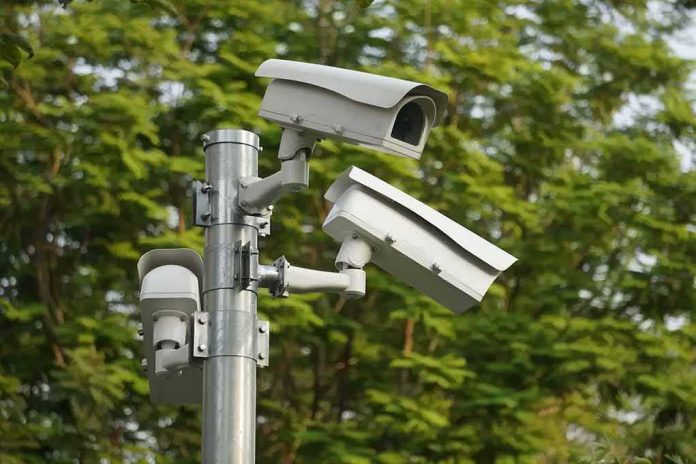
Protesters ringed billionaire Chris Larsen’s San Francisco home to challenge a city surveillance buildout they say is tracking everyone, not just suspects.
Story Snapshot
- Activists targeted Larsen over his backing of Flock Safety license plate cameras and police tech expansion.
- Cities from Los Angeles to Mountain View have paused or canceled Flock contracts over data sharing and privacy risks.
- Flock says it protects civil liberties, does not sell data, and has tightened its privacy guardrails.
- Courts and councils remain split, producing a patchwork of approvals, suspensions, and exits.
Protest At Larsen’s Home Centers A Bigger Fight Over Surveillance
On Friday, a coalition rallied outside Chris Larsen’s San Francisco mansion. They staged a protest during a national week of action against automated license plate readers. The group criticized Flock Safety cameras as mass surveillance that sweeps up innocent drivers. Coverage identified Larsen as a key backer of the city’s surveillance tools, which include these cameras. Organizers said the goal was to stop expansion and force more control over data sharing and retention.
Local reporting said Larsen has funded San Francisco’s Real Time Investigations Center and related systems. One report cited a roughly nine million dollar gift to help the police department scale cameras and license plate readers. Larsen has argued the city can be a national model if it uses these tools with clear guardrails and oversight. That message puts him at odds with civil liberties groups that want strict limits or full removal.
Why Cities Are Backing Away From Flock Cameras
City councils across the country have moved to cancel, pause, or not renew Flock contracts this year. Leaders cite access by outside agencies, weak local control, and long retention windows as core risks. The Los Angeles Police Department suspended its use while it reviewed who controls data and how it gets shared. Mountain View voted to terminate its pilot after learning federal agencies viewed local data without sign-off.
Advocates point to a pattern: problems grow when networks get dense and data flows across jurisdictions. Cambridge, Massachusetts, ended its contract and removed cameras after finding trust and agreement issues. Other cities, including Santa Cruz and those tracked by national outlets, have reported similar concerns. The reasons repeat: unclear ownership, sharing beyond city limits, and fear of use for immigration enforcement without local approval.
Flock’s Response And New Guardrails
Flock Safety says its systems help police find stolen cars and missing people while respecting rights. The company states that customers own the data, it does not sell the data, and it does not use facial recognition. It also says it does not work with the federal government on immigration enforcement. Flock added audit trails and reason codes for searches and announced a shorter default retention, moving from thirty days to seven.
Company leaders also assert the platform has not been hacked and that tighter settings give local control. Supporters in law enforcement argue that quick plate hits can break cases that otherwise stall. Critics counter that even seven days of citywide collection can reveal patterns of life if shared widely. That clash sits at the heart of the debate now reaching wealthy neighborhoods, city halls, and courts.
Courts And Councils Send Mixed Signals
A federal judge ruled that Norfolk’s use of automated plate readers did not violate the Fourth Amendment. Courts often hold that a single plate read in public view is not a search. But legal scholars warn that broad, long-term tracking from many cameras may raise different issues. City councils are not waiting for a final ruling. They are writing local rules, or walking away, while the courts sort out scope and duration questions.
They can all be aggregated upstream.
That's what Chris Larsen is doing. He's actually pushing contract with Flock, and paying for them, because it all gets aggregated in his own product along with BID and HOA cameras, police dash and body cams, possibly also Ring ones.
— Y Disassembler (@loomdoop) August 18, 2026
For many Americans, this fight echoes a larger fear: powerful players can wire the public square without consent. Conservatives worry about a growing surveillance state that can chill speech and target political foes. Liberals worry about tracking that can sweep up poor and minority communities. Both sides see unclear data sharing as a breach of trust. The San Francisco protest shows how fast these concerns jump from policy meetings to people’s front yards.
Sources:
nypost.com, assets.aclu.org, carscoops.com, washingtonexaminer.com, 48hills.org, aclu.org, reason.com, yahoo.com, sfist.com, business-humanrights.org, missionlocal.org, eff.org, linkedin.com, youtube.com, flocksafety.com, harvardlawreview.org