

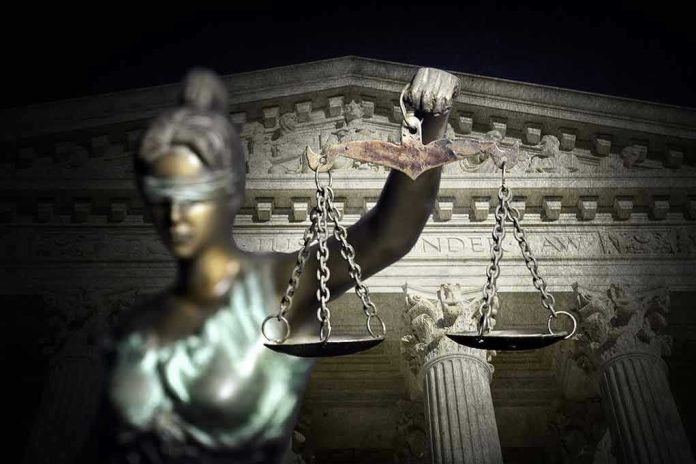
The Supreme Court’s decision to hear a case on birthright citizenship could reshape immigration policy and constitutional interpretation in the U.S.
Story Overview
- The Supreme Court will decide on the Trump administration’s move to end birthright citizenship for certain children of illegal immigrants.
- This case could redefine immigration policy and challenge interpretations of the 14th Amendment.
- Conservative groups argue this is necessary to uphold constitutional integrity and national sovereignty.
Supreme Court Takes on Birthright Citizenship
The United States Supreme Court has agreed to hear a pivotal case that challenges the long-standing interpretation of the 14th Amendment’s provision on birthright citizenship. The Trump administration’s initiative seeks to limit automatic citizenship for children born in the U.S. to illegal immigrants. This move has sparked intense debate, with implications for immigration policy and constitutional law.
Supporters of the administration argue that the current interpretation of the 14th Amendment incentivizes illegal immigration and undermines U.S. sovereignty. They contend that the amendment was never intended to grant automatic citizenship to children of individuals unlawfully present in the country. The case presents an opportunity for the Supreme Court to reconsider and potentially redefine a critical aspect of U.S. immigration law.
Implications for the 14th Amendment
The 14th Amendment, ratified in 1868, grants citizenship to “all persons born or naturalized in the United States.” Historically, this has been interpreted to include nearly all children born on U.S. soil. However, the Trump administration argues for a more restricted interpretation, suggesting that the amendment should not apply to children of illegal immigrants. This case could lead to a significant shift in how citizenship is determined in the United States.
The case’s outcome could have far-reaching consequences, potentially affecting millions of individuals and reshaping immigration policy. For conservatives, this is seen as a step towards restoring the original intent of the Constitution and addressing the challenges posed by illegal immigration.
Conservative Values at Stake
For many conservatives, this case underscores the importance of adhering to constitutional principles and protecting national sovereignty. The debate over birthright citizenship is not just about immigration policy but also about preserving the integrity of the U.S. Constitution. The decision could set a precedent for how constitutional amendments are interpreted in the context of modern challenges.
The Supreme Court’s ruling will be closely watched as it could redefine the rights of individuals born in the United States and influence future legislative and executive actions on immigration policy. As the nation awaits the court’s decision, the discussion around birthright citizenship continues to be a focal point for those advocating for stricter immigration controls and constitutional fidelity.
Sources:
The Supreme Court will decide whether Trump’s birthright citizenship order violates the Constitution