

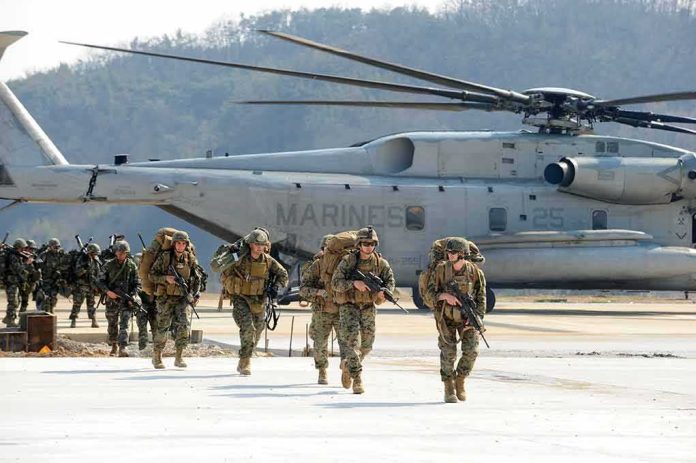
America’s 12-year mission in Iraq officially ended as the Pentagon confirmed every U.S. troop left the country on September 30, 2026.
Story Snapshot
- U.S. forces completed an “orderly” Iraq exit, closing Operation Inherent Resolve and shifting to limited support roles.
- The pullout followed a 2024 U.S.–Iraq agreement and wrapped in phases under President Trump’s administration.
- U.S. positions in Syria were also handed over earlier this year, signaling a broader regional drawdown.
- Analysts split on risks and benefits: some see retrenchment; others warn of deterrence gaps without forward forces.
What Changed: Mission Ends, Footprint Shrinks
Defense officials said U.S. forces left Iraq by September 30, 2026, ending a 12-year campaign against the Islamic State group. The Pentagon called it an “orderly departure” and said the coalition formally concluded Operation Inherent Resolve in Iraq. Officials added the United States would still provide targeted training and intelligence support to Iraqi partners. The withdrawal reduces direct exposure of U.S. troops while keeping a smaller, off-site role for key tasks that Iraqi forces still request.
Reuters reporting tied the exit to a deal first reached in 2024 and then executed in stages through 2026. That timeline shows how a major drawdown can be negotiated and then carried out across administrations. The phased approach aimed to avoid a sudden vacuum while meeting Iraq’s demand for sovereignty and Washington’s desire to cut exposure. That mix of politics and security management underlines a core point: real retrenchment is possible when both sides plan the handoff.
Beyond Iraq: Syria Drawdown Shows a Wider Shift
U.S. forces have also stepped back in Syria. Analysts at the Center for Strategic and International Studies reported that the United States handed over its last major base in Syria to the interim Syrian government on April 16, 2026. That move marked the end of more than a decade of U.S. presence. It followed earlier signs of drawdown. A Congressional Research Service report noted a February 2026 outpost withdrawal and said unnamed officials signaled more departures were coming.
These steps point to a regional pattern. The United States is reducing boots on the ground while trying to keep limited help in place. That could include advising, sharing intelligence, and targeted training. Supporters say this approach cuts costs and casualties while pushing local partners to lead. Critics counter that it may invite rivals or proxy forces to test the gaps. The balance between risk and restraint will show in the next year as local forces manage threats.
The Big Debate: Retrenchment vs. Deterrence
Commentators frame the Iraq exit as part of a larger U.S. retrenchment in the Middle East. Some argue this right-sizes American commitments after long wars. Others warn it could embolden militias or adversaries. A YouTube analysis flagged risks that the withdrawal might backfire if proxy groups fill space faster than local forces can respond. That concern echoes years of debate over whether pulling back reduces danger or shifts it in time and place.
Trump said he no longer wants a deal with Iran as reports said the U.S. military is preparing for possible strikes, including a resumed campaign that could target Iranian energy, infrastructure and nuclear sites.
— Finance Mastering (@FinanceMaste) October 8, 2026
Research on deterrence adds a sharper point. A RAND study found that forward-deployed U.S. forces are strongly associated with deterring hostile measures, including lower chances of proxy wars and intimidation near partners. That evidence supports those who say presence still matters for day-to-day stability. Policymakers now face a trade-off: reduce exposure and expense, or keep forces forward to signal resolve and shape behavior before crises escalate.
What It Means for Americans
For many families, this means fewer constant deployments and less strain. For taxpayers, it could mean savings if smaller footprints cut operating costs. For both conservatives and liberals who distrust Washington’s promises, the key test is simple: will leaders measure results and stay transparent about risks? The record so far confirms the exits happened. Harder questions—like whether threats shrink or grow—need data that agencies should release in coming months.
What to Watch Next
Watch whether Iraqi and Syrian partners can sustain security without daily U.S. backup. Track any spike in proxy attacks or cross-border strikes near key sites. Look for clear Pentagon updates on what “limited support” delivers in practice. Expect the deterrence debate to intensify if rivals probe defenses. The stakes are real: getting this balance wrong could pull the United States back in under worse terms, or keep it stuck in costly roles that most Americans no longer accept.
Sources:
theamericanconservative.com, reuters.com, congress.gov, richtmann.org