

Ukraine’s mix of underground warfare and strikes on the Kerch Bridge has put fresh stress on Russia’s grip over Crimea and the front near Kupiansk, with clear damage but still unclear long-term effects.
Story Highlights
- Ukrainian troops moved through abandoned gas pipes to avoid drones and resupply units near Kupiansk.
- The pipeline mission advanced about 15 kilometers underground and named units took part.
- Ukraine struck the Kerch Bridge, collapsing road spans and halting traffic, according to officials and major outlets.
- Analysts say the tactics are novel, but the strategic impact remains uncertain so far.
Documented Underground Operations Near Kupiansk
The New York Times reported from inside a buried gas pipe where Ukrainian soldiers moved supplies, evacuated wounded, and bypassed Russian observation near the city of Kupiansk. Soldiers crawled through pipes under four feet wide and stayed inside for long periods to avoid drones and artillery. Video reporting showed entry and movement but kept locations hidden for security. The record confirms sustained subterranean movement, but not a wider collapse of Russian defenses tied only to this tactic.
BBC reporting identified Ukraine’s National Guard 13th Khartiia Brigade and said Operation Ve began in April. The unit advanced about 15 kilometers along the pipeline after clearing water, debris, and Russian barriers. The account tied the effort to local advances and morale but said it did not change the overall course of the war. This detail gives names, dates, and scope, which strengthens confidence in the core facts on the ground.
Claims, Limits, and the Search for Proof
Ukrainian sources linked to the operation claimed over 100 Russian troops killed and 30 captured, but public evidence did not include named prisoners, cemetery data, or Russian confirmation. Analysts warn that wartime casualty numbers can be tools of messaging and often vary widely. Given that risk, the strongest facts here remain the named units, observed pipe movement, and the measured underground advance, not the casualty counts.
Local reports say Russia also used the pipeline routes earlier, and tried again later in small groups. Ukraine’s Seventh Rapid Response Corps said it stopped a later attempt by about 50 Russian soldiers near Kupiansk. These notes show that pipe warfare cuts both ways and that the underground fight is a contest of adaptation, not a one-sided breakthrough. They also suggest the tactic helps most at local points rather than across the whole front.
Kerch Bridge Strike and Its Operational Effects
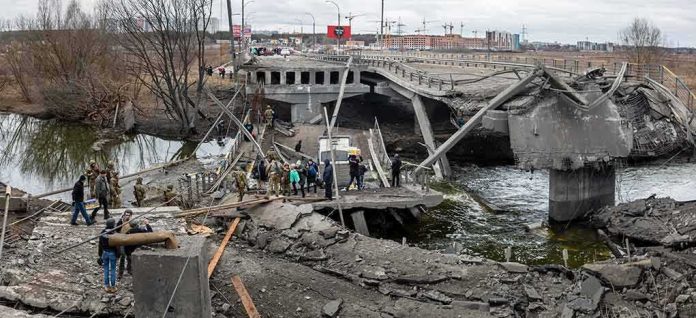
Ukraine struck the Kerch Bridge that links Russia to Crimea. Major outlets reported collapsed road spans, damage to rail sections, and traffic halted as vehicles queued on both sides. Independent assessments, including one from the Institute for the Study of War, supported that road sections had collapsed and the rail part was damaged. The strike clearly disrupted movement in the short term and carried heavy symbolic weight for both sides.
Open questions remain about how long the bridge’s capacity was reduced and by how much. Some outlets said they could not verify every claim about total destruction or duration of closure. Russia acknowledged damage and shutdowns, but state-linked voices framed the impact as temporary and repairable. Those differences are common in wartime and stress why measured logistics data over time is key to judging true effect.
What This Means and Why It Matters to Voters
Subterranean maneuvers and bridge strikes show how modern war evades eyes in the sky and hits key links. These moves can lower losses, shock the enemy, and win time. But history says tunnels are usually a tactical tool. They help small units slip through gaps, not replace larger force or supply needs. The best test is whether these methods change resupply rates, front-line positions, and casualty trends over weeks and months, not days.
For Americans watching from home, the lesson is clear. Big claims fly fast, but proof comes from hard numbers: traffic counts, train schedules, cargo tonnage, and maps that match dates. That is how to judge whether Crimea is cut off or if underground routes truly shift the front. Citizens on the left and right can agree on this point: demand real data, not spin, because clear measures are the only way to see through the fog of war.
Sources:
youtube.com, nytimes.com, apnews.com, twz.com, nationalsecurityjournal.org, en.haberler.com, bbc.co.uk, kyivindependent.com, oliverboydbarrett.substack.com, euromaidanpress.com, nationalinterest.org, ukrainianworldcongress.org, ia803107.us.archive.org, apps.dtic.mil