
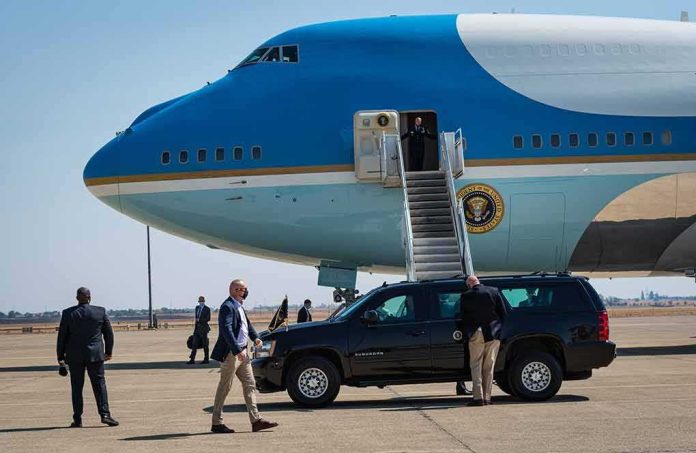
The Pentagon has yanked Frank Kendall’s access to classified information over an alleged Air Force One disclosure, and the move lands in the middle of a fierce fight over who controls the story about presidential security.
Quick Take
- The Department of War said Kendall’s access was revoked immediately.
- Sean Parnell tied the action to an alleged disclosure about Air Force One’s capabilities.
- Kendall said he was “completely mystified” and denied knowingly revealing classified material.
- The public record does not identify the exact remarks or the outlet involved.
Pentagon Moves Fast on a Sensitive Disclosure Claim
Sean Parnell said the Department of War had revoked former Secretary of the Air Force Frank Kendall’s eligibility for access to classified information and any sensitive position. Parnell said the action followed Kendall’s “unauthorized disclosure of classified information regarding Air Force One’s capabilities to a media outlet.” The statement gave no detail about what was said, what was exposed, or which outlet allegedly received the information.
That lack of detail matters because the public case rests on an institutional accusation, not on a released record. The available reports repeat the Pentagon’s claim, but they do not publish the underlying transcript, memo, or interview that would let readers compare Kendall’s words with the department’s description. In security cases, that gap can leave the public with a sharp punishment and only a thin explanation.
Kendall Says He Did Not Knowingly Leak Classified Material
Kendall told The Associated Press that he was “completely mystified” by the revocation. He said he had always been careful not to disclose anything classified and did not know what he was accused of revealing. Newsday reported that Parnell also did not name the media outlet in his post, which leaves a basic question unanswered: what exact statement triggered the action?
Kendall’s background makes the revocation more than a symbolic gesture. The Air Force biography lists him as Secretary of the Air Force from July 2021 to January 2025, a job that would have placed him near sensitive aircraft and defense information. That does not prove wrongdoing, but it explains why the Pentagon would treat the allegation as serious if it believed protected details had been shared.
Why This Story Lands Beyond One Official
This case fits a wider pattern in Washington. Clearance fights often become public signals of discipline, loyalty, and power, while the evidence stays inside classified channels. That structure helps the government act fast, but it also makes outside review hard. When the public hears “unauthorized disclosure” without the underlying facts, many readers will see either a needed security move or a political hit, depending on their trust in the people making the call.
🇺🇸 US defense officials have stripped ex-Air Force chief Frank Kendall of his security clearance over allegations he leaked safety vulnerabilities regarding a Qatar-gifted presidential aircraft. Kendall denies the claims, stating he was not given details of the alleged leak. pic.twitter.com/RLCWMaGmkr
— Secret Feeds (@TheSecretFeeds) August 8, 2026
That tension cuts across party lines. Supporters of President Trump may see the revocation as overdue accountability for a Biden-era official tied to a sensitive Air Force One dispute. Critics may see a one-sided punishment issued before the facts were made public. What is clear from the available record is narrower: the Pentagon acted quickly, Kendall denied knowing he disclosed classified material, and the evidence needed to settle the dispute has not been released.
Sources:
redstate.com, washingtonexaminer.com, newsday.com, wsj.com, facebook.com, reddit.com