

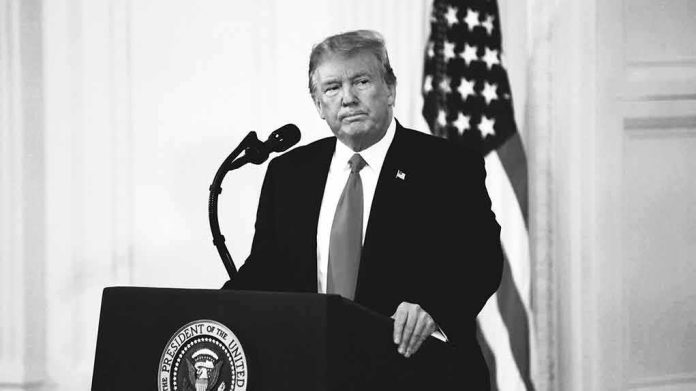
President Trump told a Marine officer on Thanksgiving that “we’re gonna replace you very easily,” stirring a fresh debate about how leaders talk about the troops they rely on.
Story Snapshot
- Trump told Marine Lieutenant Colonel Matthew Andrews he could be “replaced very easily” during a Thanksgiving call.
- The remark came as Trump praised recruitment and thanked deployed service members.
- Critics said the phrasing sounded dismissive of experienced troops’ value.
- Defense analysts stress retention of trained members is vital for readiness.
What Trump Said And When He Said It
Mediaite reported that on Thanksgiving, President Trump spoke by phone with deployed service members and thanked Marine Lieutenant Colonel Matthew Andrews by name. During the exchange, Trump said, “if you ever leave, we’re gonna replace you very easily. So, don’t leave, Matthew. Ok? Don’t leave.” The outlet framed the line as awkward and tied it to Trump’s talk about recruitment strength during the call. A separate roundup also noted Trump highlighted the troops’ service and the holiday setting.
Another outlet described broader backlash to the call, citing reaction to Trump’s claim that he could decide when a deployment would end. In the same coverage, the “replace you very easily” line was quoted and flagged as part of the pushback. The reporting did not dispute that the words were said. It focused on how the phrasing landed with audiences who see service members as hard to replace due to skill and experience built over years.
Why The Phrase Hit A Nerve In The Ranks
Defense research draws a sharp line between recruiting new people and keeping trained people. Analysts at the RAND Corporation say keeping qualified members is key for morale and readiness, and that training replacements takes time and money. A 2023 report by the Government Accountability Office said the Department of Defense must balance recruiting with retaining already trained service members to keep the force strong and ready to deploy when needed. That lens explains why words about “easy” replacement can grate.
Leaders often speak about the force in big numbers. They talk about end strength, new accessions, and meeting goals. The people who serve think in terms of missions, teams, and specialties. Pilots, cyber operators, mechanics, and infantry leaders each bring skills that units depend on. When a senior commander or the President speaks about “replacing” someone, many hear it as a slight to that hard-won skill. They also hear the deeper worry that institutions may treat them as interchangeable parts.
The Politics Around Respect For Service
Thanksgiving calls to troops are meant to show respect and unity. Small word choices can still spark outsized reactions. Americans across the spectrum say they feel let down by a distant elite. Many think leaders talk past the real strain on families who deploy often and carry the risk. This episode fits that concern: a single phrase overshadowed praise for service and fed a view that Washington sees people as numbers, not as neighbors who serve and sacrifice.
🇺🇸 A deployed service member asked President Trump how he spent Thanksgiving Day, and his answer went straight to business. Trump said he stayed focused on Iran and bringing peace between Russia and Ukraine, keeping the command seat active through the holiday.…
— Thomas Jones (@Thomas_JonesX) November 27, 2026
Both supporters and critics of the administration can agree on one steady fact. The military needs both strong recruiting and strong retention to stay ready. Replacing a seasoned Marine officer or a skilled sergeant is never simple, even when recruiting is up. Clear, careful language from top leaders matters. It signals that the country values skill, time in uniform, and the people who carry the load. That respect builds trust, and trust drives readiness.
Sources:
mediaite.com, dnyuz.com, politico.com, scholars.org