

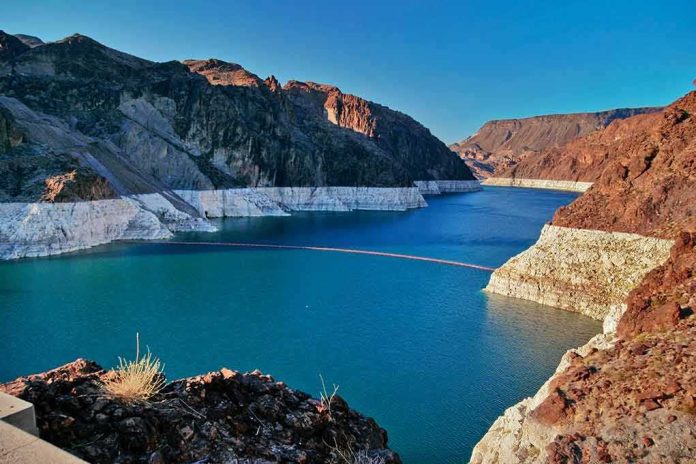
Lake Powell, the nation’s second-largest reservoir, has fallen to a record low, heightening risks to water supplies and hydropower across the Southwest.
Story Snapshot
- NASA confirmed Lake Powell hit a new record low in early September 2026.
- Weak mountain snow and warm, dry conditions cut the Colorado River’s runoff.
- Federal forecasts warn of tight operations and possible power constraints.
- The crisis reflects years of overuse meeting a long drought across the basin.
What Changed at Lake Powell This Summer
NASA reported that Lake Powell reached a record low in mid-August and continued dropping into September 2026. Satellite images showed the water surface near 3,517 feet on September 10, the lowest since the reservoir first filled. The decline followed a sharp fall in seasonal snowmelt that feeds the Colorado River. Less runoff reached the lake during late spring and summer, which is when the reservoir usually gains water. The reduced inflow pushed levels past the prior 2023 record.
Independent summaries echoed NASA’s findings. They pointed to an exceptionally dry and warm winter that left the Colorado River Basin with little mountain snow to melt. That weak snowpack, paired with high temperatures, reduced the spring surge that normally sustains reservoirs through summer. As a result, Lake Powell crossed below its previous benchmark and kept sliding in August and September. These conditions made the 2026 low not a brief dip, but a new line for managers to address.
Why This Record Matters Beyond One Lake
The Bureau of Reclamation said the combined storage of Lake Powell and Lake Mead recently hit lows not seen since before Powell existed. That means the system that serves major cities, farms, and tribes is under severe strain. When both reservoirs are this low, every choice about releases, cuts, and power becomes harder. Agencies have warned that operations are constrained until storage rebounds. This is not a one-off event; it confirms a trend toward tighter water budgets in the West.
Federal planning documents show how close the system is running to key thresholds. Reclamation’s projections earlier warned Powell could approach power limits without major changes in operations. Low reservoir elevations reduce pressure at Glen Canyon Dam, which can limit power output and raise costs for communities that rely on it. Managers have already adjusted releases between reservoirs in recent years to protect critical levels. Those steps show how thin the margin has become in dry years.
The Long Arc: Drought Meets Demand
Scientists and water managers describe a multidecadal drought pressing on top of long-standing demand that often exceeds supply. For years, policy and use patterns have stretched the river system, while climate-driven heat and dry conditions have lowered runoff. That mix set the stage for repeated record lows. This year’s weak snowpack and high heat did the final push. Together, they confirm that the basin is living with less water than many rules and plans once assumed.
Local officials and researchers have warned that “uncharted territory” is now the norm. As storage sank, managers faced harder choices about releases and cuts. Some proposed reductions for states like Arizona, California, and Nevada would be unlike anything seen before in this system. These moves are painful across communities, farms, and tribes. Yet experts argue they are needed until the basin aligns demand with realistic long-term supply. Without that shift, new records will likely follow.
What It Means for People, Power, and Policy
The record low at Lake Powell signals near-term risks and long-term change. Water deliveries to cities and farms become more uncertain. Hydropower from Glen Canyon Dam faces tighter limits when lake levels fall. Energy prices can rise when low-cost hydropower drops. These impacts hit families, small businesses, and local budgets. They feed public frustration that government planning came too late, and that leaders protected short-term interests over lasting stability for the region’s water and power.
Lake Powell Falls to 3,517 Feet, a New Record
Read the full story: https://t.co/kFpyEYZRBl
Lake Powell hit a record-low 3,517 feet in September 2026-two feet below the 2023 record-as megadrought and a failed snowpack threatened water and power for 40 million people.… pic.twitter.com/w94LEC0inm
— wondernews.now (@wondernews_now) September 23, 2026
Lawmakers and agencies now face a hard task: cut use, protect critical infrastructure, and share pain fairly. Clear rules, transparent data, and firm timelines can help rebuild trust across states and communities. Many on the left and right agree on this point: the system must serve people, not politics. The record at Powell is a stark marker. It asks leaders to match words with action, fix waste, and plan for less water. The Southwest’s future depends on it.
Sources:
sciencedaily.com, science.nasa.gov, denvergazette.com, usbr.gov