

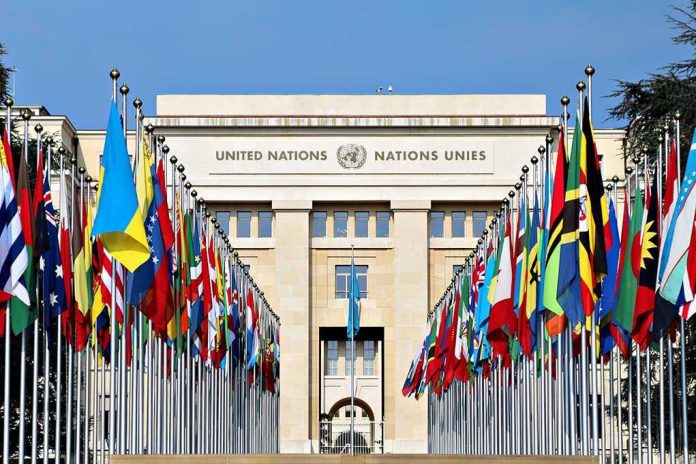
Argentina’s President Javier Milei used the United Nations stage to call the body a “useless organization” run by “fatally arrogant parasites,” tying the charge to the Falklands/Malvinas dispute and alleged inaction.
Story Highlights
- Milei accused the United Nations of failing its mission and serving entrenched elites.
- He said the body “looked the other way” on the Falklands/Malvinas dispute with the United Kingdom.
- He cited a past resolution and oil activity near the islands to argue real-world harm.
- United Nations materials defend the institution’s role and legitimacy in peacekeeping.
Milei’s Direct Challenge to the United Nations
President Javier Milei told the General Assembly that the United Nations had become a “useless organization” that sustains “a caste of fatally arrogant parasites masquerading as well-intentioned bureaucrats.” United Nations coverage of the speech confirmed these words and said Milei argued the institution had failed to keep order and uphold its covenant. His attack was not only about tone. He tried to anchor it in specific cases where he believes the body did not act, setting up a clash over performance, not just rhetoric.
Reuters reported that Milei tied his critique to the long fight over the Falkland Islands, known in Argentina as the Malvinas. He said the United Nations chose to “look the other way” as tensions rose. He argued that the dispute shows how the body avoids hard choices. That theme speaks to a wider anger many citizens feel with global groups that write rules but struggle to enforce them when powerful countries resist change.
The Falklands/Malvinas Dispute as Exhibit A
Coverage of the address said Milei cited a General Assembly resolution from decades ago that urged restraint and talks while the dispute remained unresolved. He argued that the paper sits in archives while facts on the ground shift. He also pointed to British oil plans in the North Malvinas basin, naming the Sea Lion project, and called those activities illegal under international and Argentine law, further pressing his case that inaction has costs.
The sovereignty issue is contested and has been for years, which limits what the United Nations can impose. Some Security Council actions during the 1982 war show the body will act in crises, but those steps did not settle the core claim over the islands. That history helps explain why leaders use the General Assembly to argue legitimacy, even when the forum lacks tools to force an end-state.
United Nations’ Defense: Mandates, Limits, and Legitimacy
United Nations materials say field missions and peace efforts come from mandates by the Security Council and General Assembly. They argue the strength of the system is its broad membership and the Secretary-General’s impartial role. They also stress the core principles of consent, impartiality, and limited use of force, which shape where and how the body can act. Supporters say these guardrails create legitimacy but also slow or block action when parties refuse to agree.
That defense highlights a core tension the public sees often. People hear big promises about peace, rights, and order. Then they see slow results, gridlock, or no clear enforcement. To many, this looks like a club that protects its own. To officials, it reflects the hard design of a system that needs consent to avoid larger wars. Both can be true, and that gap feeds anger across the political spectrum.
Why This Speech Landed With Frustrated Voters
Milei’s message tapped a shared worry: powerful institutions answer to themselves more than to people. His specific claims about the Falklands/Malvinas, oil development, and dusty resolutions gave his critique a concrete edge. United Nations coverage affirmed his harsh phrasing and focus, which raised the stakes for response. For readers who feel global bodies dodge accountability, the speech sounded like overdue truth-telling rather than mere theater.
Yet broad labels like “useless” risk drowning out the testable parts of his case. The dispute’s contested law and the United Nations’ limited enforcement tools complicate simple blame. The fairest test is narrow and factual: what the relevant resolutions said, what changed in the basin, and how United Nations organs acted or declined to act. On that ground, the record supports elements of both critique and constraint.
Sources:
cronista.com, reuters.com, inkl.com, theguardian.com