

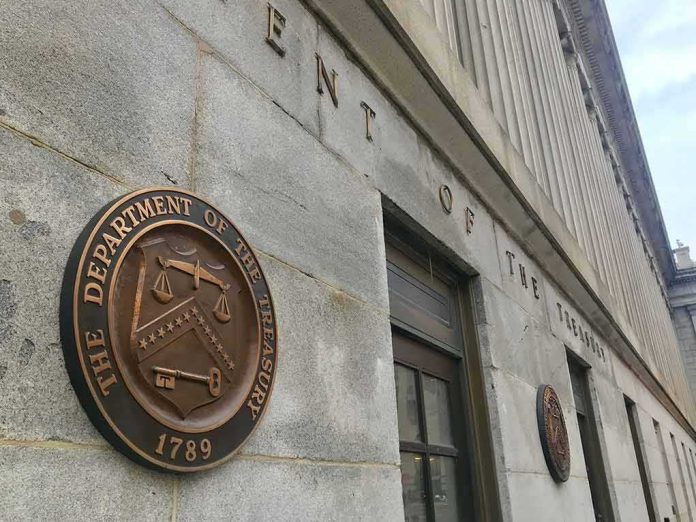
The Treasury just doubled its long-bond buybacks to at least $4 billion per operation, a fast fix aimed at cooling rising borrowing costs.
Story Snapshot
- Treasury raised the cap on long-end buybacks from $2 billion to at least $4 billion per operation.
- The move targets 10- to 30-year bonds to boost liquidity and ease yields in coming weeks.
- Secretary Scott Bessent said buybacks could go beyond $4 billion if needed.
- Research shows buybacks can help liquidity, but effects are usually modest.
What Treasury Changed And Why It Matters Now
The U.S. Department of the Treasury said it will at least double the size of its long-end liquidity support buybacks, lifting the maximum per operation from $2 billion to at least $4 billion. The program focuses on older 10- to 20-year and 20- to 30-year bonds, where trading can get thin and jumpy. Officials aim to improve market functioning and ease pressure on long-term yields, which set borrowing costs for home buyers, small firms, and state budgets.
Markets often read buybacks as a signal that Washington wants lower yields without saying so directly. When Treasury removes some supply, prices can rise and yields can slip. That effect can support confidence during shaky periods, even if the total dollars are small next to the full market. Treasury framed this step as liquidity support, not a promise to peg rates. Still, the practical goal is clear: calm the long end before stress spills into the broader economy.
How The Expanded Buybacks Work In Practice
Buybacks let Treasury repurchase older “off-the-run” bonds that trade less often. Dealers then get cleaner balance sheets, and investors can more easily move in and out of positions. That can narrow bid-ask spreads and smooth price moves. Studies by the International Monetary Fund found that buybacks modestly improve liquidity and raise listed bond prices by small amounts, which can add up at the margin during tight times. Treasury’s advisers have long noted these indirect funding benefits.
Secretary Scott Bessent also signaled the door is open for larger operations. He said buybacks could exceed $4 billion per issue if conditions warrant, giving the department room to respond if volatility returns. Prior guidance this year laid out quarterly schedules and buckets for support operations, so dealers can plan around dates and sizes. That predictability can help reduce surprises, which often drive the worst market swings.
What This Means For Yields, Debt Costs, And Main Street
Long-term yields steer mortgage rates, auto loans, and business financing. When Treasury boosts demand for long bonds, yields can dip, at least for a time. That can lower interest costs on new government borrowing as well. Reporters and analysts said yields fell after the announcement, showing the channel at work. But past episodes suggest the relief can be brief if bigger forces, like large deficits and heavy issuance, keep pushing rates higher.
People on the right and left worry about a system that feels rigged for insiders. This move tries to fix a plumbing issue without a broader fiscal plan. Supporters will see a fast, targeted step to defend market function and protect taxpayers from a sudden spike in costs. Critics will say it treats symptoms, not causes, while total debt and spending keep rising. Both views can be true at once: smoother trading helps today, while long-run trust still depends on credible budgets.
Limits, Tradeoffs, And The Road Ahead
Buybacks change the mix of supply but not the nation’s overall debt path. Research shows liquidity gains are real yet modest, which argues for steady, not heroic, expectations. If stress fades, Treasury can scale back. If pressure builds, officials have signaled flexibility on size, timing, and targeted issues. The next key test will be how auctions and buybacks interact over the coming weeks, and whether yields stay calm without fresh waves of intervention.
📈 Risk Assets: Bitcoin has jumped 5.96% to $72,457.61, in the biggest short squeeze on record since data tracking began in 2021. The surge followed the US Treasury under Secretary Scott Bessent doubling its long-bond buyback size to $4 billion per operation, pulling the 30-year…
— Lots Fund (@lotsfund) August 21, 2026
For savers and borrowers, watch long mortgage rates and corporate bond spreads. For taxpayers, watch interest costs in the budget. For everyone else, this is a reminder that market plumbing matters. When it works, credit is cheaper and steadier. When it fails, costs jump for families, cities, and small firms. This step aims to keep the pipes clear. It does not replace the harder work of growth, spending discipline, and a tax code that rewards real productivity.
Sources:
feedpress.me, politico.com, cnbc.com, home.treasury.gov, finance.yahoo.com, washingtonpost.com, wsj.com, ideas.repec.org